When do baseball teams score runs?

baseballline

One of the marks of a smart baseball writer is the ability to sense a trend, research its existence and nature, place her findings in context, and present her conclusions in a way that meaningfully educates readers. Inherent in this ability is the wherewithal to know when to stop researching a trend or pressing on a concept, realizing that the fruits of the work have been or soon will be exhausted. Sometimes a person who is not a “smart baseball writer” by the foregoing definition will noodle about on an idea for so long, he’ll end up with a small pile of research that no longer has any bearing on any meaningful conclusions.

Two years ago, I decided to investigate a hunch that the Detroit Tigers were having trouble scoring runs late in games. My initial research mostly seemed to support my hypothesis, and a follow-up look appeared to confirm it more strongly. More than merely interesting (and fleetingly self-satisfying), it also was informatively concerning, because it placed the team’s well-known bullpen problems in a more nuanced light: relief-pitching woes alone weren’t the problem, because the lack of late-game scoring was compounding the problem of surrendering leads during the final frames. As strange as it seemed, the Tigers had interrelated shortcomings on both sides of the plate.

One comment I received in the course of sharing those findings stuck with me: I needed to place this information in context. After all, there are plausible reasons to believe that all teams might, perhaps to varying extents, experience decreased run production in the late innings.

And so it was that, two years later, I finally discovered Retrosheet, a site that compiles inning-by-inning scoring data to a more useful degree than the resources I’d utilized back in 2013. What follows are two graphs of the inning-by-inning scoring of sixteen teams for the 2014 season. Continue reading

Baseball blogger proposes extremely traditional training tactics

cistuwarmyThe rapid seep of the internet across the biophysical landscape has allowed, in pooling pools of athletico-scriptology, the fomenting and indeed rise of a baseball-centric analytical community that fashions itself both advanced and numerological in both its substantive and aesthetic drapings, trappings, and driftings. The aforementioned pooling-facilitated rise occurred not within a vacuum chamber or bag or filter or hose but in the context and– the soon-to-be-mentioned contextualizers would announce– against the preexisting backdrop of an often-organized and, in the metaphorical and sometimes literal literal sense, gated or bound collection of Baseball Writers who, it must be noted, likely never anticipated being intransitively thrust in any respect, and much less being so thrust into a, and really, the, (readily accepted, it also must be noted) position of defending, together with the practically necessarily wholly inclusive and thus merged task of defining, both Traditional Baseball and the traditional mode of observing, considering, and understanding baseball. They awoke to find themselves Anti-Federalists, to put a probably only partially enjoyed-by-them historical frame around it. One cohort generally granted minimal time and nominal credit to the other, and vice versa, is the point.

And yet. If there is a commonality in individual operational course of dealing it is entrepreneurially this: the need to distinguish oneself. The terminology in the following sentence is positive rather than normative. From the linguistic vantage of the traditional-minded, those of the upstart class distinguished their output, and themselves thereby, progressively; inversely, retrograde. At the extremes, both vectors have their mortal/temporal/terrestrial limits, however: points at which, for example, the only way to be more progressive is to turn, perhaps suddenly, perhaps violently, retrograde– to adopt the most traditional of traditions as the vessel in which to carry forth your message still. And vice versa. (Perhaps.)

And so. We have arrived at the above-depicted depiction of the broadcasted baseball blogger. While this is not about him but about what he has done, it is maybe worth noting, or commenting or remarking upon, that he exists, or existed, among those on the unbound progressive fringe. The worth of such notation would ripen, if at all, in the lack of surprise that should accompany one who, having understood the foregoing, observes the indicia of another who has reached the terminus of his respective– if not universally respected, see supra— vector and made the only available subsequent move, here to an admittedly extreme degree.

There exist those individuals who postulate that, as the virtual world waxes, the corporeal world necessarily must wane and further wonder whether, as a consequence, the ostensibly beneficial activity features of the virtual world become diluted so as to require a severe return to the very most traditional (meaning “old”) corporeal traditions in order to affect anything meaningful, in actual terms. Here, the rarely depicted baseball blogger, in a joint venture with the United States Army,[1] brings forth a proposed plan of training and development in which those professional, as in full-time, baseball players not yet in the Major Leagues subject themselves to the complete, as in unbridled, brutality of military engagement in order to be evaluated and thereby prove their worth as those now capable of conducting Our Nation’s Pastime at its highest (unembargoed) level. War is good for this, he is saying.


[1] Sporting mascot: Black Knights.

The Best Baseball Research of the Past Year

With the Super Bowl in the rear-view mirror, it’s time to get ready for baseball season, and what better way to do that than to peruse some of the best baseball articles from the past year, as identified by the Society for American Baseball Research, which has chosen fifteen (non-ALDLAND) finalists for awards in the areas of contemporary and historical baseball analysis and commentary?

My latest post at Banished to the Pen highlights each finalist and includes a link to cast your vote to help determine the winners.

As a preview, here’s my summary of my favorite article of the bunch:

Jason Turbow, “The Essence of Velocity: The Pitching Theory That Could Revolutionize Baseball, If Only The Sport Would Embrace It,” SB Nation, June 18, 2014. Turbow profiled Perry Husband, a former player who reinvented himself as a pitching coach. Really, Husband is a pitching theorist, and he labeled his theory “Effective Velocity.” The basic notion is that what matters in terms of pitch speed variation is not the actual difference between the speed of pitches but the difference in speed as perceived by the batter. This is significant, because Husband determined that actual speed and batter-perceived speed diverge for pitches thrown in certain locations. In short, pitches up and in gain effective velocity, while pitches down and away lose effective velocity. For both situations, the difference between actual and effective velocity can be between one and five miles per hour. Husband also had a revelation about the hitting process: luck is a more prevalent factor in a batter making contact than generally assumed, and hitting success depended more on pitcher mistakes. According to Husband, success in hitting, to the extent it is subject to the batter’s control, is dependent upon the batter’s ability to adjust to pitch-speed variances, and most batters cannot handle an effective velocity spread of more than five miles per hour. The very best hitters, Husband said, might be able to handle an eight mile per hour effective velocity spread. Pitchers know they need to mix speeds, but when they throw pitches to the areas where they disadvantageously gain or lose effective velocity, they neutralize the effect of their speed mixing. The one problem for Husband? He couldn’t find any Major League teams to buy into his theory. Turbow’s article tracked Husband’s search for acceptance in engaging fashion.

Read about the other fourteen nominees, see my ballot, and cast your vote here.

Max Scherzer scouting report (backup catcher ed.)

My first post over at Banished to the Pen, a new baseball blog, takes a very serious look at a rumor of debatable seriousness: that the Texas Rangers considered adding Max Scherzer as a backup catcher before he signed as a starting pitcher for the Washington Nationals.

The full post is available here.

Farewell, Mr. Cub

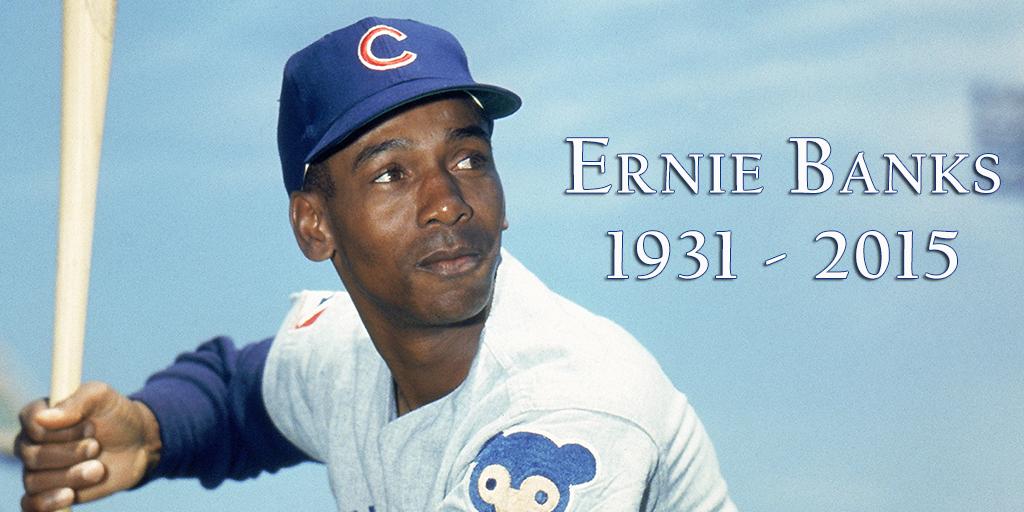
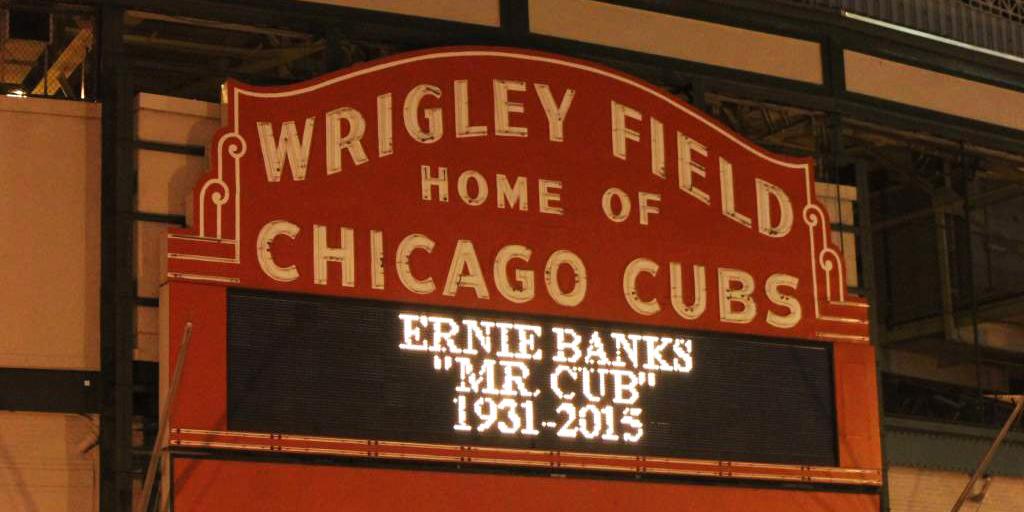
The undeniable truth is that the Chicago Cubs were my first favorite baseball team, and their greatest player, Ernie Banks, died tonight. A sports life later, I caught up with Ernie when he was on the cover of last summer’s Sports Illustrated “Where are they now?” issue, and I was glad I did.

https://twitter.com/OzzieGuillen/status/558839777982570496

The Cubs finally are on the rise, but if they are to make 2015 their year, they’ll need to do it with Mr. Cub watching from somewhere other than the outfield bleachers.

Mr. Scherzer goes to Washington


Overnight, the long-anticipated news of this baseball offseason finally broke: The Washington Nationals won the Max Scherzer sweepstakes by signing the former Detroit Tiger to a seven-year, $210 million contract.

Scherzer made news last March when, heading into his final season before becoming a free agent, he turned down the Tigers’ six-year, $144 million offer to stay with the team. That failed (from the team’s perspective) dance fouled up a variety of personnel matters for Detroit. They had already traded Prince Fielder and much, but not all, of his contract to Texas and starter Doug Fister to Washington for figuratively literally nothing all probably in an attempt to clear the books for Scherzer’s new contract. When Scherzer balked at the offer, the team responded by giving Miguel Cabrera all the money. Last season got off to a rough start, and, at least from a business perspective, Scherzer was at the center of it.

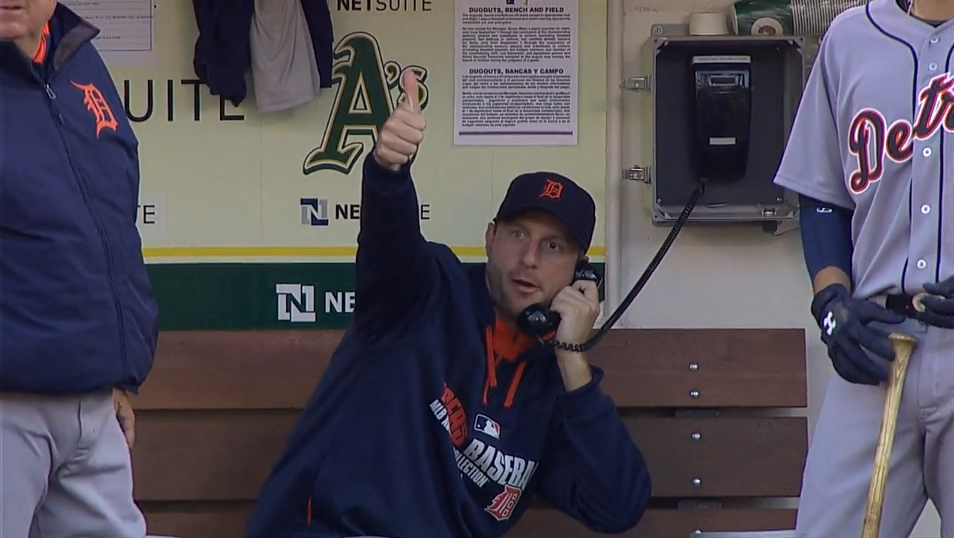
Max probably was my favorite amongst a very likable group of guys playing for the Tigers over this last stretch of seasons. His relief appearance against Oakland in the 2013 playoffs always will be among my most favorite half-innings of baseball.   Continue reading

The Physics of the Bugs Bunny Changeup (via Banknotes Industries)

The phrase “Bugs Bunny changeup” is one that has been evoked by numerous writers wishing to wax poetic about a pitcher’s off-speed offerings. Were the author more inclined to the dispensation of Cistullian prose, he might choose to join them. The present author, however, is not that author, nor is the present post that post. Rather, this post is dedicated to the discussion of the genuine article – the original Bugs Bunny changeup. . . .

Read More

(via Banknotes Industries)

The yard sale at Upton Abbey continues

upton abbey banner

It’s been a while– too long– since the last dispatch from Upton Abbey, but today’s news commands an update.

The Braves’ offseason has been one filled with departures. First, they allowed a number of their free-agent pitchers– Ervin Santana, Kris Medlen, and Brandon Beachy, among others– to walk, along with role player Tommy La Stella (via trade). Then came the biggest move of all: Atlanta traded Jason Heyward, its best player and a fan favorite by virtue of his abilities and history in the Braves’ farm system, to the hated Cardinals for some mystery meat.

Now Justin Upton is departing for San Diego, the latest of the Padres’ marquee offseason acquisitions. In exchange for the younger Upton, who is heading into the last year of his contract, the Braves will receive four minor leaguers, including Max Fried, which sounds like a selection on the Popeye’s menu but actually is just a twenty-year-old pitcher who’s already had Tommy John surgery, and something called Mallex Smith. If you can stomach that sort of writing, here are scouting reports on these prospects.

Braves fans can be forgiven for feeling like they’ve been whipsawed. After competing for a playoff spot two years ago and combining the high-profile acquisition of the Upton brothers with contract extensions for most of their infield, it looked like Atlanta was really building something.

As it turns out, the Braves are building something, but it isn’t a good baseball team. The construction of the new Cobb County stadium– much reviled in these e-pages— is the lens through which these moves can be understood. It now is clear that new general manager John Hart has his marching orders: deliver a team that will be competitive in 2017, the year the new park opens. “And not a moment sooner,” fans might add.

There’s nothing wrong with rebuilding. Every team not named the Yankees and (now) the Dodgers has to do it from time to time. What’s likely to trouble baseball fans in Atlanta is the sudden downshift into rebuilding mode apparently for the sole purpose of optics: the Braves organization wants to unveil its new– and, again, controversial and probably illegal– park with a competitive, if unrecognizable, team on the field. The timing was off. The best way to arrive in 2017 with a good team is to sell off your assets that are valuable in 2014. Expect to see Craig Kimbrel traded during the 2015 season. That’s what’s happening now.

Were the Braves of 2013-14 world-beaters? Obviously not, and the 2014 season exposed flaws that everybody chose to pretend didn’t also exist in 2013. But there was a framework there. The team didn’t cry out to be blown up. My strong suspicion is that it wouldn’t have been, even with a new GM in place, absent the construction of the new park. And that’s a stupid reason to hit the restart button.