When the calendar turned to December, the last thing the Howe family expected was that they’d ever see their dad – Detroit Red Wings legend Gordie Howe – with a hockey stick in his hand again, scoring goals.
When Dr. Murray Howe was first contacted by the San Diego-based Stemedica Cell Technologies, he was like most people, suspicious of what they insisted their stem-cell treatments could do for his 86-year-old father, bed-ridden by a stroke, his mind addled by the onset of dementia.
“He pretty much had one foot in the grave at that point,” Murray Howe said. “He wasn’t really eating. He couldn’t stand under his own power. He wasn’t really talking.
“We just hated to see him in the condition he was in. We were thinking he maybe had two or three weeks to live.
“We just didn’t want him to be lying in a bed for the last three weeks of his life.”
After consulting with brothers Mark and Marty and sister Cathy, the Howes figured what did they have to lose? So they took Gordie from Lubbock, Texas, where he lives with Cathy, to Mexico for the treatments, which have not been approved in North America, and are astonished by the dramatic turnaround in their father’s condition.
“We were just completely blown away by his response (to the treatments),” Murray Howe said. “I’m still astonished.
“I’ve never seen anything like it in medicine.” … Read More
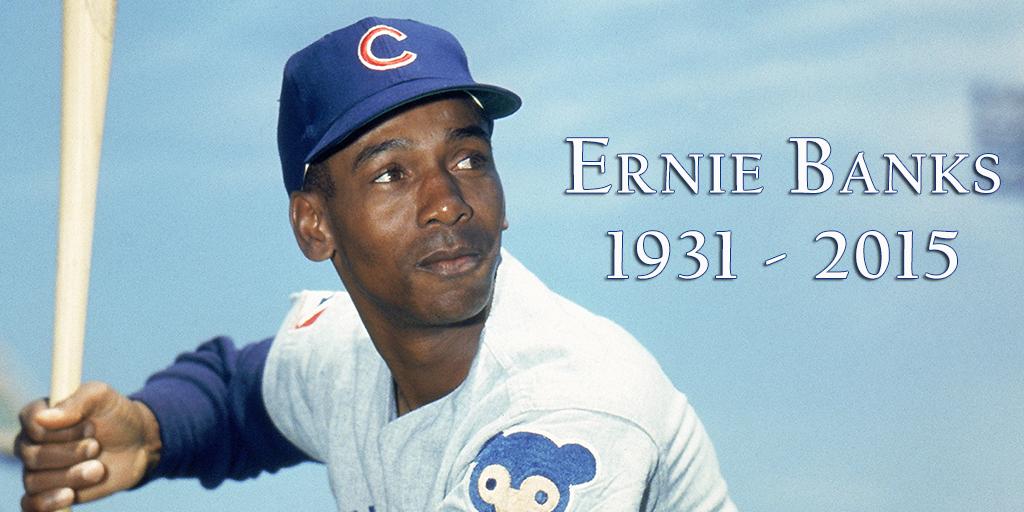
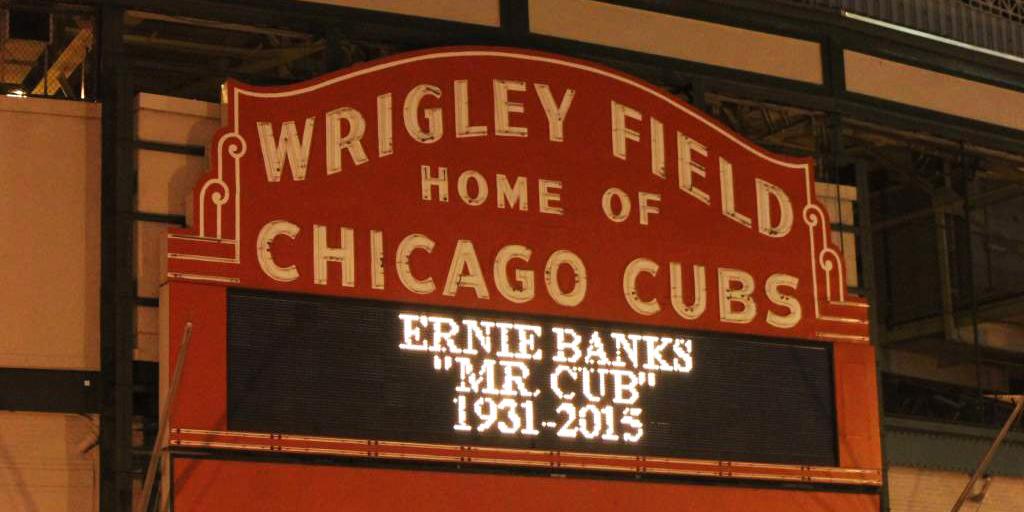
The Cubs finally are on the rise, but if they are to make 2015 their year, they’ll need to do it with Mr. Cub watching from somewhere other than the outfield bleachers.
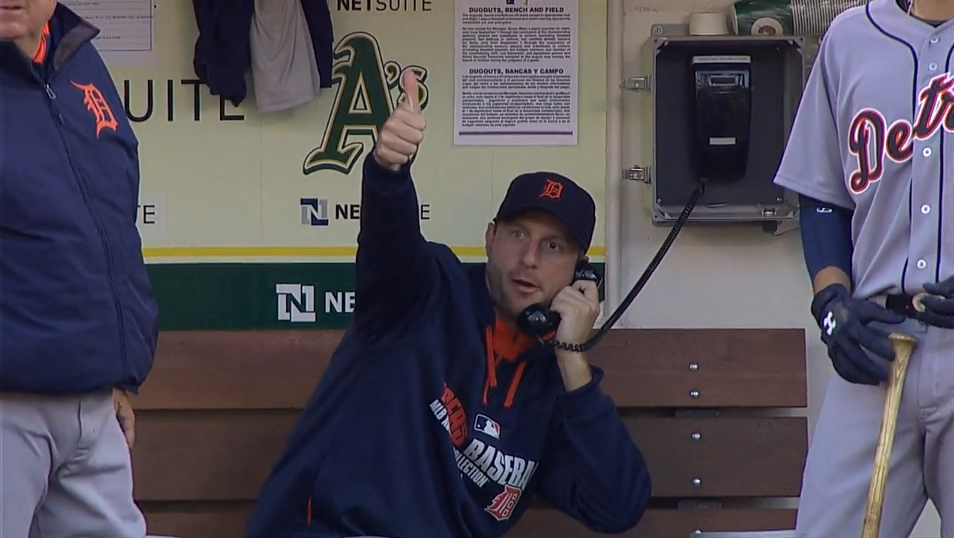
Overnight, the long-anticipated news of this baseball offseason finally broke: The Washington Nationals won the Max Scherzer sweepstakes by signing the former Detroit Tiger to a seven-year, $210 million contract.
Scherzer made news last March when, heading into his final season before becoming a free agent, he turned down the Tigers’ six-year, $144 million offer to stay with the team. That failed (from the team’s perspective) dance fouled up a variety of personnel matters for Detroit. They had already traded Prince Fielder and much, but not all, of his contract to Texas and starter Doug Fister to Washington for figuratively literally nothing all probably in an attempt to clear the books for Scherzer’s new contract. When Scherzer balked at the offer, the team responded by giving Miguel Cabrera all the money. Last season got off to a rough start, and, at least from a business perspective, Scherzer was at the center of it.
Detroit and Nashville used to see a lot of each other when both played in the Western Conference’s stacked central division. They have fewer opportunities to square off since Detroit’s move to the Eastern Conference this year, though, so each meeting takes on greater importance. Continue reading →
Sania Mirza had offended Islam. Such was the judgement of a group of Muslim clerics. It was September of 2005, and Mirza, then 18 years old and the No. 34-ranked tennis player in the world, was on her way to Kolkata, India to play in the Sunfeast Open.
Then came the fatwa. It would be Mirza’s first brush with radical Islam, but not her last.
Issued by Haseeb-ul-hasan Siddiqui, a leading cleric with the little-known Sunni Ulema Board, the religious order demanded that Mirza, a practicing Muslim, stop wearing “indecent” clothes to play tennis.
Instead of standard-issue t-shirts and skirts, the board ruled, she should wear long tunics and headscarves, like a group of female Iranian badminton players. Or else.
“She will be stopped from playing if she doesn’t adhere to it,” Siddiqullah Chowdhry, a cleric with a Kolkata-based Muslim group Jamiat-e-Ulama-e-Hind, told Reuters. The threat was vague, but still alarming. … Read More
Beyond the usual discussion of champions and coaching legacies (quickly: Urban Meyer– three national championships at two different schools, evil; Nick Saban– four national championships at two different schools, merely soulless), one of the central season-in-review topics of conversation, at least in these parts, is whether the SEC is over. Surprisingly but also not surprisingly, Paul Finebaum, voice of the SEC, answers the question implied in the previous sentence in the affirmative. (UPDATE: PFT Commenter emphatically concurs.) Although he’s been developing his position over the course of his daily radio show since roughly the first of the year, he summed up the general point in his appearance on Keith Olbermann’s show just before the national championship game:
The SEC’s bowl record was 7-5. (They were 7-3 last year.) The Pacific Twelve was 6-2 (exclusive of Oregon’s national championship loss), the Big Ten was 5-5 (exclusive of Ohio State’s national championship win), the Big XII was 2-5, and the ACC was 4-7. In other words, among the power five conferences, the SEC had the most teams playing in bowl games and notched the second-best winning percentage.
What seems to concern Finebaum, though, is a sudden lack of championships. That people think the SEC is done for because one of its members hasn’t played for a national championship in a whole year and hasn’t won one in a whole two years is a testament to the never-before-seen degree of dominance the conference produced during the BCS era. Prior to Ohio State’s inaugural CFP championship on Monday, the Big Ten had 1.5 national championships since 1970. The SEC had nine in the BCS era (i.e., since 1998) alone. The ACC had two BCS championships, the ACC had two, the (now-defunct for football purposes) Big East had one, and the then-Pac Ten had one, since vacated.
After the hunt for Mississippi October turned up empty and OSU knocked Alabama out in the semis, the SEC may need to do a little more to earn its seeds next year, but I’m not sure we can say the conference is measurably weaker simply because it failed to produce a national champion this year. If anything, the above suggests the conference is as deep as ever.
Transitioning toward the offseason and the 2015 season, I’ll use this space to remind everyone that Michigan State’s only losses in 2014 were to Ohio State and Oregon. The Spartans face both teams again in 2015, albeit without the aid of their departed defensive coordinator, Pat Narduzzi. Continue reading →
Following a hot-knife-through-butter opening touchdown drive for the Oregon Ducks in last night’s national championship game, the Ohio State Buckeyes took over the game and never relinquished control. OSU running back Ezekiel Elliott averaged 6.8 yards per carry, and it felt like more than that in the second half, when Ohio State called the same counter run play seemingly on every down and repeatedly executed it successfully. Elliott was so hungry for more yards that he tried to eat confetti after the game.
After that initial Oregon drive, the Buckeye defense, lead by coordinator and former OSU head coach Luke Fickell, found the answer, though, and Oregon’s bucket of tricks soon ran dry. Even in the second half, when Oregon’s defense produced a couple of turnovers, Marcus Mariota and the offense couldn’t make any progress.
Oregon accumulated its twenty points with two touchdowns, that opening-drive score and a one-play, seventy-yard TD pass early in the third quarter, and two field goals. Those two field goals, along with a white-flag punt with eight minutes to go in the fourth quarter, felt uncharacteristic of a school that, in recent years, lead the charge of pedal-to-the-metal offense.
In the end, Ohio State ended up knocking off Oregon by nearly as wide a margin– 42-20– as the one by which Oregon defeated Florida State in the semifinal round. Continue reading →
Oregon meets Ohio State tonight in the inaugural College Football Playoff finale, and I’m most excited about the ESPN Megacast, which, in addition to the above, includes an ESPN Radio play-by-play broadcast as well. ESPN gets knocked around plenty for doing things like bowing to the will of “partners” like the NFL at the expense of its own journalistic integrity or hosting a platform for grey-matter destroyers like Skip Bayless, Stephen A. Smith, and Colin Cowherd, but there are times when they leverage their resources to make significant improvements to the fan experience. ESPN introduced the Megacast concept for the final BCS championship game one year ago, and it was such a success that it’s back again this year, bigger and better than ever. In the interim period, other networks have experimented with the concept, loosely defined, in other sports, and I believe this is the way we will enjoy all major sporting events in the near future.
As Sports Illustrated graphically illustrated in this week’s issue, Ohio State and Oregon actually were quite close to each other this year in statistical terms. Initially, there are two reasons to question that apparent parity, however: 1) Oregon plays in the stronger Pacific Twelve conference, while OSU spent much of the season feasting on relatively weaker conference opponents, and 2) Ohio State earned much of its production with quarterbacks not named and thought to be superior to Cardale Jones, the man who will be under center for the Buckeyes tonight. It is right to regard Oregon as the better team in this matchup.
There are a number of factors that cut against Oregon’s edge, however: Continue reading →
The phrase “Bugs Bunny changeup” is one that has been evoked by numerous writers wishing to wax poetic about a pitcher’s off-speed offerings. Were the author more inclined to the dispensation of Cistullian prose, he might choose to join them. The present author, however, is not that author, nor is the present post that post. Rather, this post is dedicated to the discussion of the genuine article – the original Bugs Bunny changeup. . . .
Now Justin Upton is departing for San Diego, the latest of the Padres’ marquee offseason acquisitions. In exchange for the younger Upton, who is heading into the last year of his contract, the Braves will receive four minor leaguers, including Max Fried, which sounds like a selection on the Popeye’s menu but actually is just a twenty-year-old pitcher who’s already had Tommy John surgery, and something called Mallex Smith. If you can stomach that sort of writing, here are scouting reports on these prospects.
Braves fans can be forgiven for feeling like they’ve been whipsawed. After competing for a playoff spot two years ago and combining the high-profile acquisition of the Upton brothers with contract extensions for most of their infield, it looked like Atlanta was really building something.
As it turns out, the Braves are building something, but it isn’t a good baseball team. The construction of the new Cobb County stadium– much reviled in these e-pages— is the lens through which these moves can be understood. It now is clear that new general manager John Hart has his marching orders: deliver a team that will be competitive in 2017, the year the new park opens. “And not a moment sooner,” fans might add.
There’s nothing wrong with rebuilding. Every team not named the Yankees and (now) the Dodgers has to do it from time to time. What’s likely to trouble baseball fans in Atlanta is the sudden downshift into rebuilding mode apparently for the sole purpose of optics: the Braves organization wants to unveil its new– and, again, controversial and probably illegal– park with a competitive, if unrecognizable, team on the field. The timing was off. The best way to arrive in 2017 with a good team is to sell off your assets that are valuable in 2014. Expect to see Craig Kimbrel traded during the 2015 season. That’s what’s happening now.
Were the Braves of 2013-14 world-beaters? Obviously not, and the 2014 season exposed flaws that everybody chose to pretend didn’t also exist in 2013. But there was a framework there. The team didn’t cry out to be blown up. My strong suspicion is that it wouldn’t have been, even with a new GM in place, absent the construction of the new park. And that’s a stupid reason to hit the restart button.
When the calendar turned to December, the last thing the Howe family expected was that they’d ever see their dad – Detroit Red Wings legend Gordie Howe – with a hockey stick in his hand again, scoring goals.

 Sania Mirza had offended Islam. Such was the judgement of a group of Muslim clerics. It was September of 2005, and Mirza, then 18 years old and the No. 34-ranked tennis player in the world, was on her way to Kolkata, India to play in the Sunfeast Open.


