A collaborative effort this week, my latest post for TechGraphs highlights news stories from the worlds of golf, hockey, tennis, football, bionic sports, and more.
The full post is available here.
A collaborative effort this week, my latest post for TechGraphs highlights news stories from the worlds of golf, hockey, tennis, football, bionic sports, and more.
The full post is available here.
The Cobb County Braves stadium deal is safe. The Georgia Supreme Court on Monday unanimously upheld the bond issue for up to $397 million to finance the deal, affirming a ruling by Cobb County Superior Court Judge Robert Leonard.
But the high court also underscored some of the concerns brought up by the three plaintiffs who challenged the deal. In the opinion, written by Justice David Nahmias, the justices said, “We do not discount the concerns” raised in the three appeals “about the wisdom of the stadium project and the commitments Cobb County has made to entice the Braves to move there.”
Cobb County surprised Atlanta in November 2013 with a deal to lure the Braves away from downtown and into a suburban site near Interstates 285 and 75 off Cobb Parkway. Construction is underway on the new SunTrust Park, which will supplant Turner Field.
The court said the residents’ objections to Cobb’s financial incentives “lie predominantly in the realm of public policy entrusted to the county’s elected officials for decision, not in the realm of constitutional or statutory law. And to the extent the concerns affect whether the bond proposal is sound, feasible and reasonable, we defer to the trial court’s findings on those factors, which were supported by evidence in the record.”
The court concluded with a warning. “If the stadium deal does not fulfill the high expectations that have been set for it, there may be a significant political price to pay for those who negotiated and signed onto it,” Nahmias wrote. “But under the law of Georgia as construed in the precedents of this court, we cannot say that the trial court erred in validating the bonds or that the validation process was deficient. Accordingly, we affirm the trial court’s judgment.” … Read More

During Home Run Derby batting practice this evening, the MLB Network crew on the field in Cincinnati snagged an interview with Max Scherzer. At the end of the interview, the on-field crew asked Scherzer to throw back to Dan Plesac in the booth by saying “Hello Chief, it’s Max.” After some brief clarification, an apparently unwitting (or merely unwilling?) Scherzer got the line right, to the great enjoyment of Plesac, who was ready in the booth with his shoe phone to his ear.

Plesac, an established fan of the 1960s detective comedy television program “Get Smart,” has made the reference before, but this appears to be the first time Scherzer has been a willing participant.
As for what, if anything, Scherzer misses about his time in Detroit, the former Tiger offered that he misses being able to make fun of a certain equipment manager who was bad at fantasy football in person, lamenting that now he only can do so by text message. As the host in the second clip linked in the preceding paragraph seemingly correctly infers, Scherzer is much more interested in fantasy football than real great T.V. shows, which is his loss. As demonstrated again tonight, though, Plesac’s love for the bit is the fan’s gain.

It’s July, which means it’s time for MLB teams to sort out their trade-deadline strategy. While fans distract themselves with All-Star festivities, general managers are preparing to execute player transactions in attempts to load up for a playoff run or, in acceptance of their near-term fates as noncontenders, build for the future.
In this context, the Detroit Tigers find themselves in a bit of a bind. After a very strong start, they’ve slid back to a .500 record and have been entrenched in the middle of the AL Central, never too far out of first place, but never really within striking distance. Would a first-place finish from this position be unprecedented? Hardly. Can they claim a fifth-consecutive division title without making a significant trade this summer? Almost certainly not. The Tigers’ record is not a product of underperforming their potential; instead, it likely is a reasonably accurate reflection of this team’s collective ability to date, warts, lower-body injuries, and all.
There is no question that the Tigers should be buyers this month, however thin their wallet may be with currency in the form of desirable prospects. I can’t say with any certainty whom Detroit should acquire this month– starting pitchers Johnny Cueto and Cole Hamels are the most valuable targets on the market, but the sellers’ prices may be too rich for the blood of the Tigers’ farm system– but I do agree with the prevailing preference for bolstering the pitching rotation. Shane Greene‘s floor proved too low to allow the team to continue to wait to see how high his ceiling might go, Alfredo Simon’s regressed to the very average levels we should have expected out of him as a starter, and, with appearances in just four games in 2015, Justin Verlander’s projected resurgence isn’t happening. The return of game-calling extraordinaire Alex Avila to his precarious post behind the plate can’t fix that many holes, and neither, I suspect, can J.D. Martinez‘s unsustainable home-run rate. Detroit needs to find another starter.
The trade-deadline attention on the pitching rotation represents a shift of attention away from their bullpen, the conventionally identified leading source of all of the Tigers’ problems. Continue reading
In the context of yesterday’s Jason Pierre-Paul fireworks/amputation news, my latest post for TechGraphs asks whether the increasing use of wearable sports technology could have negative consequences for athletes, and, further, whether athletes may be effectively powerless to avoid those consequences.
The full post is available here.
A federal district court today upheld the Trademark Trial and Appeal Board’s cancellation of the Redskins mark. A federal statute bars registrations of marks that “may disparage … persons, living or dead, institutions, beliefs, or national symbols, or bring them into contempt, or disrepute”; the district court agreed that the Redskins fell within this prohibition. This decision doesn’t bar the Redskins from using their name, but it does reduce their ability to use trademark law to stop various infringing Redskins gear.
…
The analysis strikes me as unpersuasive: I don’t think that historically trademarks have been used to “communicate[] messages from the [government].” I don’t think “the publicly closely associates [trademarks] with the [government].” And while the government does have and does exercise some control over which trademarks are allowed, I don’t think that this itself can suffice to justify viewpoint discrimination, since in all viewpoint-discriminatory programs (including ones the Court has condemned), the whole dispute was about the fact that the government was trying to exercise control about what speech is allowed.Instead, it seems to me that trademark law is much closer to the programs in which viewpoint discrimination is forbidden . . . . The special government-provided benefits given to trademark owners — or copyright owners — are similarly private speech, despite the government involvement, and the government shouldn’t selectively deny those benefits to speakers who have certain views. … Read More
(via The Volokh Conspiracy)
Last Sunday, Chris Squire, best known as the bass player for the band Yes, lost his battle with leukemia. Although the band underwent periods of lineup changes, you have never heard Yes without Squire, in part because of the value of his prominent playing style, and in part because of his controlling legal interest in the band’s name. As we prepare to honor the birth of a nation stateside, in memory of Squire, we take a moment to turn our ears back to England, to which we are forever tied:
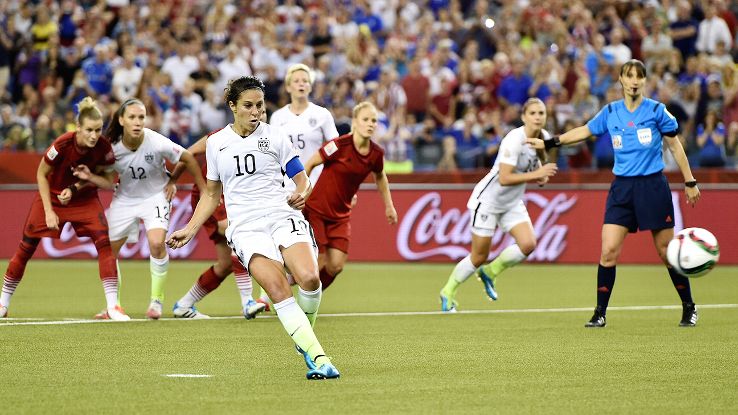
Last night in Montreal, the United States defeated Germany 2-0 to advance to the finals of the 2015 World Cup, which will take place on Sunday and pit the Americans against either England or Japan. Behind goalie Hope Solo and a staunch defensive back line, the team is riding a 513-minute shutout streak, and last night’s win makes the United States the first country to reach four Women’s World Cup finals.
I enjoyed watching the (second half of the) game last night, and I realized I probably enjoy watching the women’s team better than the men’s national team (the only other soccer-watching I do).
Pros:
Con:
In light of the fact that the number of soccer games I’ve watched in the last two years is in the single digits, further comment would overburden my limited experience with the sport. Instead, I’ll just be keeping an eye on Japan and England’s match tonight and rooting for an American victory on Sunday.
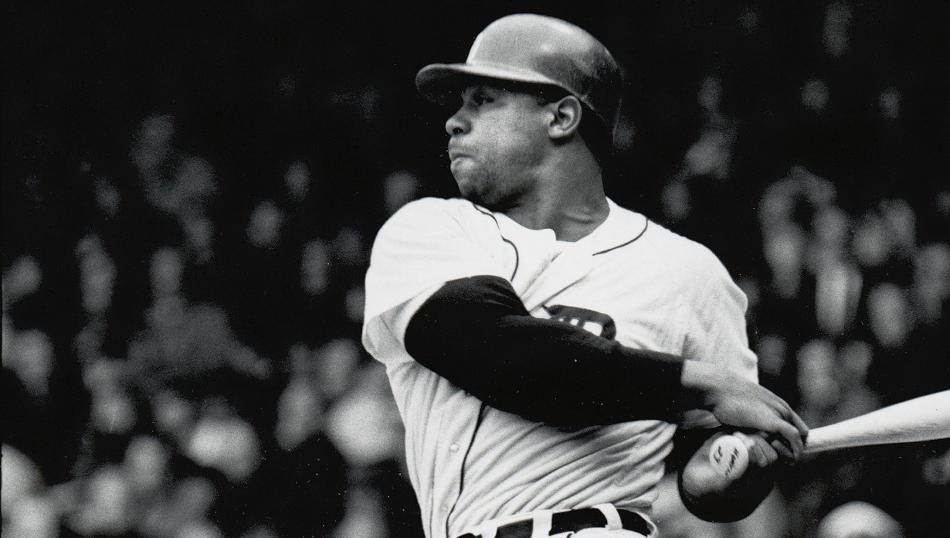
Still, nothing showed Horton’s character more than that July weekend in 1967, when rioting began on a Saturday night in Detroit. The Tigers hosted the New York Yankees for a doubleheader the following afternoon, and Horton stood in left field studying his teammates, the visitors, the fans and something beyond the grandstands at Tiger Stadium.
“I kept seeing black smoke in the distance, and I thought it was just a fire somewhere,” Horton said, and he was correct. It was carnage from the second of what would be five days of rioting that would take 43 lives and wound more than 1,000 other people. When the second game ended, Horton discovered in the clubhouse what was happening. “I was sitting there, getting ready to take a shower,” Horton said, “and then I got to thinking. I just said to myself, ‘Man, I’ve got to go.'” … Read More
(via Sports on Earth)
Wimbledon began today, and my latest post at TechGraphs highlights a number of the digital developments in action surrounding this year’s tournament, including streaming video and a probably far-flung attempt to measure the emotion surrounding the event.
The full post is available here.