Ring tones: Two raconteurs battle to tell the tale of Boom Boom Mancini

Boxing is and remains at the nexus of raw athleticism and raw celebrity, and its literary and musical ties are no less strong today for the decrease in volume of evidence of those ties that reasonably tracks the decrease in the sport’s popularity. I don’t feel any special need to perpetuate the sport except that I would hate to see it go, which is why I try to keep an eye on it here. (Click the “boxing” tag at the bottom of this post for past coverage.)

I was looking forward to reading this interview with Boom Boom Mancini’s latest biographer, and although I did learn some interesting details about the fighter’s life, the interview wasn’t anything special. It did recall an earlier Mancini biographer, though, who gives a crisp, thundering delivery:

(I also think more boxing matches should take place outside.)

Friday Jams: MAKE PLAYS!

Some readers out there might not know that the annual Michigan State-Notre Dame game is a big rivalry game.  In fact, it is probably the biggest game on Sparty’s schedule each year aside from Michigan, and the Domers take it pretty seriously too.  They even play for a megaphone.  How fun is that?  Anyway, the point of this intro is that since it is such a big rivalry, emotions often run high postgame.  That was the case in 2006, when Notre Dame came back to win after trailing by 16 entering the fourth quarter.  This inspired Detroit-area radio host and Michigan State alum Mike Valenti to go on a tirade that will undoubtedly stand for years to come as the greatest approximately 18 minutes in radio history.  Give this one a listen, I can promise you will not regret it.

Also, since I likely won’t write anything else before Sunday, I just want to say that Jim Harbaugh still sucks.  In fact, I think this calls for another Friday Jam.  So go ahead and press play on Gridiron Heroes and weep after you realize that your favorite NFL team will never have a fight song that comes close to being this awesome (unless your favorite team is the Lions, like it should be).

Goin Phishin

Annual Phish summer pilgrimage starts today. After seeing the band in New York, Indiana, and Michigan, it’s time to add Georgia to the list. According to at least one expert, the group has been on a real tear during this second leg of their summer tour, so I have very high hopes.

For live setlist updates and high-quality photos, follow @Phish_FTR. For weakly insightful observations and low-quality photos, you know where to find me.

B-List Band of the Week: Dave Mason

The B-List Band of the Week feature returns today after an extensive hiatus. Again, the point here is not to present second-rate writing about second-rate musicians, but rather to briefly highlight artists existing out of the spotlight, perhaps in an attempt to identify why they are so located. Last time, the focus was on The Outlaws, a group that, on paper, had all the makings of one Lynyrd Skynyrd but failed to materialize as such. Today, it’s on Dave Mason, a guitarist and singer frequently on the fringe of rock and roll’s main scene, particularly in the 1970s, and who continues to perform today.

In recanting Mason’s story, it should first be acknowledged that he’s unlikely to have gained the notoriety that he has without his association with the band Traffic. As it were, Mason actually came to work with Jim Capaldi before either became involved with Steve Winwood, when Mason and Capaldi became members of the same band in the mid-1960s. Mason would meet Winwood when the former became road manager for the latter’s Spencer Davis Group, eventually joining him, Capaldi, and Chris Wood as founding members of Traffic. Mason’s first hit would be the band’s second single, “Hole in My Shoe,” a Harrisonian-Indian pop-psychedelic bit that would eventually appear on the band’s self-titled release in 1968, its second album. Between Traffic’s first album, 1967’s Dear Mr. Fantasy, and Traffic, Mason would leave and rejoin the band, adding another Britpop-style song in “You Can All Join In” and his biggest hit, “Feelin’ Alright?”, to the ’68 effort.

Mason was out of Traffic for the second and final time in 1968, making his way to Los Angeles and into one of the greatest and most embryonically formative touring bands ever recorded, Delaney & Bonnie. Keep reading…

Two girls, one Jam

I’m getting ready to slide out of work and slide into an evening of outdoor music featuring two fine ladies, Mavis Staples and Bonnie Raitt. Here they are in reverse order, Bonnie with one of her biggest hits, and Mavis discussing my favorite album of hers:

_____________________________________________

Previously
Mavis Staples at Hangout Fest
Bonnie Raitt with Bruce Hornsby

Rainy Friday Jam

I’m slowly making my way back here from vacation, and with that and the looming football season ahead, a return to regular content is on its way. The latest ALDLAND Podcast is up on the Podcasts Page There’s also a Lyle Lovett concert report and some Olympic coverage in the can, and I plan to acknowledge the now-passed one-year anniversary of this site’s launch.

One of the many nice parts of vacation was my acquisition of a pile of new music, including three LPs of live music from the Tedeschi Trucks Band. Everybody’s Talkin’ contains a mix of originals and covers. We know that Derek Trucks places a lot of emphasis on the other artists with whom he publicly associates himself, but I still was surprised to see Fred Neil’s “Everybody’s Talkin'” receive such prominent attention, serving as the title track of the triple-live release.

I knew Neil’s song from one of my favorite live releases, Stephen Stills’ Live. There, Stills actually introduces the song by acknowledging Neil by name, which is one of the reasons it always has stuck out to me from among a pretty fluid B/acoustic side.

Here’s Neil’s original, which sets a pace suitable for a rainy Friday afternoon:

Voodoo? Hoodoo? You d[a] Man Blues Jam

In last week’s review of Chicago Blues: The City & The Music, I lamented the exclusion of Hoodoo Man Blues, one of the great Chicago blues albums. Here’s a review by AllMusic’s Bill Dahl:

Hoodoo Man Blues is one of the truly classic blues albums of the 1960s, and one of the first to fully document, in the superior acoustics of a recording studio, the smoky ambience of a night at a West Side nightspot. Junior Wells just set up with his usual cohorts — guitarist Buddy Guy, bassist Jack Myers, and drummer Billy Warren — and proceeded to blow up a storm, bringing an immediacy to “Snatch It Back and Hold It,” “You Don’t Love Me, Baby,” “Chitlins con Carne,” and the rest of the tracks that is absolutely mesmerizing. Widely regarded as one of Wells’ finest achievements, it also became Delmark’s best-selling release of all time. Producer Bob Koester vividly captures the type of grit that Wells brought to the stage. When Wells and his colleagues dig into “Good Morning, Schoolgirl,” “Yonder Wall,” or “We’re Ready,” they sound raw, gutsy, and uninhibited. And while Guy leaves the singing to Wells, he really shines on guitar. Guy, it should be noted, was listed as “Friendly Chap” on Delmark’s original LP version of Hoodoo Man Blues; Delmark thought Guy was under contract to Chess, so they gave him a pseudonym. But by the early ’70s, Guy’s real name was being listed on pressings. This is essential listening for lovers of electric Chicago blues.

Many of the cuts on this album are traditional blues numbers, but Junior Wells and Buddy Guy put their own spin and rhythmic emphasis on these otherwise familiar songs. Today’s Jam is a good example:

(If the title of this post jogged something in you, here‘s what you need.)

________________________________________________________

Related
Book review: Chicago Blues: The City & The Music

Songs of Summer (via Jazz Backstory)

The summer season has provided inspiration for both popular and classical compositions for centuries. One of the earliest examples, circa 1260, is the English Medieval round “Sumer is Icumen In.” The translation from Middle English shows us that thirteenth century songwriters were motivated by the activities of summer. Sly Stone was similarly inspired in his 1969 hit “Hot Fun in the Summertime,” and a verse from each song seamlessly spans the centuries:
From “Sumer is Icumen In”:
            Summer has come in, loudly sing cuckoo
            The seed grows and the meadow blooms and the world springs anew
From “Hot Fun in the Summertime”:
            Boop boopa boop when I want to, out of school
            County fair in the country sun and everything is cool.

Instrumental music has its share of summer songs as well. … Keep Reading

(via Jazz Backstory)

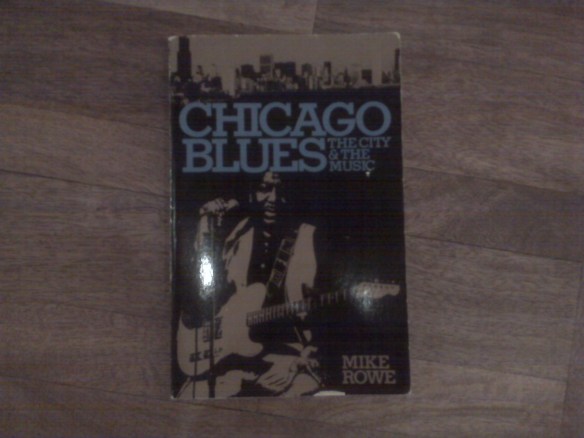
Book review: Chicago Blues: The City & The Music

When strangers would ask me about the book I was reading, Mike Rowe’s Chicago Blues: The City & The Music, I described it as “an urban sexual thriller.” The truth is that no stranger ever asked me about the book I was reading, though, and Chicago Blues is about the farthest thing from a literary thriller of any variety since the Gutenberg Bible was set to print. With a plot arc that parallels the Encyclopedia Britannica, this book plods from the Mississippi cotton fields to Chicago via the Great Migration with an arm’s-length familiarity that conveyed less a lack of information and more a certain physical and conceptual distance from the subject. Amibiguous punctuation on the back cover introduction of the author as “Mike Rowe, a noted British blues historian,” but it confirms enough of the reader’s sense of an approach that is in at least some respect foreign.
Still, there is something to learn from the drumbeat of names and factoids that populate the meat of this book. In particular, I found the personalization of the movement from Mississippi to Chicago by way of West Memphis, AR, to be informative, as was learning about early blues leaders besides Robert Johnson, including Tampa Red and Big Bill Broonzy.

After that, though, Rowe’s methodological approach became all too clear. His portal into the Chicago blues scene was the record labels, probably because they offered the most ready source of documentary evidence of that scene. What they don’t offer much insight into, at least after a while, is the music (to say nothing of the city) itself. Recording histories and trends tell us something, but far from everything, about the music and the musicians. With barely any exception, Chicago Blues offers little insight into the personalities of the musicians, their interactions with their peers and competitors, their individual influences, mentors and habits, or their playing styles. Rowe almost never takes the reader inside a live performance, and when he does, it isn’t for very long.

The ultimate musical achievement: To be featured on a t-shirt worn by Derek Trucks.

As usual with these sorts of things, I have an eye out for mention of some particular item. Sometimes I’m pleasantly surprised, as I was when Keith Richards surpassed even my hopeful expectations by dedicating much type in his autobiography to his relationship with Gram Parsons. Here, though, the situation was much to the contrary, as the main piece of Chicago blues recording I knew and owned heading into reading the book, Junior Wells’ Hoodoo Man Blues, received no mention whatsoever. While the Parsons-Richards connection probably is objectively a bit obscure today and as an element of the Rolling Stones’ 50-year history, Hoodoo Man Blues “is essential listening for lovers of electric Chicago blues,” “one of the truly classic blues albums of the 1960s.” While I learned from Rowe’s history that the 1965 release would have come toward the end of the Chicago blues boom, rather than toward the beginning (as I had thoughtlessly assumed), I was kept waiting for some mention of the recording considered “one of the first to fully document, in the superior acoustics of a recording studio, the smoky ambience [sic] of a night at a West Side[, Chicago] nightspot” that was never to come. Rowe addresses some of the back and forth between Wells and harp rival Little Walter, and Buddy Guy’s (originally credited as “Friendly Chap” due to label conflicts) name appears in the book, but for a text so focused on recording and the record labels, the book’s omission of this recording is more than disappointing.

I wouldn’t not recommend Chicago Blues, but I might not recommend reading it straight through. As a touchstone text, though, it makes a good reference piece to add to your collection.
ALDLAND Podcast

Welcome back, loyal ALDLAND Podcast listeners.  Last night, Chris and I took time out of getting physically and mentally prepared for the premiere of Breaking Bad to record this extra special podcast for you.  So take a listen, you will likely be at most moderately disappointed.

_______________________________

Download the ALDLAND podcast at our Podcasts Page or stream it right here: