Baseball Notes: Save Tonight

baseball notes

It is an accepted reality that, in general, baseball players don’t have much time for their sport’s new and advanced statistics and metrics. In many ways, this resistance makes sense. In the moment, when standing on the mound or in the batter’s box, there’s only so much thought and information a player can hold in his mind while trying to accomplish the task– make or avoid contact between bat and ball, for example– at hand. Players, like experts in other fields, also understandably tend to be skeptical of outsiders’ ability to provide baseball analysis or insight superior to their own. This skepticism is fairly well documented, most obviously when it involves changes that might impair or decrease a player’s value or role in the game, and, more surprisingly, even when new statistical revelations work in a player’s favor. (There certainly are some players, like Jake Lamb and Trevor “Drone Finger” Bauer, who have embraced sabermetric thinking, but it’s reasonable to assume they remain in the minority among their colleagues.)

A primary impetus of baseball’s sabermetric movement has been to encourage the abandonment of certain traditional statistics that, while still largely entrenched in the sport, are understood to be incomplete in important ways or much less meaningful than their use might suggest. Batting average, for example, doesn’t include walks. (Cf. On-base percentage.) RBIs require a player’s teammates to reach base ahead of him. ERA depends, to a significant extent, on a pitcher’s defensive teammates and other factors outside a pitcher’s control. (Cf. defensive-independent pitching statistics like FIP and DRA.) Pitcher wins and saves are artificial, highly circumstantial metrics that, at best, indirectly measure pitching talent.

For years, analysts have pushed baseball to rid itself of these traditional performance measures. There’s a comfort in hanging onto the statistical language with which we grew up as we learned and discussed the game, but that comfort should turn cold upon learning the degree to which these familiar stats obscure what’s really happening on the field.

So long as baseball’s current player-compensation structure remains in place, though, players aren’t likely to stop caring about things like saves; after all, that’s how they’re paid:

screenshot-2016-10-19-at-5-46-24-pm

In the course of discussing whether departures from conventional reliever usage as particularly exhibited in the 2015 and 2016 playoffs are likely to bleed over into upcoming regular season play, FanGraphs’ Craig Edwards explains one reason players are likely to prefer conventional, save-oriented bullpen strategy:

Saves get paid in a big way during arbitration. Only one player without a save, Jared Hughes, received a free-agent-equivalent salary above $6.5 million in arbitration, while all 16 players who’d recorded more than 10 saves received more than Hughes in equivalent salary. Players are more than happy to make more money, so giving more relievers higher salaries and more multi-year deals is openly welcomed. Taking saves away, however, also takes money away from players with less than six years of service time.

Although there are a number of not-uncompelling reasons why players prefer to steer clear of baseball’s newer metrics, Edwards has fingered one of the most forceful. If fans and analysts want to hear players discuss OBP, DRA, and leverage, they ought to channel their persuasive efforts less toward appeals to players’ logical sensibilities (they get it, no doubt) and more toward the education of the MLB salary arbitrators, to whom the players already listen with great attention.

___________________________________________________________________

Previously
Baseball Notes: Current Issues Roundup
Baseball Notes: The In-Game Half Lives of Professional Pitchers
Baseball Notes: Rule Interpretation Unintentionally Shifts Power to Outfielders?
Baseball Notes: Lineup Protection
Baseball Notes: The Crux of the Statistical Biscuit
Baseball Notes: Looking Out for Number One
Baseball Notes: Preview
Farewell, Mr. Cub

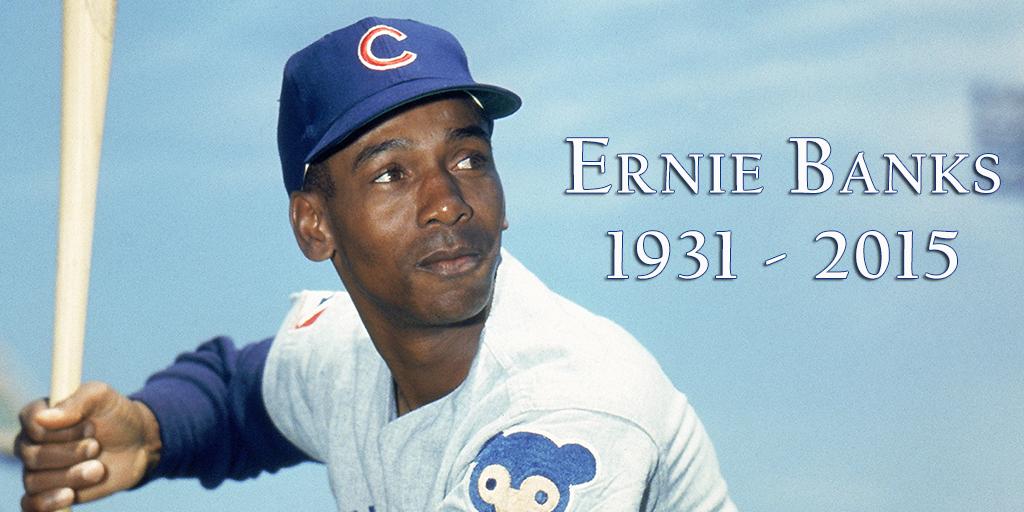
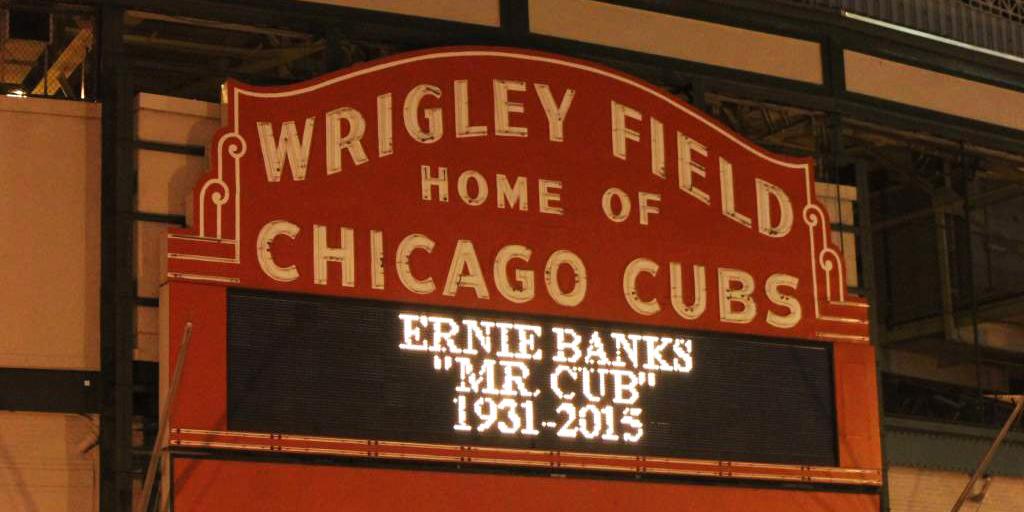
The undeniable truth is that the Chicago Cubs were my first favorite baseball team, and their greatest player, Ernie Banks, died tonight. A sports life later, I caught up with Ernie when he was on the cover of last summer’s Sports Illustrated “Where are they now?” issue, and I was glad I did.

https://twitter.com/OzzieGuillen/status/558839777982570496

The Cubs finally are on the rise, but if they are to make 2015 their year, they’ll need to do it with Mr. Cub watching from somewhere other than the outfield bleachers.

Bronson Arroyo: Songsmith

Last week’s Sports Illustrated closed with a remembrance of Adam Dunn’s career that included the following information:

While hip-hop paeans name-checked Jeter, the only tune anyone ever composed about Dunn came from his Reds teammate, and part-time musician, Bronson Arroyo. The pitcher reworked a song to reflect his friend’s typical late September demeanor. Says Arroyo, “The lyrics were like, ‘I’m Adam Dunn, I’m so glad the season’s over, I just want to get home and be sipping on a beer by the pool and get away from this b.s.'”

Yeah, I don’t know either.

The Sports Illustrated cover curse has relocated to page 34

rachel nichols si

If it feels like the force of the Sports Illustrated cover curse has waned, that’s only because the jinx has relocated to page thirty four. There, in this week’s issue, appeared SI media critic Richard Deitsch’s article, “The Case for…Rachel Nichols,” in which Deitsch praised Nichols’ recent “interrogat[ions]” of Roger Goodell and Floyd Mayweather Jr. “on her eponymous CNN show, Unguarded with Rachel Nichols. As a result,” Deitsch proclaimed in a laudatory proclamation highlighted in the featured pull quotation, “Nichols is at the moment the country’s most impactful and prominent female sports journalist.”

That may have been true “at the moment” Deitsch wrote it, but by the time many SI readers saw it, Nichols’ show had been cancelled. That’s pretty devastating all the way around, and if you’re a fan of either Mississippi State or Ole Miss football, both of which share this week’s SI cover, you may be in for a long day today.

What are they teaching those kids in Miami? LeBron James and non-history

You may have heard that LeBron James will be returning as a member of the Cleveland Cavaliers next season. He announced his decision in a first-person Sports Illustrated post last week.

While sportswriters generally fell about the place in sharing how emotional they thought James’ letter was/made them, no one seems to have examined James’ history recitation with any care. James said that “Miami, for me, has been almost like college for other kids.” Did they offer a course in American Athletic History there? If so, can someone leak us the syllabus?

James goes on to make the following statement (emphasis added):

When I left Cleveland, I was on a mission. I was seeking championships, and we won two. But Miami already knew that feeling. Our city hasn’t had that feeling in a long, long, long time. My goal is still to win as many titles as possible, no question. But what’s most important for me is bringing one trophy back to Northeast Ohio.

Unless James plans to suit up with Johann Von Football and defend Akron’s 1920 APFA title, it’s difficult to understand what James is talking about. The context of that final quoted sentence clearly indicates James is referring to the Larry O’Brien trophy. That’s the trophy they give to the team that wins the NBA championship. The Cleveland Cavaliers have not ever won the NBA championship. They only even made it to the finals once, in 2007, when the eternal Spurs swept James and the Cavs. You can handle the math from here.

Flying Tigers: Actually Mad Max

maxscherzersportsillustratedcover

Detroit starting pitcher Max Scherzer is the subject of this week’s Sports Illustrated cover story. The cover’s headline is “Mad Max’s $144 Million Bet,” and it asks whether Scherzer “Made a Dumb Wager on His Future.” Scherzer, who wanted all contract discussions to end by the time the season started regardless of whether he reached a new agreement with the Tigers, was not happy with the way SI framed the story about him, telling the Free Press he was “frustrated that they chose to put the contract stuff on the cover.” The reigning Cy Young Award winner elaborated:

When they approached us, [Tigers media relations] and I, we specifically asked not to make the story around the contract. … They assured us it wasn’t going to be like that. They chose a different route, and we felt like we were lied to and misled.

I didn’t want it to be about that. I’m a baseball player. I want to talk baseball. It’s frustrating when you get lied to about that.

The magazine responded that they knew Scherzer did not want to discuss his contract situation “in detail,” but stated that they did not make any promises about how they might present that subject in the context of the article.

The article itself (I’ll post a link once it’s available online) really does not spend much time on the contract issue at all. It’s mentioned roughly twice in the feature but never substantively analyzed. On the whole, the article actually is a nice profile of Max at an important stage of his career. It spends far more time discussing his analytical development at Missouri– the importance of the pitch following a 1-1 count, for example– and his development of a curveball with Detroit pitching coach Jeff Jones than it does his employment status and prospects.

The sensationalism of the cover’s “$144 Million Bet” language, described as a “dramatic $144 million offer” on the article’s introductory page, has the look of an editor’s efforts to boost general interest in the piece and the magazine as a whole. That introductory page asks, “What does [Scherzer] know that we don’t?” If that really was the question author Albert Chen was seeking to answer when he interviewed Max and wrote this article, he surely would have spent more time discussing broader matters of age, endurance, and pitcher decline than he did.

Those topics are there, of course, and so is the contract. It would be irresponsible not to include all of that in a Scherzer profile published this week. But Chen’s article doesn’t deliver on the sensational promises of his editor’s cover, and readers should be glad it doesn’t. They’ll learn a lot more about Scherzer in Chen’s article and have a more enjoyable time doing so than they would from a poorly sourced pot-stirring piece more suitable for ESPN First Take.     Continue reading

Amidst the glut of Pete Rose journalism, a new, false dichotomy

IMG-20140317-00078It is not difficult to get an interview with Pete Rose. I’m sorry to pull back the curtain on one of sportswriting’s recent tricks, but it’s true. People assume that Rose, one of sports’ all-time controversial figures, must be a tough get, but the sheer volume of articles published in recent years based on one-on-one interviews with Mr. Hustle belie that assumption. I’m reasonably confident ALDLAND could secure a sit-down interview with Rose. He seemingly wants to talk to anybody and everybody– the more he’s in the news, the more likely a public clamor for MLB to reverse course and allow him to stand for a Hall of Fame vote– and I don’t see anything wrong with that. Think what you want about Rose, but Sparky Anderson made his peace with his former player before he died, so you probably should too.

The latest entry into that glut of Rose prose is a book by Sports Illustrated’s Kostya Kennedy, Pete Rose: An American Dilemma. The March 10 issue of the magazine carries an excerpt, available online here. The magazine cover teases a central– and magazine-cover-worthy– quotation: “Rose has been banished for the incalculable damage he might have done to the foundation of the game. Steroid users are reviled for the damage they actually did.”

Again, I like Rose, I think he belongs in baseball, and I think the PED-user analogy can be illustrative. Few people love an illustrative analogy more than me, probably. But here, Kennedy takes the wind out of his own quotation’s sails, and rightly so. We cannot now be sure of the precise effect Rose’s baseball gambling had on his playing and managing. Kennedy is straightforward about this, and, just paragraphs before his money line, he set out in detail how, even if Rose only bet on his Reds, his managing decisions could have been impaired by his collateral financial interest in the outcome of his team’s games. For example, Kennedy suggests that Rose might have utilized his players to achieve short-term results in a way that impaired long-term effectiveness. A baseball season, to say nothing of a baseball career, is a marathon. Kennedy points out that Rose appeared to overuse a lefty reliever, Rob Murphy, in the 1987 and 1988 seasons. Murphy fairly denied the charge to Kennedy, but the writer still put the following tag on this section, which immediately precedes the highlighted quotation above: “There’s no indication, either through game logs or player testimony, that Rose’s betting influenced how he managed. But it could have. speculation, sure. Evidence? Not yet.”

Kennedy seems to miss the point with his “Rose has been banished for the . . .damage he might have done” line, the point he himself just finished making: that Rose’s gambling damaged the game, but we simply don’t yet have the evidence to show exactly how. The same is true of the PED users, for whom evidence has been perhaps the central issue. How many fewer home runs would Barry Bonds have hit had he not used PEDs? (He did use PEDs, right?) How many fewer hits for finger-waving Rafael Palmeiro? How many fewer strikeouts for Roger Clemens? Why pretend like the damage is any more or less obvious for one or the other?

I hope baseball allows Rose back into the game, to stand for election to the Hall of Fame (a privilege Kennedy notes Bonds and Clemens and their lot enjoy). While MLB Commissioner Bud Selig has hinted at some easing of Rose’s ban, this is an all-or-nothing issue. I’m not sure what, if anything, will tip the scales in Rose’s favor, but a false dichotomy like the one Kennedy presents doesn’t help anyone’s cause on this issue.

Monday Morning PR Quarterback

wwwThe rise of the internet fad, such as it is, presents a challenge to the viability of traditional print media. Nowhere in the world of sports media is that clearer than with Sports Illustrated, the onetime king of the written sports word.

SI hasn’t necessarily shied away from the Worldwide Web, but it hasn’t exactly been fleet-footed about it either. Here‘s the earliest archived version of SI.com, Continue reading

Upton Abbey – Episode 8 – Director’s Commentary

upton abbey banner

I have been running this Upton Abbey feature on this site since April. Brendan helped me with the name, and I created the headline graphic that has accompanied each post. Readers with a careful eye have noticed that that graphic includes B.J., Justin, and Kate Upton.

The folks at Sports Illustrated are dedicated fans of this series, and they’re using the cover of next week’s issue to acknowledge ALDLAND’s influence on their work:

While the SI editors have not expressly acknowledged this site by name, I did begin receiving free copies of the magazine in the mail a few weeks ago, which is good enough for me.

_________________________________________________________

The Braves begin the playoffs tomorrow night, when they host the first game of their divisional series against the Los Angeles Dodgers. L.A. had a great second half to their season, while the Braves spent September looking to regain their rhythm. Another thing they spent September doing was vigorously enforcing baseball’s “unwritten rules.” Brian McCann and Chris Johnson took the lead on this Quixotic initiative, and Braves fans certainly have to hope that their team can drop what is less than a non-issue and return their focus to the task at hand. The Dodgers look to be in a good spot right now, and late-September’s Braves will have a hard time beating them.

_____________________________________________

Previously
Episode 7 – Dessert Seized
Episode 6 – I Can See Clearly Now?
Episode 5 – Guess Who’s Not Coming To Dinner
Episode 4 – A Three-Course Meal
Episode 3 – Hosting Royalty
Episode 2 – Lords of the Mannor
Episode 1 – Beginning, as we must, with Chipper

Fantasy Football vs. Reality, by Nate Jackson

An excerpt from retired NFL player Nate Jackson’s book, Slow Getting Up: A Story of NFL Survival from the Bottom of the Pile, appeared in the September 16, 2013 issue of Sports Illustrated. The following is an excerpt of that excerpt:

Fantasy Football: A player’s statistics are all that matter.

Reality Football: No one knows anyone’s stats, not even their own.

Fantasy Football: NFL players are millionaires.

Reality Football: Many aren’t and never will be.

Fantasy Football: The NFL is all about Pro Bowlers and Hall of Famers. Everyone else is a scrub.

Reality Football: Everyone in the NFL is great at football. It’s not uncommon for a future Hall of Famer to get smoked in practice by a rookie free agent who won’t make the team.

Fantasy Football: It’s a quarterback’s league. Without a “franchise quarterback,” you have no chance. …

Reality Football: The action of the quarterback is determined by the 21 moving bodies around him and the coaches on the sideline. The quarterback is one man with one job. Either he does it well or he does not. After the game he stands naked in line for the shower like everyone else.

Fantasy Football: Roger Goodell is making the game safer. He is removing dangerous head shots from the game through fines and penalties, and has settled on a large fund to help retired players, contributed money to researching head trauma and established the Heads-Up tackling initiative, which teaches kids not to hit with their helmets.

Reality Football: You can’t hit without your head. And no matter how many times you say the word “safe,” football is not safe. It never has been and never will be. That’s the whole point.