My first article for Baseball Prospectus examines the claim that the perceived dearth of free-agent signings in the current MLB offseason is evidence of teams improperly colluding to depress player wages.
The full article is available here.
My first article for Baseball Prospectus examines the claim that the perceived dearth of free-agent signings in the current MLB offseason is evidence of teams improperly colluding to depress player wages.
The full article is available here.

Here are the top sports-related legal stories from the past week:
Sports court is in recess.
Rather than my own attempt at fashioning a nugget of faux-wisdom, the purpose of this Baseball Notes post is to highlight a number of articles posted elsewhere addressing current offseason issues in the sport.
An underappreciated element of the utter sameness that permeates baseball today is the number of executives who came through the commissioner’s office at Major League Baseball either as an intern or early in their careers. Jobs there aren’t just pipelines to teams. They are breeding grounds for the proliferation of commissioner Rob Manfred’s doctrine, honed during two decades as the sport’s chief labor negotiator.
How does it work? Consider the case of Tommy Hunter, the relief pitcher, who late last winter was holding out for a major league contract. On the same day, according to two sources, at least two teams called Hunter offering the exact same deal – an occurrence that in the past might have screamed of collusion. In this case, the sources said, it was likelier a reflection of how teams value players so similarly.
It’s not just the algorithms with minuscule differences that spit out the same numbers. It’s a recognition of how to manipulate the new collective-bargaining agreement. “Clubs are maneuvering to take advantage of the significant salary depressors in the CBA,” one agent said. An example: One large-revenue team telling agents that his team is wary of getting anywhere close to the luxury-tax threshold, lest it be penalized for exceeding it.
“Of course that’s what we’re saying,” the GM said. “We’d be stupid not to.”
On Julio Teheran and what happens when player-value metrics tell different stories:
At Baseball-Reference, Julio Teheran was much worse in 2017. He allowed heaps more runs than he had in 2016. It’s more complicated than that — a ton of work has gone into the calibration — but at a basic level this is what we’re talking about. By bWAR, based on runs allowed adjusted for things like ballpark and the quality of his defense, Teheran was worth 1.6 wins in 2017, close to league average.
. . .
At FanGraphs, Julio Teheran was much worse in 2017, worse even than he was at Baseball-Reference. His strikeout rate went down, his walk rate went up, and he allowed way more home runs. It’s more complicated than that, but at a basic level it’s not much more complicated than that. By fWAR, which is based on a stat (FIP) calculated with those three factors alone, Teheran was worth 1.1 wins. He pitched considerably worse than a league-average starter.
. . .
But now it gets complicated, because at Baseball Prospectus Teheran’s WARP was 3.8, identical to his 3.8 WARP in 2016. He ranked 24th in baseball, ahead of Alex Wood, James Paxton and Robbie Ray. We’ve found a story that says Teheran was actually good.
. . .
Which takes us to a third level of storytelling, observing not just what happened or what should have happened but what should have should have happened.In WARP’s telling, Teheran walked more batters than he did in 2016, but he pitched like somebody who should have walked fewer than he did. He allowed far more home runs than he did in 2016, but he pitched like somebody who should have allowed fewer. Specifically, given his pitch types and pitch locations, he should have beat batters who actually beat him.
. . .
There are those who complain there are multiple WAR models telling us different things about players. Stats are supposed to resolve uncertainty, we figure, not exacerbate it. But these are complicated questions. The worst thing a stat could do it mislead us about how simple baseball is, or about how much we know. It’s not simple. We don’t know all that much.
On the weekend’s big throwback trade between the Dodgers and Braves:
With five players involved, [Matt Kemp, Adrian Gonzalez, Scott Kazmir, Brandon McCarthy, and Charlie Culberson,] this is a big trade for two teams to make. But then, if we’re going to be realistic, this isn’t about the players at all. This is a swap of money, or, more accurately, this is a swap of debt. There is short-term debt, and there is shorter-term debt.
. . .
Gonzalez is already a free agent. The Braves designated him for assignment so fast that it was part of the initial press release. Kemp is unlikely to play a game for the Dodgers, since they’re already looking to flip him, if not drop him outright. Kazmir didn’t pitch in the majors this past season. McCarthy did, but he threw just 92.2 innings. Culberson batted all of 15 times before making the playoff roster because Corey Seager was hurt. All of these players combined for a 2017 WAR of +0.7. It was all thanks to McCarthy, and his 16 adequate starts.
. . .
[H]ere’s how this works. Gonzalez’s 2018 salary belongs to the Braves now. Then his contract is up. The same is true for McCarthy, and the same is true for Kazmir. Culberson does come with some years of team control. The Dodgers are also sending the Braves $4.5 million. And Kemp’s 2018 salary now belongs to the Dodgers. So does Kemp’s 2019 salary. In each year, he’s due $21.5 million.
. . .
[T]his exchange is more or less cash-neutral. That is, neither the Braves nor the Dodgers are taking on the greater obligation. But the Dodgers are spreading it over the next two years, reducing their 2018 payroll figure. The Braves will face the greater short-term burden, and then, come 2019, there will be sweet, sweet freedom. The Braves ditch a future obligation, giving them more financial flexibility a year from now. The Dodgers assume a future obligation, but they, too, will get more financial flexibility a year from now, and beyond, because they likely won’t have to pay the most severe competitive-balance taxes. All they’re worried about is getting the overage penalties to reset. . . . Next offseason, Bryce Harper, for example, is expected to be a free agent. Manny Machado is expected to be a free agent. All sorts of good players are expected to be free agents, and, significantly, Clayton Kershaw could opt out. The Dodgers are presumably planning to spend big, so resetting the overage penalties now could and should eventually save them eight figures. All it requires is one year of dipping down.
___________________________________________________________________
Previously
Baseball Notes: Baseball’s growth spurt, visualized
Baseball Notes: The WAR on Robbie Ray
Baseball Notes: Save Tonight
Baseball Notes: Current Issues Roundup
Baseball Notes: The In-Game Half Lives of Professional Pitchers
Baseball Notes: Rule Interpretation Unintentionally Shifts Power to Outfielders?
Baseball Notes: Lineup Protection
Baseball Notes: The Crux of the Statistical Biscuit
Baseball Notes: Looking Out for Number One
Baseball Notes: Preview

As highlighted in this week’s Sports Law Roundup, Disney and Fox are entering into a doozy of a media deal that involves everything from movies to television shows to streaming platforms to sports programming. This transaction has Star Wars components, Hulu components, and Simpsons components that, rightfully, are making headlines. It would not be surprising, however, if some of the most visible changes for viewers that result from this asset purchase, for which approval by various supervisory entities remains pending, come for consumers of sports media.
In an article out today, Will Leitch sheds some light on how this sale may affect the sports-media landscape: Continue reading
Here are the top sports-related legal stories from the past week:
Sports court is in recess.
I used to write the sports technology roundup at TechGraphs, an internet website that died, and now I am writing the sports law roundup at ALDLAND, an internet website.
Here are the top sports-related legal stories from the past week:
Sports court is in recess.
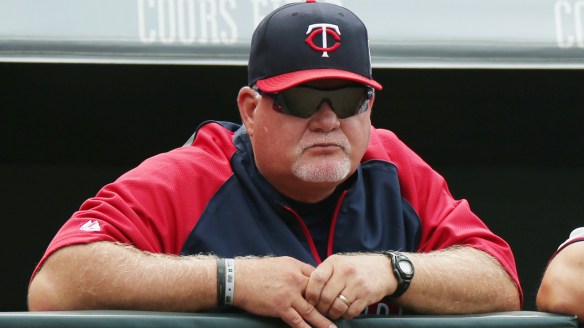
In a move sure to disappoint many, the Detroit Tigers’ managerial search reportedly is over after less than two weeks, and the team appears to be set to announce former Minnesota Twins manager Ron Gardenhire as the replacement for Brad Ausmus. From the article announcing the decision:
What separated Gardenhire from the rest of the pack?
Multiple sources told The Athletic’s Katie Strang that Tigers general manager Al Avila entered the process leaning heavily toward a candidate with previous MLB managerial experience. Gardenhire was seen as a seasoned, battle-tested option in this regard.
In his thirteen-season tenure as the Twins’ skipper, he compiled a .507 winning percentage. In twenty-seven playoff games, he posted a .222 winning percentage. All of those playoff wins came in his first three seasons (2002-2004) with the club, and Minnesota missed the playoffs entirely, and by wide margins, in his final four seasons there (2011-2014).
In my opinion, Gardenhire is the worst sort of “old-school” manager who lacks the ability to adapt to the modern game or develop young talent, two things of critical importance to this Tigers team in 2018 and beyond. He’s Jim Leyland without the edge, wit, or soul (which is to say: not Jim Leyland). He’s Dusty Baker without the success. He’s Clint Hurdle without the willingness to learn and adjust. He’s basically Bryan Price’s dad. Which is to say, not good, and vanilla at best.
To this, Tigers fans should say: “no thank you.” That a coaching search that supposedly began with fifty names ended like this reveals a front office more tone-deaf than previous personnel decisions indicated. Research indicates that managers probably have little impact on game outcomes, and if Gardenhire is coming to Detroit merely to serve as an interim stopgap during the rebuilding process, so be it. If that’s the case, though, why not bring in someone younger and cheaper who at least offers the possibility of growing with the players and the club and developing into a long-term solution? Or, why not promote from within, like the Atlanta Braves did with Brian Snitker? The team’s coaching ranks weren’t short on people “with previous MLB managerial experience,” including Lloyd McClendon and Gene Lamont.
Gardenhire’s not likely to be a detriment to the team, but his hiring feels like a missed opportunity and serves as a reminder that, after the Verlander decade, the Detroit Tigers’ rebuilding process will be a long and difficult one indeed.
https://twitter.com/Starting9/status/920356239049154560
New York Yankees starting pitcher CC Sabathia had a big night last night, giving his team a much-needed six-inning shutout start and a chance to even the series against the Houston Astros in the ALCS. With Sabathia, at age thirty-seven, in the final year of his current contract, Sabathia’s performance made some wonder about his Hall-of-Fame credentials, a subject I attempt to parse in only slightly greater detail in my latest post for Banished to the Pen.
The full post is available here.
The Davy Jones of Major League Baseball, John Jaso, says he plans to retire from the sport and live on his sailboat. As the Deadspin writeup notes, Jaso earned roughly $16.6 million in his nine-year career, during which he spent time with the Pirates, Rays, Mariners, and A’s. Not bad for a catcher-turned-first-baseman/corner-outfielder who amassed 6.1 career WARP.
Of course, it’s also roughly the same amount of money– $16 million– the Detroit Tigers agreed to pay Mike Pelfrey for two seasons of work. Pelfrey now has twelve MLB seasons under his belt and -2.5 career WARP to show for it. His -2.2 WARP in 2016, the first year under his contract with the Tigers, represented the worst season of his career after his rookie year. (Pelfrey rebounded to -0.1 WARP this year for the White Sox, who picked up just $540,000 of the $8 million remaining on his contract when they signed him the first week of the season.)
These are the facts, and, viewed together, they don’t reflect particularly well– though certainly in varying degrees of not-well– on anyone involved with the possible exception of the White Sox, who paid essentially the league-minimum salary for 120 innings of slightly below-replacement level starting and relief pitching. Jaso’s probably holding off on his official retirement announcement until he has an opportunity to meet with Al Avila.
__________________________________________________________
Previously
Catching Fire: Pelf on the shelf
I used to write the sports technology roundup at TechGraphs, an internet website that died, and now I am writing the sports law roundup at ALDLAND, an internet website.
Here are the top sports-related legal stories from the past week:
Sports court is in recess.

