The Atlantic reveals the history of the NCAA and the true genesis of the “student-athlete”

In the October issue of The Atlantic, available now online, Taylor Branch lays out a behind-the-scenes history of the NCAA that is long, thorough, compelling, and readable. Amidst today’s increasingly loud chatter over major sanctions and paying players, Branch’s sober historical profile explains how the modern NCAA came to be, and how its shaky, yet grandiose origins led to the tenuous position it precariously maintains today.

While I try to keep things on the lighter side around here and leave the heavier stuff elsewhere, one bit of the story Branch carefully detailed jumped out at me: the origin of the “student-athlete” concept so foundational to the NCAA’s purported ideals and mission today. From the section of the article called “The Myth of the ‘Student-Athlete'”:

Today, much of the NCAA’s moral authority—indeed much of the justification for its existence—is vested in its claim to protect what it calls the “student-athlete.” The term is meant to conjure the nobility of amateurism, and the precedence of scholarship over athletic endeavor. But the origins of the “student-athlete” lie not in a disinterested ideal but in a sophistic formulation designed, as the sports economist Andrew Zimbalist has written, to help the NCAA in its “fight against workmen’s compensation insurance claims for injured football players.”

“We crafted the term student-athlete,” Walter Byers himself wrote, “and soon it was embedded in all NCAA rules and interpretations.” The term came into play in the 1950s, when the widow of Ray Dennison, who had died from a head injury received while playing football in Colorado for the Fort Lewis A&M Aggies, filed for workmen’s-compensation death benefits. Did his football scholarship make the fatal collision a “work-related” accident? Was he a school employee, like his peers who worked part-time as teaching assistants and bookstore cashiers? Or was he a fluke victim of extracurricular pursuits? Given the hundreds of incapacitating injuries to college athletes each year, the answers to these questions had enormous consequences. The Colorado Supreme Court ultimately agreed with the school’s contention that he was not eligible for benefits, since the college was “not in the football business.”

The term student-athlete was deliberately ambiguous. College players were not students at play (which might understate their athletic obligations), nor were they just athletes in college (which might imply they were professionals). That they were high-performance athletes meant they could be forgiven for not meeting the academic standards of their peers; that they were students meant they did not have to be compensated, ever, for anything more than the cost of their studies. Student-athlete became the NCAA’s signature term, repeated constantly in and out of courtrooms.

Using the “student-athlete” defense, colleges have compiled a string of victories in liability cases.

Branch’s article is revealing and worth spending a slow afternoon reading. It isn’t so much thought-provoking as it is informative, really because there’s just so much of a story to tell. One thought I was left with, though, was whether those fans jumping into the growing throng that seems increasingly driven not only to pay players and establish a football playoff system, but at dismantling the NCAA itself really want (or know) what they’re asking for. There exists an injustice in the current system, no doubt, but the current arrangement is drawing more fans than ever. What college sports fans like, in terms of an end product, is something built on the college sports business empire as it actually exists, not as the NCAA claims to want it to exist, and not as reformers would have it exist. The ripple effects of fundamental change that appear to be on the horizon with increasing inevitability seem unlikely to confine themselves to off-field matters, and they seem to be highly unpredictable. The present arrangement may be untenable, but if you’re enjoying what you’re seeing, you may find your self interest directing you to a position that would preserve this arrangement as long as it can last.

The full article is available here.

Nike strikes out at bats

The PostGame reports:

Every college under contract with Nike has been let out of its commitment to use Nike baseball bats during the upcoming season.

Of the top 20 teams in home runs last season, not a single one used Nike bats.

Major schools such as Southern Cal, Miami, Alabama, Georgia and Kentucky all used Nike bats and experienced major drops in offensive production. Home runs were 20 percent lower and slugging percentages 44 percent lower for those teams than for the rest of the NCAA.

The Tuscaloosa News, which led the reporting on this story, notes the Hurricanes hit an average of more than 93 homers a season between 2008 and 2010, but last season with Nike bats they slammed just 33 dingers. That’s a staggering 64.5 percent drop in power.

Alabama’s power dropped 86.6 percent over the previous three seasons.

Nike is not an equipment company. Nike is an apparel company. They’ve done a good job of convincing us that apparel is just as important to athletic performance (and even recruiting) as equipment, but there’s a reason you don’t see players wearing Louisville Slugger dri-fits. It takes a different set of institutional knowledge and skills to make things like baseball bats. Keep reading…

Ultimate Underdog (via Sports Illustrated)

For Vanderbilt, playing in the nation’s toughest conference is a losing proposition. But the only team in the SEC that everyone can love is 2–0, thanks to a new coach who has turned a blind eye to the past.

For fans, Saban is like a fiftysomething Justin Bieber. It does not seem to bother anybody that he is a reluctant guest of honor. “I think you all know that this is one of my favorite days of the year,” Saban tells reporters sarcastically.

Appearing before the media alongside Saban and the three Tide players, almost for bookkeeping purposes, are the representatives for the Vanderbilt Commodores. They have a new coach, 39-year-old James Franklin, but the same old story. They have finished with a losing record in 27 of the last 28 years. They have not had a winning conference mark since 1982.

Even at a gathering of its conference brothers, Vanderbilt football is an orphan. Forget luring fans to Media Days. Vanderbilt barely draws any media to Media Days. Of the 1,050 credentialed reporters, fewer than 10 are there to cover Vanderbilt.

And yet: This appears to be Franklin’s favorite day of the year. He says, “I believe whoever I meet, they’re a Vanderbilt fan. And if they’re not, by the time we get done talking, they are.” He looks out at a ballroom of skeptical media members and sees opportunity in every seat. … Read More

(via Sports Illustrated)

(HT: @rmccost)

Autumn in ALDLAND?

Football season is in full swing, the U.S. Open is coming to a close, and hurricane season (hopefully) is wrapping up. Summer won’t quite go away, though, as evidenced by the perfect baseball weather (along with its accordant short sleeves, sweat, and sunburns) at yesterday’s Tigers and Twins game in Detroit— more on that game later today. 

There were two week-one blowouts yesterday in the NFL: the Ravens beat the Steelers 35-7 and the Peyton Manning-less Colts succumbed to an Arian Foster-less Houston team 34-7. While the scores were similar, and both outcomes were somewhat surprising, I think everyone believes the Steelers will have a successful season this year. When I saw the Houston-Indy score, though, I said that the Colts might lose every game this year, and I think we’re going to find out just how much Manning meant to that team. Beyond the obvious– his complete control of the offense– Manning also set up the Indianapolis defense. Like a dominant pitcher who can influence other games by allowing his team’s bullpen a day off, Manning kept his defense off the field, thereby allowing them to pursue a more aggressive (and energy-draining) approach when the other side did control the ball.

Fall ball: ALDLAND takes you to the action in Motown

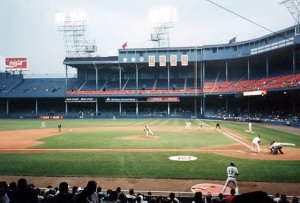
Tiger Stadium (1912-1999)

This afternoon, the Detroit Tigers will try to sweep a three-game set against the Minnesota Twins at Comerica Park in Detroit. I will be on hand for the game, so stay tuned to this site, twitter, and flickr for updates.

Doug Fister is scheduled to start for the Tigers, and although his record on the year is 7-13, he struck out thirteen in his last start (against Cleveland) and took a perfect game into the seventh inning in his previous start (against Kansas City). The Tigers have won ten of their last eleven games, including a current eight-game winning streak, so this should be a fun one.

Short weeks’ Fridays are the best week Fridays

The four-day week that follows a long weekend is like the power play after a long-delayed penalty, and it’s an underappreciated calendaric gift.

To the point: I was going to use John Conlee’s “Friday Night Blues” as this week’s Friday jam, but it turns out he really was a one-hit wonder. Instead, and in reflection of last weekend’s Nashville jaunt, here’s the Station Inn’s own Mashville Brigade with their rendition of Conlee’s hit, with a bonus tease of a planned future Friday jam:

Who first owned the G?

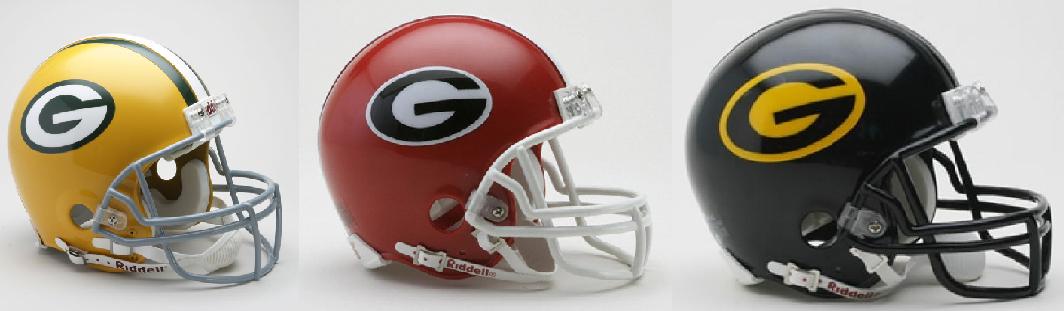
In case you were wondering which team first sported the elongated G the Green Bay Packers are wearing on their helmets tonight, the answer is the Green Bay Packers, who started using it in 1961 and, further according to the internet, trademarked the symbol and licensed it to the University of Georgia in 1964 and Grambling University after that.

The NFL kicks off in less than two hours

Two months ago, who would’ve thought there would be a season this year? Well, probably everybody who actually thought about it. The NFL never was going to cancel this season, just like the NBA won’t miss theirs, and from the fan’s perspective (if not the media’s), the work stoppage wasn’t that big of a deal. But who would’ve thought the 2011 NFL season would look like this?

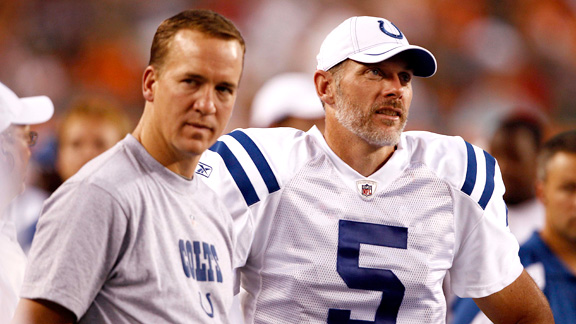
Probably not too many of you. Moreover, if told that, as work resumed and the season approached, Brett Favre was in talks with another NFL team, who would guess that the once-retired, greybearded quarterback starting in week one would be Kerry Collins?

Keep reading…