Don’t make me hate you, Adam Moerder

On Grantland’s sports blog, The Triangle, Adam Moerder has a post today entitled “Don’t Make Me Hate You, Detroit Tigers.” The uninspired text-drop begins with what actually is a fairly bold proposition: “More than any other MLB team, the Tigers probably have the best odds of becoming a dynasty this decade.” Moerder quickly confesses, “that thought sickened me.”

Why? A Tigers’ dynasty, Moerder asserts, “would be a pretty boring, hollow accomplishment.” Because? Because Moerder thinks it’s likely, apparently. In other words, Moerder is bored (sickened!) by his own prediction. If he feels that way, why strike ahead with the rest of his post? Because sickening boredom is only a stop on the path to hate.

Most sports critics hate teams with neglectful, disinterested owners who do little more than bleed their organizations for cash and refuse to lift a finger towards making an effort to build a winning franchize. The trouble here is that Moerder hates the Tigers because their owner actually is willing to spend money to improve his team. He fashions the Tigers some sort of Rust-Belt Yankees who bought a lineup of expensive free agents (“there’s no elegance”!), except that that doesn’t accurately describe how this team was built, and he even admits that their farm system is strong (a weak one is hate-worthy in his book).

“Boring” also cannot be a characteristic of a team that includes Justin Verlander, Prince Fielder, Jose Valverde, Miguel Cabrera, postseason heroes like Don Kelly, almost-eccentrics like Delmon Young (and, by association, his more borderline-eccentric brother, Dimitri Young), and an entertaining manager in Jim Leyland.

Moerder closes by repeating that he finds the Tigers’ “roster be constructed in an aesthetically unpleasing manner.” He hinted at this earlier, when he wrote that “the current infield defense, led by Miguel Cabrera at third (!), is an abomination.” It’s an abomination because it reminds Moerder of an “amoral” (not immoral, mind you) video game world he experienced two decades ago. That’s really what he wrote. A virtual lack of elegance indeed. He also said the roster “reeks of hubris,” and only one of those words has been accurately used to describe Detroit in the last thirty years. Please.

Since Moerder can’t even express what he doesn’t like, attempting to figure out what he does like probably is pretty fruitless, but it seems to have something to do with an environment of baseball competition in which a down-and-out team can get its act together by building a winner through development of its prospects and some “elegant” acquisitions. If he were to grab a little perspective, he might really like this team out of Detroit.

What a waste of e-space.

____________________________________

While reading Moerder’s non-sequitorious and circularly inconclusive chaff, Justin Verlander and the Tigers blew a 2-0 shutout in the top of the ninth against the D-Rays and suffered their first loss of the season in a game in which former Tiger Fernando Rodney got the save, so you can bet that I didn’t proofread the above, although I’d contend I still put more thought into it than Moerder put into his bit.

On baseball and energy policy: A word (and a graph) from the Chicago School

Matt McKenna writes:

What, then, is the primary driver of rising fuel costs? The answer, while difficult to capitalize on politically, is straightforward: since 1998, the major contributor to the price of gas has been an aging Chicago White Sox ball club.

To illustrate the point, the price of gas has increased from $1.44 in 1998 to $3.94 in 2012, adjusted for March 2012 dollars. The consistency of this rise allows us to rule out the political affiliation, environmental consciousness, and personal motives of any particular President as a major factor. Clearly, something bigger is at work here.

Over that same time period, the Chicago White Sox have gone from a roster with an average age of 26.85 years in 1998 to 29.2 years in 2011. Due to the White Sox’ magnificent World Series victory in 2005, concern over rising ages and fuel costs didn’t particularly bother White Sox fans or Americans at large. And nor should they have–Jerry Reinsdorf and Kenny Williams built some good teams between 2000 and 2005.

Since 2005, however, White Sox teams have been generally mediocre and, as the chart above indicates, getting older. By 2010, the average age of a White Sox player was up to 29.8 years, the fourth highest in the league. By 2011, the price of gas skyrocketed to $3.58 a gallon, and it is no wonder why.

The baffling twist to the Republican’s faux fusillade on Barack Obama’s energy policy is that they actually do have a legitimate gripe on the subject, even if they fail to recognize it: Barack Obama is the world’s most powerful White Sox fan. Obama was an Illinois State Senator between 1997 and 2004 and a U.S. Senator between 2005 and 2008. It was during these years that, while occasionally punctuated with brilliant baseball, the White Sox slowly aged and created the situation in which we currently find ourselves mired: $3.94 for a gallon of gas. One would think Obama might have held enough sway with Chicago’s sports leadership to successfully warn them of the national impact of signing big contracts for aging, once-great players.

The bottom line is that the President has little influence on gas prices outside of calling up Chicago White Sox General Manager Kenny Williams and demanding fresh talent be brought up from the minors to replace the pricey veterans on the current squad. Looking at the 2012 roster, perhaps that’s exactly what has happened–the average age for a White Sox player has dropped to 28.1 years. That may not be a big enough decrease to bring the price of oil down to a reasonable level, but it certainly can’t hurt. And who knows, maybe these young guys can hit.

Read the full piece at McSweeney’s, which also includes this graph:

Keep these trends in mind when the team from Motor City travels to face off against the White Sox in a three-game set this weekend.

The DET Offensive: Tigers open 2012 season with Sawks sweep

Alex Avila’s walk-off homer– the first for any player in the young 2012 season– in the bottom of the eleventh last night secured a season-opening sweep of the Boston Red Sox in a series that showcased the promised strength of this Tigers team and cast some light on potential weaknesses going forward.

This lineup was expected to be absurdly productive on offense, and they did not disappoint. Over the three games, they scored 26 runs on 39 hits, including seven home runs, all from Miguel Cabrera, Prince Fielder, and Avila.

The first game, a 3-2 victory, showed that ace Justin Verlander was picking up where he left off last season, a dangerous prospect for opponents considering the fact that the pitcher won the Cy Young and the MVP last year. Batting pyrotechnics in the second game, a 10-0 win, were enough to momentarily overshadow the injury to Detroit’s #2 starter, Doug Fister, who landed on the 15-day DL because he sprained a side muscle after pitching 3 2/3 shutout innings. This injury could damper the Tigers’ hot start, especially since the team has “no clue” who Fister’s replacement will be. Manager Jim Leyland:

I have no idea who’s going to start. Don’t ask. Please. I have no clue. I just told you that. There’s no sense searching. I have no clue. I keep trying to make that perfectly clear to you guys, but you keep searching. I have no clue who’s going to start. None.

… We will have a starter at the appropriate time. Who it is, I have no clue. None. Next question

That’s concerning. Number 3 starter Max Scherzer got shelled in the third game, and relievers Jose Valverde and Joaquin Benoit looked a bit out of sorts in this first series. If Tiger fans learned anything from 2006, it’s that a baseball team that lives by its offense can die by it when the hits evaporate. This team is both more balanced and more offensively powerful than that team, which made it to the World Series, and last year’s squad, but it looks like they are going to be able to need to bat their way through some early defensive hiccups to continue this strong start. If any team can do it, though, it’s this one.

For now, it feels really great to open the season in grand winning fashion, sweep a media darling like Boston, and find out that the grand slugging experiment, initiated when the Tigers signed Fielder to replace the injured Victor Martinez, really works.

We Almost Lost This Jam

What’s that you want? Some new music in this spot with a sports connection and a socially conscious tilt? Fine. Here’s a brand-new video from a current act named after a NASCAR driver that’s hip to sports and modern rock.

Bdoyk turned me onto these guys, and I’m becoming a fan of their personality as much as their music. Their new video, which features scenes from the city they call home, actually is a reworking of a 1977 Gil Scott-Heron bit described as follows:

The most popular cut on the album, “We Almost Lost Detroit,” which shares its title with the John G. Fuller book published in 1975, recounts the story of the nuclear meltdown at the Fermi Atomic Power Plant near Monroe, MI, in 1966. This song was also contributed to the No Nukes concert and album in 1980.

The Tigers almost lost their season opener against Bdoyk’s Bosox yesterday when the perfect-in-2011 Jose Valverde blew his first save opportunity of the 2012 season and ensured that reigning MVP-Cy-Young-winner Justin Verlander didn’t get his first opening-day win in his fifth consecutive attempt, but the home team pulled out the victory in a Gamecast-hindered bottom of the ninth by scoring on the much-touted (be real: what in Boston sports isn’t “much-touted”?) Alfredo Aceves.

Paragraph-long sentences. Hyphens. The Jam:

MLB season preview

Yesterday marked the beginning of baseball season, as the Seattle Mariners stomped on the Oakland Athletics 3-1 (a 2 run win qualifies as a big win for Seattle). For most teams, however, opening day does not occur until next Thursday. That’s good, because it gave me time to write this preview. Be warned: MS Paint is heavily involved, because I have been playing a lot of Draw Something lately and I want to keep drawing stuff. Also, I just need something to set this apart from any number of other MLB previews out there. Accordingly, after every division preview you will find a graphical representation of the division. I’ll go through division by division and then say who I think will take the various wild cards.  Keep reading…

Hollywood Nights: A Magic Haiku

Last night, an ownership group led by Magic Johnson bought the Los Angeles Dodgers for $2 billion, the largest amount ever paid for a sports franchise.

____________________________________________________

Magic bought the Dodgers.
Media really loves this story,
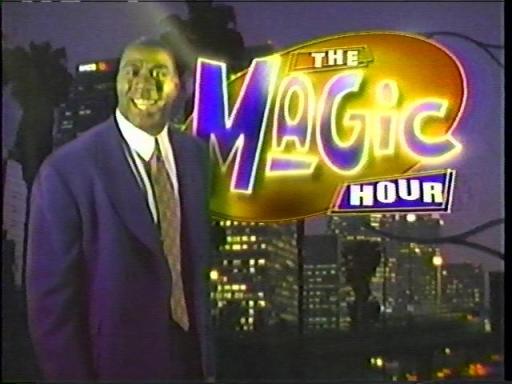
forgets The Magic Hour.

____________________________________________________

Previously:
Hollywood Nights: Z-Bo and Bishop Don The Magic Juan

Instant replay, wildcard expansion, and Bud Selig’s incentives

This month, Major League Baseball announced that it would be expanding its playoff field, starting with the upcoming season, by adding a second wild card team in each league. While Twitter-age baseball analysts roundly lamented the slow speed with which this announcement came, it looks like a lightning strike when compared to another still-waiting reform, instant replay, that has been “under advisement” for years.

I have written at length elsewhere about the importance of examining incentives to understand the real rationale behind a situation with apparently conflicting internal logic. Over at The Classical, Matthew Callan suggests that such an analysis will prove illuminating in the case of MLB reforms:

Bud Selig is arguably the most transformative figure in the history of Major League Baseball. Under his watch, we’ve seen more changes to the way the game is played and consumed than at any other time in the sport’s history.

Twenty years ago, adding a play-in game at the end of the regular season would have sent the game’s gatekeepers into fits of great weeping and gnashing of teeth. In the Bud Selig era, we hear nary a peep.

It’s telling that whenever he discusses the matter, Selig always makes sure to note how much the teams request it. “Clubs really want it,” he said back in January. “I don’t think I’ve ever seen an issue that the clubs want more than to have the extra wild card this year.”

When Selig says “clubs,” he means the owners thereof, all of whom stand to benefit from a play-in game and the additional revenue attended thereto. Selig has never shed his owner’s mentality, and every change under his watch as commissioner . . . has been allowed for the primary purpose of lining owners’ pocketbooks.

This isn’t to fault Selig, necessarily—if he didn’t grow the game’s revenues, he’d be a bad commissioner. However, it does explain the one change he remains reluctant to make: instant replay. The new wild card will become a reality mere months after the subject was first broached; in contrast, four years after being instituted on a trial basis, instant replay remains limited exclusively to home run reviews. Which are, as any baseball fan knows, sacred unto actual magic.

That the man who has dramatically altered baseball in countless ways suddenly becomes a traditionalist whenever instant replay is mentioned is hard to explain through anything but his owner’s mentality. His other innovations have the immediate, tangible benefit of increased revenue, but instant replay has none. In fact, it would cost the league money to equip every stadium with extra cameras and review booths and training the umpires to use them.

The lesson? Don’t hold your breath if you’re waiting for instant replay review of MLB’s decision to move the Expos to Washington, D.C. instead of contracting the Milwaukee Brewers.

The promise of Prince Fielder

I largely agree with Bpbrady and Dave Cameron’s assessment of the deal that made Prince Fielder a member of the team where his (estranged) father was a star. In short, the Tigers had better win a World Series by 2015. Fielder probably is close to his athletic peak right now, but, like Albert Pujols’ new contract with the Angels, compensation doesn’t really ramp up until later.
 
 
ESPN Insider’s Dan Szymborski ran a ZiPS projection for Fielder over the next nine years. Here’s what he got:


Those early-contract numbers might look a tad pessimistic, given that Fielder’s coming off a season in which he hit .299/.415/.566 and racked up 5.5 wins above replacement, and he’s just 27 years old, smack in the middle of the age range in which the average major leaguer peaks. But for all of his power potential, Fielder is a lousy defender who’ll play either first base (poorly) or DH. That means he needs to hit a metric ton to yield as much value as a player manning a premium defensive position, like Matt Kemp or even Dustin Pedroia.

The national media reaction to this deal has been pretty tepid: it just seems to be too rich for their liking, and Fielder won’t earn the money over the full length of the nine-year contract. My buddy in Detroit called me a couple hours after the announcement to discuss, and he said that the reaction over there largely remained in the surprised shock stages. The general consensus that’s filtering through there and nationally, though, is that the Tigers over-leveraged their future in an attempt to win now, making this a bad deal for the Tigers. In other words, this 275 lb (and growing), $214 million (and escalating) albatross will be such a drag on the team that it will clearly outweigh any short-term benefits.

This, of course, is hardly the case. The theory underlying the criticism of the Fielder deal is that teams should be trying to build perennial contenders, and that this contract will prevent Detroit from becoming a perennial contender once Fielder’s decline sets in. The second clause in the preceding sentence may be true and probably will be, but the first contains a cliché assumption that is bogus. Maybe it isn’t totally bogus. If some success is good, more success is better, and once having found success, it’s nice to sustain that success. The problem is that very few teams have been able to maintain top-level success. (Moreover, there was no indication that the 2011 Tigers were calibrated such that they were on the cusp of a decade of dominance or anything like that.) Detroit hasn’t won the World Series since 1984, and the years since then have been pretty thin. If presented with the option of winning the division in each of the next three seasons, winning one championship during that period, and then sinking back into mediocrity for the next six years, I can’t imagine a single Tiger fan saying no. Our willingness to forego future stability for an increased chance of present gains has put our economy in the stink pot, but when it comes to baseball, and a team that hasn’t won it all in 28 years, the strategy makes perfect sense.

Keep reading…

Prince Fielder Signs with the Tigers

Dave Cameron, whose work I know and respect from the blog USS Mariner recently wrote this post in reaction to the Prince Fielder signing.  The gist of the article is that while Fielder’s signing, coupled with the presence of Miguel Cabrera and Justin Verlander, will make the Tigers a contender for the next few years, the Tigers will eventually regret the contract as Fielder ages and presumably declines in skill.
 
Dave Cameron’s a sharp guy, and he can do the math and work out the expected value of Fielder in wins to the Tigers next year and over the lifetime of his contract a lot better than I can, so there’s not a whole lot I have to say that he doesn’t say in that article.  In the end, I think the Tigers are incredibly short sighted for pulling the trigger on Fielder.  For this deal to be worth it, the Tigers absolutely must bring Detroit its first World Series championship since 1984.  A few division titles and a pennant or two aren’t going to cut it when Fielder is 34 and stumbling around the base paths en route to hitting 18 homers and batting .260.  The contract might not even be worth it if the Tigers win a World Series, if it cripples the franchise for years to come afterward (although given the fact that Detroit is now paying three players 20 million dollars per year, that is not a given).
 
Furthermore, as Cameron notes, this money could be better spent elsewhere.  He suggests Jose Reyes and CJ Wilson as two players the Tigers could have signed for around the same money they gave to Fielder.  Having watched the Tigers a lot in the past year, I felt they needed a pitcher more than they needed another impact bat going into 2012.  Obviously the injury to DH/C Victor Martinez changed that, however if I was Tigers GM Dave Dombrowksi, I would have signed a pitcher CJ Wilson and traded a couple prospects for a bat like Houston’s Carlos Lee who could help Detroit in 2012 without hindering the franchise’s ability to contend later on.  But perhaps there’s a reason that he is a major league GM and I am not.  I guess we’ll find out in four or five years.