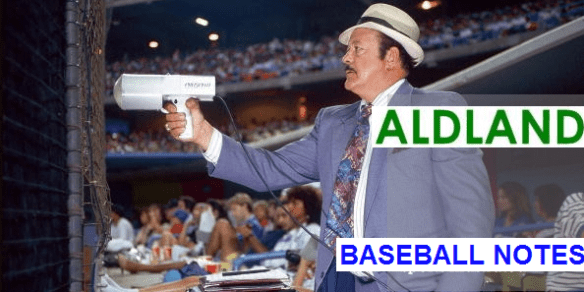
 Involving myself in this project meant developing a more intentional approach to sports observation, fandom, criticism, and so forth. Part of this was reorienting my daily and weekly routines in order to make myself more aware of important events happening in the sporting world, and to place myself in a position to be paying attention to those spaces in which something important to that world might be about to happen. My immersion has not been total, of course. (See, for example, this site’s golf coverage.) Some aspects have required greater degrees of adjustment. Others have felt much more natural, though, and baseball probably leads that group. Living within the terrestrial boundaries of the Detroit Tigers Radio Network (and Fox Sports Detroit) during the 2012 season meant keeping up with that team on a near-daily basis was as easy as passively listening to the radio at night after work. Baseball is a sport that, for the fans, is designed to seep into the mind over time, a multi-month titration of awareness appreciable only at some distance. Writing a serial feature on that team only made sense. Having an outlet for accumulated observations and possible trends, interesting stories about the team, and personal experiences was a way to process a 162-game season, memorialize those little thoughts, observations, and experiences, and generally gain that periodic distance from the game’s day-to-day that makes caring about the next game and the next series fun.
Listening and watching that much baseball– 2013 finds me tracking two teams in particular– is a great way to learn about the game, and I wanted to carve a space outside of those individual team features to write about some of baseball’s details and strategy. I would like this to be more about aspects of the sport that are hiding in plain sight: readily observable things that, when noticed, would enhance any fan’s enjoyment, rather than complex statistical analyses, although I do have some thoughts on the unavoidable topic of sabermetrics. My thought is that each post in the series would look at one isolated issue or nugget of information that, when I happened across it, felt like something I was really glad to know as a slightly more than casual baseball fan and something other, more casual fans might appreciate knowing too.
Here’s a brief, very simple example to kick things off:
Continue reading →




 ALDLAND