Inside the Wild Rise of the Savannah Bananas: Baseball’s New Billion-Dollar Brand (via Huddle Up)

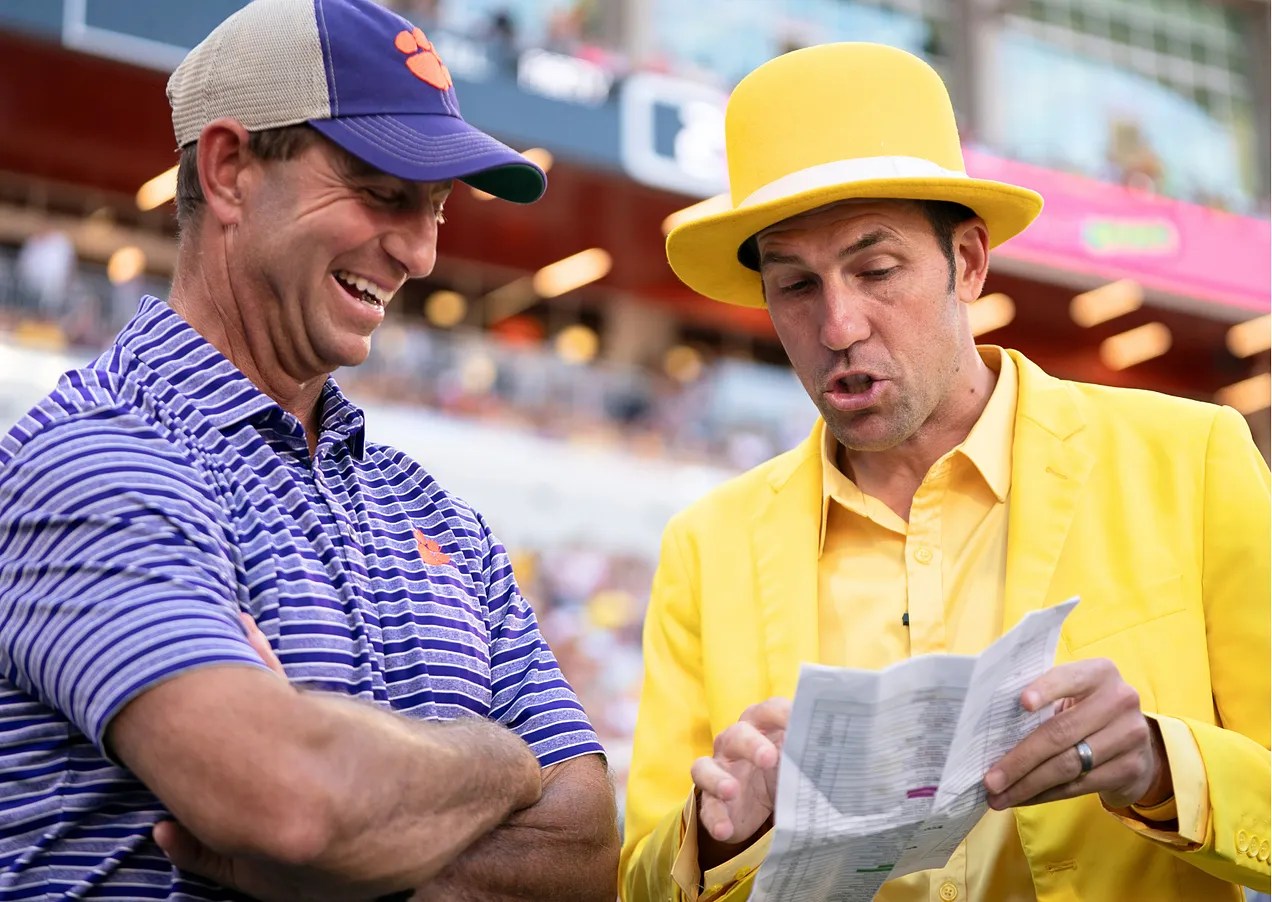
The Savannah Bananas broke their all-time attendance record on Saturday night when a sold-out crowd of 81,000 people attended their game in Clemson’s football stadium.

The game itself was unlike anything these people had ever seen. Broadcast nationally on ESPN2, the temporary 190-foot short porch in left field led to nearly a dozen home runs. There were mid-game dances and a halftime performance. Outfielders caught flyballs while doing backflips, and fans even helped record outs by catching foul balls.

The Bananas have become baseball’s most polarizing team. Purists will tell you that it’s a silly idea, despite over a million fans showing up to their games last year.

Others say that the Bananas are re-running the same playbook that made the Harlem Globetrotters so popular in the 20th century. But all of these people are wrong. The Bananas are something entirely different. … Read More

(via Huddle Up)

The Day Negro Leagues Statistics Met the Major League Record Books (via FanGraphs)

Wednesday was a big day in the world of baseball statistics, albeit a more complicated one than initially met the eye. Major League Baseball announced that the statistics from seven professional Negro Leagues that operated between 1920 and 1948 have been officially incorporated into its database, the culmination of a process that began in late 2020, when MLB first recognized those circuits as major leagues. As a result, several longstanding seasonal and career records have officially changed hands; most prominently, Josh Gibson is now the single-season and all-time leader in batting average, slugging percentage, and OPS, supplanting Ty Cobb and Babe Ruth in the career categories. The grassroots effort to gather and audit the Negro Leagues data that made this possible has been laudable, even heroic. But while we can never do enough to acknowledge the greatness of Gibson and his peers — along with the pain and injustice that they faced both within and outside baseball — MLB’s announcement and the dissemination of the news did strike a few sour notes, just as in 2020.

However, it is a mistake to confuse the provenance of those accomplishments as belonging to MLB, and a misrepresentation to brand them as such. As Shakeia Taylor, deputy senior content editor at the Chicago Tribune and host of the historically-focused Society for American Baseball Research podcast Ballpark Figures, succinctly put it on Twitter, “[I]t’s really as simple as referring to [Gibson] as the ‘major-league record holder’ instead of ‘MLB record holder.’ These two things are not the same.”

Again, the semantics and nuances matter. Major League Baseball (MLB) in its capitalized form refers to the corporate and legal entity created by the 2000 merger of the AL and NL, whose histories and records it subsumed, warts and all. Part of their histories is the systemic racism that excluded Black players within the aforementioned period, and so it should not simply call those records part of MLB, for however well-intentioned the gesture may be.

Within MLB’s [press] release [announcing the statistical incorporation], the supportive statements of Thorn, Lester, fellow Negro Leagues expert Phil Dixon, and Elias Sports Bureau senior historian John Labombarda are thankfully much better [than that of MLB Commissioner Rob Manfred, which elided MLB’s legacy in the creation of the Negro Leagues and the nuance of the maintenance of their statistics], with Thorn pointedly acknowledging the league’s role in creating the difficult conditions in the first place. “Shortened Negro League schedules, interspersed with revenue-raising exhibition games, were born of MLB’s exclusionary practices,” he said in the statement. “To deny the best Black players of the era their rightful place among all-time leaders would be a double penalty.”

The designation of certain bygone leagues as majors dates back to 1968, when commissioner William Eckert convened a Special Baseball Records Committee. The effort was in conjunction with publisher Macmillan’s effort to produce The Baseball Encyclopedia, which would encompass the official statistics of the major leagues. The five-man committee, which consisted of officials from the AL and NL, the commissioner’s office, the Hall of Fame, and the BBWAA — all of them white men, of course — announced in 1969 that it had determined that the AL, NL and four defunct leagues met the criteria to be considered majors[.]

The SBRC did not formally consider the Negro Leagues, with Joe Reichler, who represented the commissioner’s office, saying in 1987 that the leagues’ lack of exhaustive statistics and volume of games against local semipro teams factored into that decision. “They played against whoever they could for whatever they could get,” he told Gannett News Service. “You can’t blame them, but they never played more than 40 or 50 league games. It just wasn’t a cohesive league. There’s no way that you could say they were major league.”

The year 2020 served as a catalyst for a reconsideration of that exclusion. . . . In December of that year, MLB announced its “long overdue” decision to bestow official recognition of seven professional Negro Leagues from the 1920–1948 period as major leagues. … Read More

(via FanGraphs)

One Man’s Treasure: Checking in on the top MLB prospects of 2019

Cleaning out a bookshelf I discovered a pristine copy of the Baseball Prospectus Futures Guide from 2019, a book the primary function of which is to present BP’s top 101 MLB prospects headed into the 2019 season. By the time I started reading the book (last month), the guys on that list had had five seasons in which to make good, bad, or otherwise on their cited major-league potential. How well did they– and the BP prospect team– actually perform? I now can tell you with some ease and endeavor to do so here. What follows is my present-day annotation of that 2019 list, featuring total WARP from 2019 to present and quotations from BP’s own commentary then and now (i.e., prior to the 2023 season, since the public continues to await the arrival of the 2024 BP Annual).

Quick hits:

  • Biggest miss? Probably Jo Adell (#2, -0.9 WARP) or Forrest Whitley (#7, yet to debut).
  • Biggest diss? Maybe Sean Murphy (#95, 11.9 WARP, by far the lowest-ranked prospect to earn an all-star nod) or Sandy Alcantara (#73, 15.5 WARP, with a Cy Young award and two all-star appearances).
  • Of the 101 prospects listed, five (Whitley, Seuly Matias (#52), Victor Victor Mesa (#71, just ahead of Alcantara), Kristian Robinson (#100), and Kyler Murray (#101, yes that Kyler Murray) have not appeared in the majors, and eleven others have been worse than replacement level. On the other side, eleven have accumulated double-digit WARP.
  • Distribution of double-digit WARPers (and sub-2 WARP or N/A) [and free agents/not debuted]:
    • 1-10: 2 (4) [1]
    • 11-20: 3 (3) [1]
    • 21-30: 1 (5) [2]
    • 31-40: 1 (3) [0]
    • 41-50: 1 (5) [2]
    • 51-60: 1 (4) [2]
    • 61-70: 0 (7) [1]
    • 71-80: 1 (6) [2]
    • 81-90: 0 (7) [3]
    • 91-101: 1 (10) [3]

Does this suggest you’re as likely to land on a star as a black hole no matter where you place on this list? The graph at the end of this post generally illustrates that there’s more value in the top half, though still a good mix of mediocrity and land mines. And the second half isn’t exactly dumpster diving, even if name recognition does fall off precipitously.

What should someone holding BP’s 2024 prospect list learn from this exercise? Your time may be better spent elsewhere. If you insist on reading it, maybe stop once you hit the sixties, and don’t parse the individual player comments. For better or worse, even the professionals can’t really predict baseball.

Continue reading

The Bonds of Enshrinement: Assessing the Cooperstown Case for David Ortiz in 2022

https://img.bleacherreport.net/img/images/photos/001/750/956/72350937_crop_exact.jpg?w=1200&h=1200&q=75

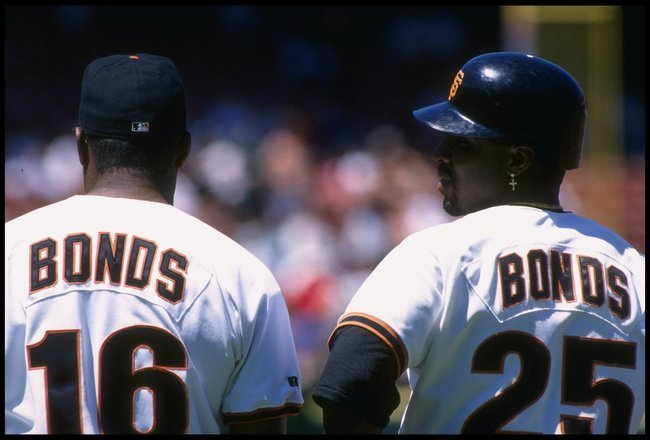
Earlier this year,* the Baseball of Fame passed an important threshold when Barry Bonds, Roger Clemens, Curt Schilling, and Sammy Sosa each failed to secure enough votes for induction on their final year of eligibility (though various mop-up committees conceivably could change that in the future). In other news, David Ortiz was the only player selected for enshrinement this year.

In the last decade or so, the online baseball social media community quickly and unequivocally came to the unwavering position that Bonds, allegations of wrongdoing cast far aside, belongs in the Hall.** Thus, any voter supporting Bonds’ candidacy is cheered as righteous, upstanding, intelligent, and correct, while any failing to do so is an unreconstructed hypocrite. These are the only choices.

As ever with these types of social movements, it isn’t enough to be “right.” One also must be right for the right reason. Naturally, herein also enters the discussion of identifying the right reason why the wrong are wrong, perhaps so as to convert them– upon receipt of the crowd’s wise and agreed critique– to being right. Among collective critics, few devices are more seductive than the critique of hypocrisy, and boy are people who think Barry Bonds should be in the baseball hall of fame enjoying lobbing that one over the barricade right now. As enunciated by ESPN baseball “insider” and live Pinocchio puppet Jeff Passan, the latest version goes like this:

The campaign against Bonds has spanned decades, involving malfunctions of fairness and logic across multiple cohorts.

It starts with Major League Baseball and the blind eye that Selig, his office and the game’s stewards turned toward PEDs. From there came the duplicity of riding the steroid wave to new stadiums and bigger TV deals and exponential revenue growth while villainaizing the very people who fueled it.

Perhaps ironically (irony being another too-seductive critique of people expressing themselves on the internet), Passan’s thesis contains some infirmities of its own. Omission of serial commas aside, this seems to ignore the fact that the Hall is a separate entity outside the control of MLB or its commissioner or club owners. Everyone associated with baseball profited from the game’s pharmacologically driven power boom in the second half of the 1990s, and MLB still recognizes all of the statistics posted and records broken during that era. Among “the game’s stewards,” only the Hall and its electors have tried to deny laudatory acknowledgement of this period of history. The facts do not support this particular smear of Bud Selig and the owners. (Readers of this site know there are plenty of other, valid reasons to engage in that exercise.)

Nor does logic support the levying of this charge. If player-driven, sport-wide profits should buoy the Hall-of-Fame credentials of the players whose playing pushed those profits, then, the theory would hold, more support is due to, for example, the non-serving players who kept the game going during World War II (vis-a-vis the likes of Hank Greenberg and Ted Williams) or the white players, simply by virtue of their skin color, during MLB racial segregation. As concerns this sort of parsing, the far-better and generally accepted view is, of course, the opposite. Passan’s contention is too reductive to be useful.

And none of this explains Ortiz’s first-ballot election. Let’s start with the case for Ortiz. He spent most of a twenty-season career with a very successful, popular, and visible Boston Red Sox team for which he was one of the most visible faces. He was a key part of three World Series championships, adding World Series and ALCS MVP honors to ten regular-season All-Star nods. Ortiz didn’t experience much of a decline as he aged, and, as a forty-year-old, he led all of baseball in slugging (.620), OPS (1.021), and doubles (48) in 2016, his final season. He finished with 2,472 hits and 541 home runs.

I don’t lose much sleep over first-ballot (or unanimous first-ballot) status; you’re either in or you’re out. That said, here, in reverse-chronological order, is the full list of players selected for enshrinement on their respective first ballot:

Continue reading

The week in baseball: 5/29/20

From the Increasingly Nocturnal Department:

  • I haven’t found it productive to follow each new return-to-play proposal for the 2020 MLB season in any detail, but public comments this week, especially from players including Max Scherzer and Trevor Bauer, point to the very real possibility that the entire season will be lost due to the inability of the owners and players union to reach final agreement on compensation arrangements for the year in a timely fashion. Although the calendar has not yet turned to June, keep in mind that any start date will need to allow a few weeks of lead time for pitchers to stretch out, undoubtedly among other logistical considerations. The viability of opening the season on or around July 4 therefore depends on what the sides can accomplish over the next couple of days. Of all the things Rob Manfred has screwed up in his brief tenure as MLB commissioner, the complete absence of baseball in America should other professional sports leagues find a workable way to resume action would be one of the most memorable.
  • Meanwhile, the 2020 Minor League Baseball season effectively ended this week following the announcement that teams are expected to begin releasing large numbers of players shortly. Some big-league veterans, including  Shin-Soo Choo and David Price, have responded by personally paying all of the monthly stipends of all of the minor-league players in their respective teams’ farm systems.
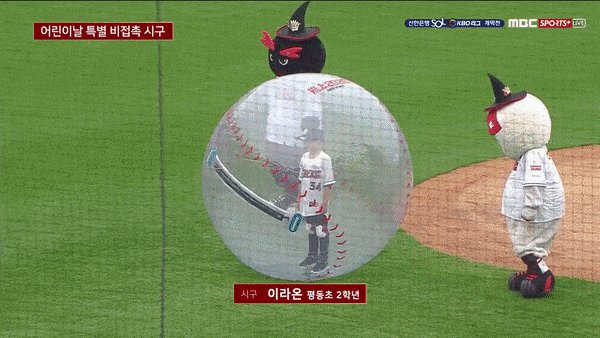
  • The CPBL and KBO seasons are rolling on, though a recent resurgence of COVID-19 cases in South Korea has delayed the expected return of fans to KBO stadiums. ESPN is continuing live telecasts of KBO games, often with replays on ESPN2 later in the afternoon.
  • The KBO appears to have earned itself a celebrity fan in Adam Eget, trusty sidekick of Norm Macdonald and manager of the world-famous Comedy Store, who said as much on a recent episode of Joe Rogan’s podcast. He and Rogan also discussed cults and Charles Manson, so listen at your own risk.
  • Japan’s professional baseball league, NPB, announced it will begin an abridged season on June 19. The prevalent view among those who follow foreign baseball leagues is that the NPB is the league that comes closest to MLB in terms of talent and competition levels.
  • Facing the prospect of the complete absence of MLB games this year, I’ve begun posting daily baseball landmarks that occurred on that day on ALDLAND’s twitter account. Some from the past week in baseball history, courtesy of Baseball-Reference:
    • 1904 – Dan McGann steals 5 bases in a game, a feat not matched until 1974 (Davey Lopes) or bested until 1991 (Otis Nixon, 6)
    • 1922 – Supreme Court rules baseball not subject to antitrust laws, interstate commerce regulations
    • 1925 – Ty Cobb becomes 1st major leaguer with 1,000 career extra-base hits
    • 1946 – 1st night game at Yankee Stadium
    • 1951 – Willie Mays gets his first hit, a home run off Warren Spahn
    • 1952 – Hank Aaron, then of the Indianapolis Clowns, signs with the Boston Braves
    • 1959 – Harvey Haddix pitches 12 perfect innings before an error in the 13th (“there has been never been anything like it” = more from Tim Kurkjian here)
    • 1968 – NL announces expansion to Montreal, San Diego
    • 1969 – Aaron becomes the 3rd major leaguer with 500 HR + 500 2B
    • 1976 – Pitcher Joe Niekro, batting against his brother, Phil, hit his only career home run
    • 1990 – Rickey Henderson breaks Cobb’s AL stolen-base record
    • 2004 – Mariano Rivera earns his 300th save
    • 2006 – Barry Bonds hits 715th home run
    • 2008 – Pedro Martinez, making a Single-A rehab start for the St. Lucie Mets, faces off against then-recent top pick David Price, then of the Vero Beach Devil Rays. (Price and the Rays win 2-0.) Price would make his major-league debut that September and his World-Series debut the following month.
    • 2010 – Roy Halladay pitches perfect game (ESPN is airing a program on Halladay’s career and too-short life tonight at 7:00 pm)
  • Whatever happens with baseball this year, Jersey City brewery Departed Soles wants to make sure we don’t forget what happened in the recent past, and therefore has released its newest beer, Trash Can Banger, a session IPA with a can styled after the Houston Astros’ classic 1970s uniforms. For now, the beer only is available in New Jersey.
  • Did the Astros cheat? They did. Did their cheating help? Running counter both to fan intuition and the public statements on the subject by professional pitchers, the latest look at that question, like some others before it, concludes that it didn’t make much of a difference. This analysis also set out to test Commissioner Manfred’s assertion that the Astros didn’t cheat in 2019 but was unable to reach a conclusion on that question.

The week in “sports”: 5/8/20

EXOzzNaVcAEJMlI

From the Be The Ball, Danny Department:

The week in “sports”: 4/17/20

cpbl

From the Got To Admit It’s Getting Better Department:

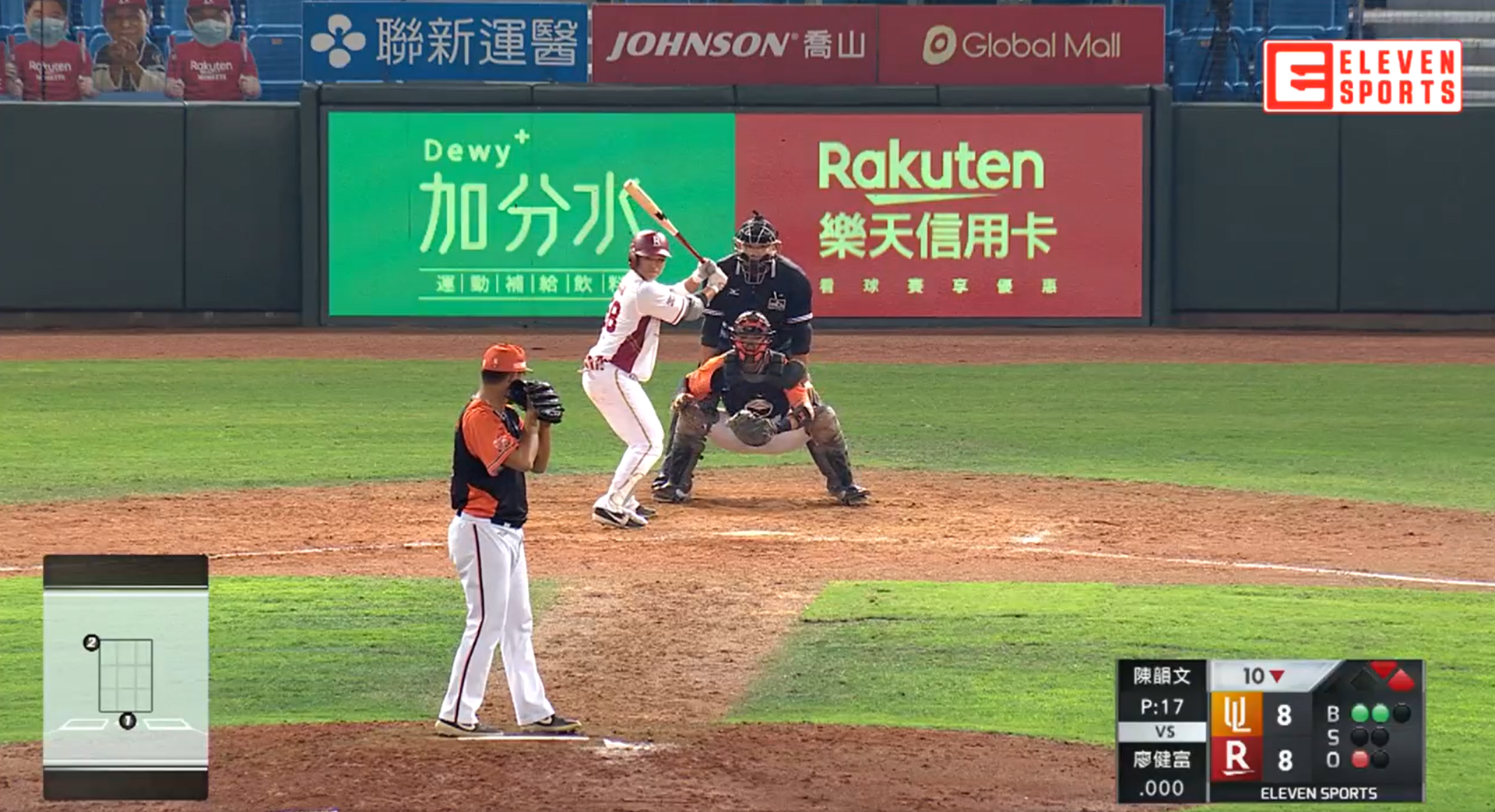
  • Baseball is back: Not everything is getting better, of course, and circumstances are continuing to worsen for many people in many places. For sports fans this week, though, a bright spot was the return of professional, regular-season baseball. The Chinese Professional Baseball League opened Wednesday with the Rakuten Monkeys hosting the Unilions (more formally, it seems, the Uni-President 7-Eleven Lions) in Taiwan. The game went into extra innings and ended with a walk-off solo homer (sound on) in the bottom of the twelfth to claim the Monkeys’ first win under their current ownership. The game was played without fans in attendance, though you may recall the Monkeys as the team that promised to fill its stands during this period with robot supporters (one of whom I think can be seen in the game-winning clip linked above). All that considered, the game atmosphere didn’t feel too sterile, though, thanks to the home team’s decision to pump in plenty of crowd noise, including chants and songs. There also were a half-dozen Monkeys cheerleaders– surely real humans and not Westworld hosts, even if we recently learned (minor spoiler alert) that the Delos park property likely is located on an island in the South China Sea– on hand to celebrate their team’s on-field achievements. It remains to be seen whether the CBPL season will continue as planned (the Monkeys beat the Lions again on Thursday, 15-3 in regulation) and eventually phase fans back into the seats, and it of course is unknown how they will respond if a player tests positive for COVID-19. For now, though, we can enjoy this moment of quasi-normalcy and hope that it proves to be a model adaptable to sports in North America in the near future.
  • iNoLongerRacing: After shouting a racial slur at one of his teammates during a live stream of a virtual race, NASCAR driver Kyle Larson quickly lost most of his sponsors, and then his team dumped him.
  • Golf’s precolonial study: We’re not talking literary criticism, although I tend to be critical of placing any weight on announcements that postponed events will occur at a future date given how little we understand about this disease and instead prefer to wait until the events, like the above-referenced CPBL opening day, actually happen. Even so, I am linking to this story about the PGA’s current plan to resume its season– sans fans– at Colonial Country Club on June 8 for three reasons: 1) of all sports, golf seems the easiest to play while abiding social-distancing requirements; 2) I needed another bullet point for this post; and 3) we’re still pretty desperate for good news in the sports world.
  • Eat your betting ticket: Major League Eating (a thing!) is taking wagers on a special eating contest featuring Joey Chestnut and seven other top competitive eaters to raise money for charity, and that’s all I feel like writing about that.
  • Coming up/Odd Odds: Speaking of large men and gambling, I’d wager it’s more likely than not that Marshawn Lynch is back on Westworld this Sunday, though I’ll leave it to the professional bookmakers to set the line on the number of different emotions that will be illuminated on his sweatshirt during the episode.

cpbl fans

MLB 2020 Opening Day

On what everyone knows should be Opening Day for the 2020 Major League Baseball season, we instead find ourselves in a world without sports. Indeed, it’s a world without public assembly of any corporeal sort. The main thing now is to do everything we can to make sure we, our family members and friends, and everyone in our communities remain healthy. That’s the only way to hasten a return to the sort of joyful living we’re supposed to be doing on days like this.

To help encourage everyone to stay in and as a sort of balm for the pains of the present reality, MLB has planned a slate of “Opening Day at Home” programming that includes a full-game stream of one memorable game– a victory, naturally– from each team beginning at 9:00 am on MLB’s social media platforms, plus a slew of classic Opening Day games starting at 1:00 pm on MLB Network.

Stay safe and be responsible, everyone.

It appears I hold an unpopular baseball opinion

pujols 2000 rbi

It isn’t just your imagination, Detroit Tigers fans. It doesn’t seem to matter whether either team is having a good year or a bad year: the Angels always destroy the Tigers. Since 2009, no American League team has a better winning percentage against the Tigers than the Angels.* Even by those dismal standards, Thursday’s game was a noteworthy one:


Albert Pujols’ home run on Thursday, a solo shot off Ryan Carpenter in the sixth inning, carried significance beyond that fun fact, of course, in that it represented both Pujols’ two-thousandth RBI and a reminder that you earn an RBI when you bat in yourself. Whatever you think of the import of RBIs, you have to admit it’s impressive that Pujols now is one of only five players ever, and three since 1920, to accumulate that many of them. It’s a testament, however circumstantial, to a long and successful career.

The home-run ball in question landed in the seats beyond left field and was nabbed by a twenty-something guy who had just arrived at the park for the day game with his friends and, I initially thought from the replay editing, immediately traded the ball for a Little Caesar’s Hot’n’Ready and a Two Hearted. An in-game interview on the telecast soon revealed that my initial thought was incorrect: he still had the ball and, in fact, planned to keep it. He has a relative who is a big fan of the Cardinals, Pujols’ prior team, and he was thinking about giving it to him. As news spread about the benchmark RBI, the story of the man who had the ball in question– and, more specifically, the fact that he had expressed an initial intention to retain that ball– got swept up along with it. Reports indicated that the man had turned down an offer to meet with Pujols, presumably for the purpose of exchanging the ball for other memorabilia. The Tigers’ public-relations team even instigated itself into the conversation in a strange and seemingly unsolicited fashion. The man subsequently reported that team officials treated him poorly. Two themes appeared to prevail in the public response: 1) the man should have taken the meeting with Pujols to exchange the ball for other items and 2) his refusal to do so would have financial consequences for him.   Continue reading

Relief from Short Relief

Not as in “relief from the burden of Short Relief.” More like, “Short Relief (at last) has provided me with some relief.” I am not a longtime reader of Baseball Prospectus the way people who truly have been reading Baseball Prospectus for a really long time casually sprinkle into digitally transmitted discourse that they are longtime readers of Baseball Prospectus, but I have been reading the site and its books and listening to its podcasts (or one of its former ones, anyway) for a few years and been a subscriber for the balance of that time, and there is no question that the temperament of the site has changed over that period. Since I have been reading it, BP has had three editors in chief: Ben Lindbergh, Sam Miller, and Aaron Gleeman, its current EIC. Miller, who now writes for ESPN, has a special ability to blend the analytical and the fanciful (perhaps “imaginative” is a better word here, though neither are correct), and, by outward appearances, was a judicious editor. Baseball writers everywhere usually write about baseball in serious tones, and Miller was a breath of fresh air in that regard, if a measured one. It’s good to have outlets for some less serious baseball writing too. There used to be a whole place for that, which was called NotGraphs, but it was terminated in late 2014. Thereafter, its postmortal spirit attempted to eke out a living in an even smaller corner of the web, but that campaign fizzled.

cart

Although Miller never misses an opportunity to credit Lindbergh, his former boss and collaborator on two significant projects who now writes for The Ringer, as the best in the business, it’s clear to me that it’s Miller who’s left a large impression on the current version of BP. Whimsy, once reserved for sidebar Hitlist one-liners and a few player comments in the BP Annual (not unusually in the form of a Simpsons reference) everyone raced to find, photograph, and post on social media web platform Twitter.com, now abounds– or, at least, attempts to abound– at BP. This is most visible in the daily Short Relief feature, a sort of refugee camp for NotGraphs alums that typically contains three essays, or maybe poems, or maybe just a picture, that effort and imitate toward the odd and purposefully absurd.

I never read every article every day at BP, but I’ve never read less of BP than I do now (Russell Carleton and Rob Mains are musts), and I very rarely read Short Relief. I’m glad a major baseball site is trying to resurrect NotGraphs, but this take just doesn’t hit me right. It feels very unessential and often forced. A lot of that probably is due to the fact that it’s an everyday feature. It’s really hard to produce original funny, silly, odd, unusual, quirky, or whatever content on a daily deadline. It’s even harder when you’re limited to one subject area. (There’s also the part about the site’s budget crunch and probably a little friction with the idea that BP is contributing resources to Short Relief rather than its core mission, which seems noticeably understaffed at the moment.)

zcsxziuylxt1sawu9zbv

BUT. Today’s Short Relief I did read, and today’s Short Relief I did like. It contains two entries, both by former owners of NG bylines. The first, from David G. Temple, once the managing editor of TechGraphs, is a short story about baseball cards that really hit home for me, as anyone reading ALDLAND’s late-night tweets earlier this week might have guessed. The second, from Short Relief coordinator Patrick Dubuque, provides a short metacommentary on the Short Relief series itself that resonated in light of the above-transcribed feelings about the Short Relief series. I commend both to your screen and eyes.