Midseason Monday

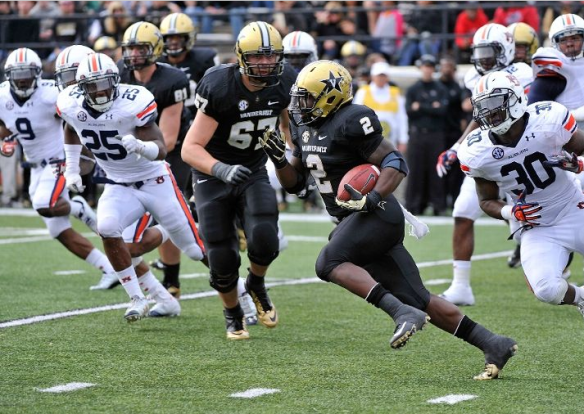
We’re into the meat of the 2012 football season with heavy games for most teams from here on out. It’s also the time when teams’ reputations for the year become solidified. One such team is Auburn, which fell to 1-6 on the season, 0-5 in conference with a 17-13 loss to Vanderbilt in Nashville. Four years ago, I watched these teams play under the lights in the same stadium. In 2008, Auburn was 5-0 and highly ranked, but the game outcome was the same. This year’s win over the TIgers/Plainsmen/Eagles won’t do as much for the Commodores’ strength of schedule, but it does push them to 2-3 in the conference, and it’s an important win to kick off the second half of a schedule that should be easier than the first.

While Vanderbilt took a necessary step in the positive direction Saturday, Michigan State took another step toward a lost season with a 12-10 loss to Michigan in Ann Arbor. More on that game later in the week. Back to the SEC for a moment, where the Eastern division is one of the most power concentrated and confusing divisions in the nation. Florida swamped South Carolina, 44-11, to go to 7-0 (6-0), while Georgia escaped Lexington with a 29-24 win over Kentucky. If Florida’s going to lose a game this year, it will be next week when they host Georgia, because the rest of their schedule is soft cake (Missouri, Louisiana-Lafayette, Jacksonville State, and Florida State). In the SEC West, LSU and Texas A&M renewed their rivalry in a compelling game featuring early Aggie control and a Tiger comeback win.

Elsewhere in the top 25, Alabama and Oregon rolled. Two quick notes on Oregon: 1) I’m worried that Florida’s #2 rating in the first BCS, together with their easy finishing schedule, will mean that we don’t get to see Alabama and Oregon in the national championship game, a matchup that feels very compelling and intriguing; and 2) the ALDLAND staff is still waiting on it’s autographed Oregon cheerleader calendar. Jog back to the SEC West, where Mississippi State is the most unheralded undefeated team in the country. After beating MTSU Saturday, though, they’re unlikely to stay that way, finishing with Alabama, Texas A&M, LSU, Arkansas, and Ole Miss. Of course, nothing is more perennially unheralded than the Starkville Dogs, and that schedule only has something to do with it. Most of the rest of the top 25 won, including Clemson, Oregon State, and Stanford in important conference games. The upstart Texas Tech Red Raiders survived in triple overtime to beat TCU, and the very impressive Kansas State beat West Virginia in Morgantown 55-14 in a game in which I’d only somewhat jokingly predicted WVU would score 100 after being embarrassed the week before. Dana Holgorson’s air raid offense appears to be out of jet fuel.

On Sunday, the Vikings continue to mount an increasingly compelling challenge to those who would dismiss them by going to 5-2 with a win over flash in the pan Arizona. RGIII continues to impress despite another close loss, this week to the Giants. The Saints doubled their win total by beating Tampa Bay, and the Raiders came back to beat the ailing Jaguars, who lost Maurice Jones-Drew and Blaine Gabbert, sending out the bat signal for David Garrard (I hope). The Patriots beat the Jets in overtime, although VSL’s Bobby O’Shea, a noted Jets fan, thinks that something is wrong in New England, and I’m inclined to agree. Whether it was the defensive injuries Baltimore suffered last week or Houston’s push to come back from a loss, the Texans returned to 2012 form with a 43-13 win over the Ravens.

In baseball, the World Series is nearly set. The Tigers are in(!), and the Cardinals and Giants are playing a game seven right now, which the Giants are winning 7-0 in the fourth. In other current news, Ndamukong Suh just separated Jay Cutler’s neck from the rest of his body. Bears 10, Lions 0 in the first half.
The DET Offensive: Get perspective

As the Tigers, clear preseason favorites to run away with the division, continue to stumble and struggle in early September, it’s been difficult for Detroit fans to reconcile what they’re seeing with their expectations. At this point, even a winning streak seems out of reach, much less a playoff berth.

Other teams have been here before, though, and whether this team’s fall will be more like last year’s Cardinals or Red Sox (or some twisted, Detroit-misery-special fusion of the two), at least there’s a model; I do not yearn for the historical recognition for which I yearned in 2003. I was about to go cry to Jonah Keri for another explanation of what’s happening when I found that Shaun Powell had, in concise and mostly soothing fashion, reminded me of what I already knew. Of the AL Central race between the Tigers and Chicago White Sox he wrote:

Neither team looks fabulous here in the late summer, and neither is dropping hints that it can rip through September and October and steal someone else’s World Series trophy. The Tigers are just seven games over .500 and the biggest underachievers west of Philly. Meanwhile, the White Sox may have beaten their rivals 6-1 on Monday night, but they still have bruises from a weekend beatdown at the hands of the Royals, who’ve taken 10 of 15 against the current division leader. Which says plenty about the division, the worst in the majors.

But none of that says anything about baseball and the wonderfully weird magic of September. Both the sport and the month are utterly unpredictable.

[I]t’s also possible that we’re in the midst of a stirring four-game series at The Cell [Series currently tied 1-1. -ed.] that allows either the Sox or Tigers to finally press the accelerator and distance themselves from their murky status once and for all. All it takes for any team within striking distance is a stretch where the switch flips on, and the same team that spent the first half of September mumbling to itself will spend the last half of October pinching itself.

That’s baseball. That’s also the ’03 Marlins, who settled for the wild card after finishing 10 games behind the Braves, then beat three favored teams in the postseason. That’s the ’06 Cardinals, who lost ace Mark Mulder, finished the season 83-78, then sucker-punched the Mets in seven games to win the NL and shocked the Tigers to sip champagne. And that’s the ’11 Cardinals, who wiped out a 10½-game deficit to steal the wild card, and you know what happened next. Craziness happened. Magic happened.

Whatever happened to the White Sox and Tigers from April until now has very little to do with what comes next. Because this stage of the season isn’t about the best team, it’s about the hottest. It’s about who can find a pitcher or two, and a manager who knows the right buttons and strings to push and pull, and a hitter who doesn’t shrivel in the clutch. If this comes together in the final eight weeks in the fall, it can make the previous 20 weeks seem an insignificant speck in the rear-view mirror.

Even if the Tigers can’t get rhythm, at least they can get some perspective. They’ll take anything they can get at this point.

_____________________________________________

Previously
Everybody knows this is nowhere – 8/31
Now it’s just offensive – 8/29
Explode! – 7/23
Halfway at the Half-way – 7/9

Interleague
Play – 6/26
Call the Experts! 
 5/26
Recipe for a Slumpbuster
 – 5/2
Delmon Young Swings and Misses
 – 4/30
Brennan Boesch’s Birthday – 4/12
Tigers open 2012 season with Sawks sweep – 4/9

Voodoo? Hoodoo? You d[a] Man Blues Jam

In last week’s review of Chicago Blues: The City & The Music, I lamented the exclusion of Hoodoo Man Blues, one of the great Chicago blues albums. Here’s a review by AllMusic’s Bill Dahl:

Hoodoo Man Blues is one of the truly classic blues albums of the 1960s, and one of the first to fully document, in the superior acoustics of a recording studio, the smoky ambience of a night at a West Side nightspot. Junior Wells just set up with his usual cohorts — guitarist Buddy Guy, bassist Jack Myers, and drummer Billy Warren — and proceeded to blow up a storm, bringing an immediacy to “Snatch It Back and Hold It,” “You Don’t Love Me, Baby,” “Chitlins con Carne,” and the rest of the tracks that is absolutely mesmerizing. Widely regarded as one of Wells’ finest achievements, it also became Delmark’s best-selling release of all time. Producer Bob Koester vividly captures the type of grit that Wells brought to the stage. When Wells and his colleagues dig into “Good Morning, Schoolgirl,” “Yonder Wall,” or “We’re Ready,” they sound raw, gutsy, and uninhibited. And while Guy leaves the singing to Wells, he really shines on guitar. Guy, it should be noted, was listed as “Friendly Chap” on Delmark’s original LP version of Hoodoo Man Blues; Delmark thought Guy was under contract to Chess, so they gave him a pseudonym. But by the early ’70s, Guy’s real name was being listed on pressings. This is essential listening for lovers of electric Chicago blues.

Many of the cuts on this album are traditional blues numbers, but Junior Wells and Buddy Guy put their own spin and rhythmic emphasis on these otherwise familiar songs. Today’s Jam is a good example:

(If the title of this post jogged something in you, here‘s what you need.)

________________________________________________________

Related
Book review: Chicago Blues: The City & The Music

The DET Offensive: Explode!

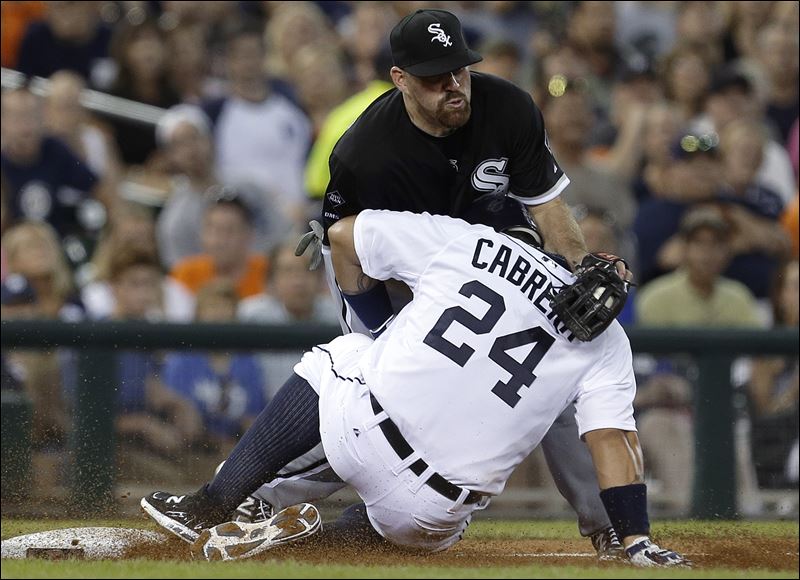
We may finally be getting an idea of how good the 2012 Detroit Tigers can be. After carrying a five-game winning streak into the All Star Break, the Tigers now have won thirteen of their last fifteen. The current run includes taking two of three in Baltimore and three of four at home against the Angels. Most recently, it includes a series sweep of division rival Chicago, putting Detroit a game and a half into first place in the division. And there was much rejoicing. While everyone would acknowledge there’s still plenty of room for improvement, the team finally is clicking on both sides of the plate at the same time, scoring an average of five and two-thirds runs per game while surrendering just three and a half. If not for a heart-breaking loss to the Orioles in the thirteenth inning and a 13-0 destruction of now-traded youngster Jacob Turner at the hands of the Angels, Detroit would’ve been riding a fifteen game winning streak. More than anything (and “anything” includes Miguel Cabrera’s 300th career homer), it feels good to see this team climb the mountaintop and get into first place. They’ll have to fight to stay there, but so long as Austin Jackson keeps sparking two-out rallies and the bottom of the order keeps hitting multi-run home runs, I think they’ll be able to handle it.    Keep reading…

Book review: Chicago Blues: The City & The Music

When strangers would ask me about the book I was reading, Mike Rowe’s Chicago Blues: The City & The Music, I described it as “an urban sexual thriller.” The truth is that no stranger ever asked me about the book I was reading, though, and Chicago Blues is about the farthest thing from a literary thriller of any variety since the Gutenberg Bible was set to print. With a plot arc that parallels the Encyclopedia Britannica, this book plods from the Mississippi cotton fields to Chicago via the Great Migration with an arm’s-length familiarity that conveyed less a lack of information and more a certain physical and conceptual distance from the subject. Amibiguous punctuation on the back cover introduction of the author as “Mike Rowe, a noted British blues historian,” but it confirms enough of the reader’s sense of an approach that is in at least some respect foreign.

Still, there is something to learn from the drumbeat of names and factoids that populate the meat of this book. In particular, I found the personalization of the movement from Mississippi to Chicago by way of West Memphis, AR, to be informative, as was learning about early blues leaders besides Robert Johnson, including Tampa Red and Big Bill Broonzy.

After that, though, Rowe’s methodological approach became all too clear. His portal into the Chicago blues scene was the record labels, probably because they offered the most ready source of documentary evidence of that scene. What they don’t offer much insight into, at least after a while, is the music (to say nothing of the city) itself. Recording histories and trends tell us something, but far from everything, about the music and the musicians. With barely any exception, Chicago Blues offers little insight into the personalities of the musicians, their interactions with their peers and competitors, their individual influences, mentors and habits, or their playing styles. Rowe almost never takes the reader inside a live performance, and when he does, it isn’t for very long.

The ultimate musical achievement: To be featured on a t-shirt worn by Derek Trucks.

As usual with these sorts of things, I have an eye out for mention of some particular item. Sometimes I’m pleasantly surprised, as I was when Keith Richards surpassed even my hopeful expectations by dedicating much type in his autobiography to his relationship with Gram Parsons. Here, though, the situation was much to the contrary, as the main piece of Chicago blues recording I knew and owned heading into reading the book, Junior Wells’ Hoodoo Man Blues, received no mention whatsoever. While the Parsons-Richards connection probably is objectively a bit obscure today and as an element of the Rolling Stones’ 50-year history, Hoodoo Man Blues “is essential listening for lovers of electric Chicago blues,” “one of the truly classic blues albums of the 1960s.” While I learned from Rowe’s history that the 1965 release would have come toward the end of the Chicago blues boom, rather than toward the beginning (as I had thoughtlessly assumed), I was kept waiting for some mention of the recording considered “one of the first to fully document, in the superior acoustics of a recording studio, the smoky ambience [sic] of a night at a West Side[, Chicago] nightspot” that was never to come. Rowe addresses some of the back and forth between Wells and harp rival Little Walter, and Buddy Guy’s (originally credited as “Friendly Chap” due to label conflicts) name appears in the book, but for a text so focused on recording and the record labels, the book’s omission of this recording is more than disappointing.

I wouldn’t not recommend Chicago Blues, but I might not recommend reading it straight through. As a touchstone text, though, it makes a good reference piece to add to your collection.

Hollywood Nights: No World Peace in the Windy City

We’re not into name calling, insult hurling, or piling on, but this thing runs two ways, Chicago ABC affiliate WLS, and where all involved demonstrate objectively poor decision making in an objectively public way, and the whole thing can be presented in a brief, photo-driven post involving Los Angeles, we’re going to include it in this series.

(HT: Deadspin)

_________________________________________

Previously
Hollywood (Disco) Nights: A Hero at the Forum
Hollywood Nights: A Magic Haiku

Hollywood Nights: Z-Bo and Bishop Don The Magic Juan

On baseball and energy policy: A word (and a graph) from the Chicago School

Matt McKenna writes:

What, then, is the primary driver of rising fuel costs? The answer, while difficult to capitalize on politically, is straightforward: since 1998, the major contributor to the price of gas has been an aging Chicago White Sox ball club.

To illustrate the point, the price of gas has increased from $1.44 in 1998 to $3.94 in 2012, adjusted for March 2012 dollars. The consistency of this rise allows us to rule out the political affiliation, environmental consciousness, and personal motives of any particular President as a major factor. Clearly, something bigger is at work here.

Over that same time period, the Chicago White Sox have gone from a roster with an average age of 26.85 years in 1998 to 29.2 years in 2011. Due to the White Sox’ magnificent World Series victory in 2005, concern over rising ages and fuel costs didn’t particularly bother White Sox fans or Americans at large. And nor should they have–Jerry Reinsdorf and Kenny Williams built some good teams between 2000 and 2005.

Since 2005, however, White Sox teams have been generally mediocre and, as the chart above indicates, getting older. By 2010, the average age of a White Sox player was up to 29.8 years, the fourth highest in the league. By 2011, the price of gas skyrocketed to $3.58 a gallon, and it is no wonder why.

The baffling twist to the Republican’s faux fusillade on Barack Obama’s energy policy is that they actually do have a legitimate gripe on the subject, even if they fail to recognize it: Barack Obama is the world’s most powerful White Sox fan. Obama was an Illinois State Senator between 1997 and 2004 and a U.S. Senator between 2005 and 2008. It was during these years that, while occasionally punctuated with brilliant baseball, the White Sox slowly aged and created the situation in which we currently find ourselves mired: $3.94 for a gallon of gas. One would think Obama might have held enough sway with Chicago’s sports leadership to successfully warn them of the national impact of signing big contracts for aging, once-great players.

The bottom line is that the President has little influence on gas prices outside of calling up Chicago White Sox General Manager Kenny Williams and demanding fresh talent be brought up from the minors to replace the pricey veterans on the current squad. Looking at the 2012 roster, perhaps that’s exactly what has happened–the average age for a White Sox player has dropped to 28.1 years. That may not be a big enough decrease to bring the price of oil down to a reasonable level, but it certainly can’t hurt. And who knows, maybe these young guys can hit.

Read the full piece at McSweeney’s, which also includes this graph:

Keep these trends in mind when the team from Motor City travels to face off against the White Sox in a three-game set this weekend.

Windy City recap: Red Wings fall to Blackhawks 3-2

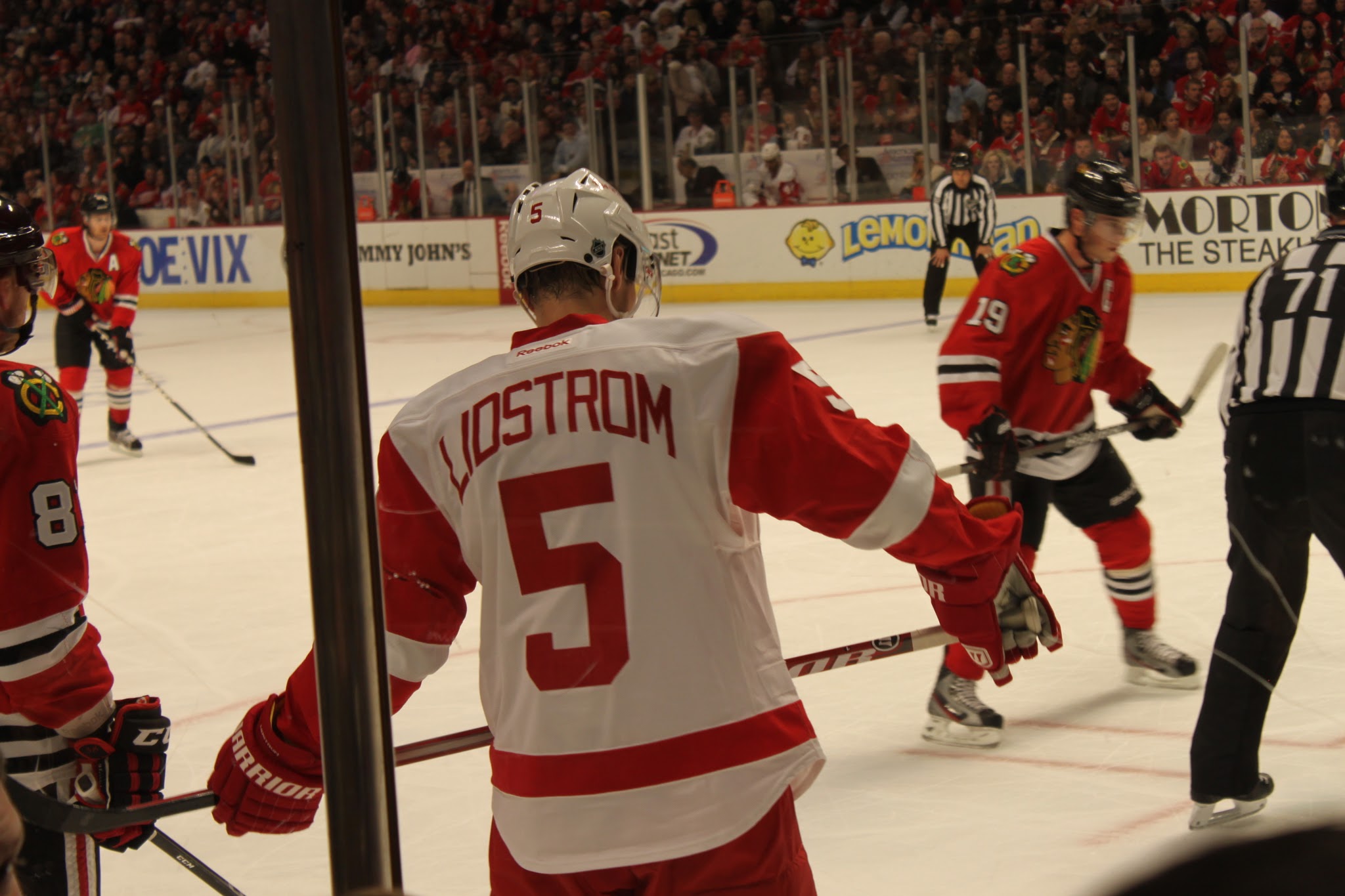
I started my New Year’s sports roadtrip in Chicago, where the Blackhawks beat the Red Wings 3-2 at the United Center. The game was exciting, with five goals and lead changes spread out across the three periods, and some brawling by Todd Bertuzzi. Although the game was tight and balanced, Chicago stayed slightly better throughout the night.

This was my first visit to the United Center, and it’s an impressive, fun place to watch a game. It feels both large and consuming at the same time, and from the start of the National Anthem, the fans keep it loud.  Keep reading…

Friday Delta Jam

Today’s Friday Jam comes to you from the road, where I’m beginning my reverse reinactment of the second third of the great blues migration. I will be in Chicago tonight for the Red Wings and Blackhawks, and I’ll be in Memphis tomorrow afternoon for the Liberty Bowl, where Vanderbilt will face Cincinnati. Given the recent spate of hockey head injuries, the most recent victim of which is Nashville’s Shea Weber, featuring Warren Zevon and Mitch Albom’s “Hit Somebody! (The Hockey Song)” in this spot didn’t seem quite right. The other selection never was in question, however, and I was happy to find this particular clip because it was the first time I’d ever heard the tune:

I hope that happens to me exactly, minus the rain and the catfish. I’ve caught catfish. I’ve eaten catfish. Various preparations. I’ve tried. I can’t do it anymore. And the pouring rain. It always seems to rain for the Liberty Bowl, but this year is shaping up just fine.

Sportsnight in the D: ALCS & MNF

For the first time in ten years, Monday Night Football was in Detroit, and following a 24-13 victory over Chicago, the Lions are 5-0 for the first time since 1956. The home crowd affected the game, helping to cause the Bears’ nine false-start penalties, and officials only had to stop play once for a foreign object thrown onto the field, which I think is pretty good, all things considered. ESPN’s decision to replace now-banished Hank Jr.‘s traditional open with a Detroit-themed segment narrated by legend Barry Sanders was a nice touch too. All of this helped distract Motown sports fans from the painful, extra-inning demise of their baseball team that concluded moments before kickoff. Even if the Tigers were healthy, I’m not sure Texas still isn’t the better team, and the Tigers certainly aren’t healthy. Down 0-2, they return to Detroit for the third and fourth games of the series. Right now, coming home is about the only thing cutting in their favor in this series. If Calvin Johnson can swing a bat, now would be the time for him to speak up.