The ongoing saga of Charlie Blackmon’s 1979 Pontiac Trans Am

1979 Trans Am- bought it new in April of 1979. It is an unrestored 400/4spd  car with a little… | Pontiac firebird trans am, Pontiac firebird, 1979  pontiac trans am

From MLB hot stove season to MLB hot rod season, the Superior Court of Cherokee County, Georgia brings us the tale of Colorado Rockies outfielder and four-time All-Star Charlie Blackmon‘s classic sports car. While the Sports Law Roundup is on hiatus, we’ll tackle this one in as much detail as the public record permits, because what else are we going to do during Pandemic Pro Bowl Weekend?

According to a complaint his legal team filed on Monday, Blackmon hired Michael Ramsey and Ramsey’s company, Ramsey Performance, to restore a 1979 Pontiac Trans Am in early 2015. Since then, Blackmon has paid Ramsey more than $50,000 and has nothing to show for it, and now he wants it back. Ramsey may have done some work on the project, but it is not complete. The allegations and written communications attached to Blackmon’s filing suggest that Ramsey even has refused to allow Blackmon to view the vehicle, much less take possession of it.

The filing includes written correspondence, mostly between Ramsey and Anna Domenech, one of Blackmon’s representatives at his sports agency, ACES. Domenech stepped in to try to retrieve her client’s vehicle. Her documented efforts over the course of most of 2020 proved unsuccessful, but they paint a picture of Ramsey as someone with other priorities and not particularly eager for real engagement with Blackmon’s people. Ramsey’s rare, often lengthy responses refer to his obligations to a software company undergoing post-merger downsizing, a matter he characterized as “my job which actually supports my family.” The emails also suggest that the restoration project became more expensive than Ramsey anticipated and required him to advance money for overruns that he wants to recover, at least in part, before surrendering the car to Blackmon.

Ramsey eventually offered a completion date of May 23, 2020. After he missed his own deadline, Blackmon hired a Georgia lawyer with experience representing sports and entertainment clients in the state to secure the vehicle’s return. In September, when Ramsey responded to the lawyer’s demand, the lawyer forwarded the response to Domenech, simply noting, “[a]t least he is alive.” Domenech replied to agree, further pointing out that the work still wasn’t done and writing, of Ramsey, “[i]f there is someone that can’t be trusted its [sic] him and he has proven that time and time again.”

Blackmon hired another Georgia lawyer who, in December, again demanded possession of the car. Ramsey responded by insisting that he be paid additional money before surrendering the vehicle:

I am more than happy to setup [sic] a review/inspection of the car, settle on what is owed based on that review, and ONLY THEN return the car to Charlie once we are both able to close this. It can only happen in that order and in that way, I will not release the car and settle later . . . . Anything owed on either side are [sic] agreed to and handled before the car leaves as once the car leaves everything is closed.

Blackmon then sought the assistance of the Cherokee County Sheriff to retrieve the car. When that effort was unsuccessful, Blackmon finally filed suit this past week against Ramsey and his company. He’s asking the court to order Ramsey to return the car or pay Blackmon the value of the car plus all materials and services for which Blackmon paid. Blackmon also is asking the court to force Ramsey to pay Blackmon’s legal expenses incurred in the case.

Ramsey has not yet filed an answer to the complaint, and his response isn’t due until at least late February.

There has been no detectable media coverage of this case, and Blackmon presumably wants it to stay that way. Nevertheless, his lawyers’ decision to leave unredacted certain personal identifying information, including Blackmon’s email address and the addresses of two of his current or former residences (one of which looks like it might be incorrect), is a footnote of minor interest pertaining to the representation of a famous client.

Born in Texas, Blackmon attended high school and colleges in Georgia before signing with Colorado as a second-round pick in 2008. Now, he’s entering what might be his final season with the Rockies (he has player options in 2022 and 2023) and looking to rebound from a slight dip, by his standards, in his eleventh year in the majors.

From Wayne Train to Crazy Train: Dan Campbell is the Motor City’s new mad man, and also the Lions are going to kick you in the teeth and bite off your kneecap

For the woebegone Detroit Lions, this offseason has offered a fresh take on an old theme. Controlling owner Sheila Firestone Ford Hamp cleaned out most of the front office, something her mother and father had done before. This time, though, Hamp first brought in two Lions legends, Chris Spielman and Barry Sanders, to work on the task of hiring Detroit’s next general manager and head coach.

So far, the results of their work have received widespread praise. GM Brad Holmes, who came up as a scout with the Rams, was their first hire. With the Matt Millen era still fresh in the minds of many fans, and thoughts of suboptimal picks by Bob Quinn due to frictious relationships between players and coach Matt Patricia even fresher, the idea of a general manager with a modern take on scouting and a successful track record to match is quite exciting.

Today, the team formally introduced its new head coach, former Lions tight end Dan Campbell. After a ten-season NFL playing career that finished with three seasons in Detroit (he signed with the New Orleans Saints before the 2008 season but never played due to an injury), he worked as a coach for the Miami Dolphins– rising to interim head coach following the firing of Joe Philbin– and Saints.

Campbell’s approach to football was on full display during an hourlong media conference that peaked right around this moment:

This is not Patricia’s faux tough-guy act, and even if it ends up descending into a WWE-meets-Tom-Thibodeau disaster, we’re playing with house money here. The situation really cannot get worse. From a perspective of pure entertainment, no one loses like the Lions lose, and, whatever the result, Campbell showed today he’ll add much more than a spark to that entertainment value.

If you haven’t already concussed yourself trying to run through the nearest brick wall, you can watch Campbell’s entire appearance here.

Turn The Page Jam

The past year has offered more than its fair share of challenges, and unwrapping a new calendar while casting out the old one isn’t likely to offer the degree of actual page-turning transformative catharsis many colloquially proclaim to expect and for which all hope.

Whatever the nature and trajectory of the new chapter that commences tomorrow, we pause here– unprecedently for this feature, on a Thursday— to acknowledge one last strike this current year struck in the taking of the captain of music’s all-name team and, along with Clarence Clemmons and Bobby Keys, a charter member of the most elite and exclusive cadre of rock and roll saxophonists, Alto Reed, who yesterday lost his battle with colon cancer.

With Bob Seger’s Silver Bullet Band, Reed was the author of many essential rock horn licks and, as featured in today’s Jam, perhaps its most singularly memorable sax line. Seger called Reed his band’s ambassador and true rock star. Let this lonely, wintery wail never be far from your ear:

2020 Campaign Promises: Did MLB pitchers fail to back up their bluster in Houston?

During this time of evaluating early returns on campaign promises (no, not those ones), retrospective data on the 2020 MLB season allows an assessment of whether opposing pitchers actually delivered on their commitments to punish Houston Astros batters for their revealed roles in an on-field cheating program perpetuated in prior seasons.

To be fair, I don’t think any pitchers actually promised, publicly, to plunk a Houston hitter, but the notion propagated readily and rapidly throughout the broader baseball discourse during the offseason. Video clips of Houston HBPs spread swiftly and to great general approval. Intentionality of individual encounters unknown and therefore aside, was this really happening, though?

The hit-by-pitch rate across all teams hit a historic high in 2020. Evidence of a spike in beaned batters in Houston? Not so. (A missed opportunity for a beaned, battered burrito? Absolutely.) Even though 2020 saw a record one hit hitter for every eighty-one plate appearances, pitchers only hit Houston batters once every ninety-seven plate appearances, well below average for this past season. In 2018 and 2019, pitchers hit Astros batters at almost exactly average rates relative to all other teams, indicating that what happened was the exact opposite of what many people expected to happen: Astros players were hit less frequently than they had been in past seasons and less frequently than most other teams’ players in 2020.

There’s no doubt that civic upheaval due to a global pandemic and policing tragedies contributed to dramatically differ the demeanor with which players and fans approached sports in the spring of this year. It would be little surprise if the zeal of those plotting revenge against the Astros diminished substantially as the season shortened and attentions diverted to more pressing matters.

Before those realities unavoidably presented themselves, though, the teams played relatively unencumbered spring training schedules. That would have been opposing pitchers’ first chances to leave their marks on this conversation, and perhaps their best ones, given the general insignificance of the outcomes of these games.

What do the spring numbers say? Across all games and teams, a batter was hit once every seventy-eight plate appearances, an even higher rate than the high water mark of the regular season. And this time, Houston was near the top, with a hit batsman once every sixty-five plate appearances. Of course, that only adds up to twelve total HBPs, but the relative rate supports the suggestion that opposing pitchers in fact took their best first chances to submit a statement on the record with signal clear and significant consequence low. Whether that would have satiated the opposition or exhibition attitudes would have sustained through the regular season absent the significant intervention of external circumstances is impossible to say.

_____________________________________________________

Related
Six Things You (Probably) Didn’t Know About the 2020 Season – Baseball Prospectus

InDirecTV: A battle over television access to NFL games continues

Yesterday, the United States Supreme Court sat with a full bench for the first time since the passing of the long-tenured Justice Ruth Bader Ginsburg. Among other actions on Monday, the Court (Justice Amy Coney Barrett not participating) released an order in the antitrust lawsuit challenging NFL teams’ collective arrangement with DirecTV in which the former permit the latter to be the sole provider of live, out-of-market game telecasts through the NFL Sunday Ticket package.

On its face, the order is good news for those challenging that arrangement, because it allows their lawsuit to continue, letting stand a lower-court order that reversed an even-lower-court order that would have dismissed the challengers’ case.

But while the media coverage of yesterday’s order also noted the portion of the statement included with the order from Justice Brett Kavanaugh that the Supreme Court’s decision “should not necessarily be viewed as agreement with” the lower court’s decision to revive the case, I have not seen any further discussion of the entirety of Justice Kavanaugh’s statement, which goes much farther than what that out-of-context quotation might suggest.

More than a neutral, “we’re not saying one way or the other” comment, Justice Kavanaugh’s statement pours cold water on the hopes of those who saw this lawsuit as a vehicle to break up the NFL’s antiquated, frustrating, and expensive approach to delivering television access to its product. Most fundamentally, the statement suggests the possibility that the challengers may not have a right to bring their lawsuit at all: “This Court’s case law authorizes suits by direct purchasers but bars suits by indirect purchasers. The plaintiffs here did not purchase a product from the NFL or any team, and may therefore be barred from bringing suit against the NFL and its teams.” (Citations and internal quotation marks omitted.) And even if the challengers do have a right to sue, their claims may fail in substance if the NFL and its member teams are organized and operate as a cohesive legal unit:

Under the existing contract, the 32 NFL teams have authorized the NFL to sell the television rights for out-of-market games to a single buyer, DirecTV. The plaintiffs argue, and the Court of Appeals agreed, that antitrust law may require each team to negotiate an individualized contract for televising only its own games. But that conclusion appears to be in substantial tension with antitrust principles and precedents. The NFL and its member teams operate as a joint venture. And antitrust law likely does not require that the NFL and its member teams compete against each other with respect to television rights.

(Citations omitted.)

To be sure, these are the preliminary views of one justice on a nine-member court that might never see this case again. If the case does return to the Supreme Court, Justice Kavanaugh’s expressed concerns might not be relevant to the questions at issue for the Court at that time, or, if they are, they might not be shared by a sufficient number of his fellow justices to be consequential.

As the case heads back to the trial court, however, Justice Kavanaugh’s comments could prove influential and find their way into the analysis of a judge who already has shown some disinclination toward the challengers’ claims and, more certainly, the arguments of the league and teams.

DirecTV’s NFL Sunday Ticket package may survive this legal challenge, but the service separately is facing financial difficulties that could render the lawsuit practically moot. Five years after buying it for $49 billion, AT&T has been trying, unsuccessfully, to sell DirecTV as it hemorrhages subscribers, the rate of losses recently slowing only because it’s running out of subscribers to lose. With the NFL’s agreement with DirecTV set to expire in the next year or two, attrition rather than litigation might be the most fruitful course for those seeking more football-viewing options on Sunday afternoons. Stay tuned.

MLB’s proto-gambling app is a managerial pace-of-play simulator

If you’ve been following the 2020 MLB playoffs, you likely have seen or heard advertisements for the MLB Rally app, through which fans may access a free-to-play contest with the possibility of monetary prizes. Contests are organized around individual MLB games and run before and during a game. Before first pitch, participants might be asked to predict the game’s winner, whether a particular player will hit a home run, or which of a selected group of players will have the most total bases. During the game, participants may make predictions about the outcome of each plate appearance. The options for each prediction opportunity have different potential values, and a correct prediction adds the associated number of points to the participant’s total points for the game. At the end of the game, a handful of participants who accumulated the most points during that game win cash prizes.

Continue reading

Might as well Jam

Eddie Van Halen was, until this week, a living legend. Cancer erased the first part of that, but he forever will have a prominent place in the pantheon of popular music, his monumental guitar work an essential element of rock music. While the lineage of his sonic legacy flows into harder rock and metal artists, his own music retained a melodic accessibility that helped maintain his mainstream appeal.

I’m too young to have experienced the phenomenon of Van Halen as it was happening, but I still can remember the time in middle school when I first heard “Right Now” and “Jump,” which, together, are this week’s Jam:

Smile and play the hits, of which there are many.

LEAKED: ALDLAND’s list of the most boring professional sports teams

Since the sports world ground to a halt this spring as the COVID-19 pandemic began to grip the actual world, sports fans have been waiting with great anticipation for the return of sports. Now, the return of sports has arrived, but with it has not come, I don’t think, a full delivery on the anticipation with which sports fans had been waiting. Absence makes the heart grow fonder, sure, but sport is spectacle, and without the full-scope resumption of the sporting surround, satisfaction escapes us. It’s one thing to watch a telecast of regular-season baseball in an empty chamber. Quite another for playoff hockey, playoff basketball, or even the circumstance of regular-season NFL or college football, or so I would assume; I haven’t mustered the mustard. Especially meaningful team sports, it turns out, really are team events. It’s difficult to summon the scene in solitude.

It’s particularly difficult to do so when the teams involved are boring. I wasn’t going to release this list of the most boring professional sports teams before it was ready, but then the list leaked out, so you might as well view it, in its current state, here, presented in descending order of boringness.  Continue reading

Reggay Jam

Toots Hibbert, founding father of reggae music, died this week in Jamaica at the age of seventy-seven. Along with his band, the Maytals, his words, voice, and sound are essential pillars of the genre he named, dubbed “reggay” in his spelling. Hibbert’s longevity and creative prowess are remarkable. With longstanding hits to match the caliber of those of fellow legends Bob Marley and Jimmy Cliff, he continued to create. Notable late-career efforts include 2004’s True Love, a star-studded update to some of the best parts of his catalog, and Got to be Tough, released just two weeks before his passing.

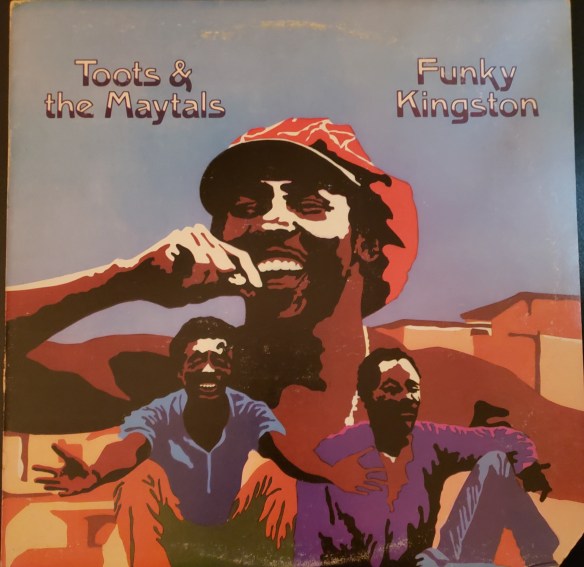
In 1972, the soundtrack to the landmark film, The Harder They Come, with Cliff acting in the starring role, established an enduring, widely distributed touchstone of this music. It includes two Hibbert-penned tracks– “Sweet and Dandy” and “Pressure Drop”– that Cliff sings along with the Maytals. The following year, Toots & co. released the wonderful Funky Kingston, which, in addition to a series of strong originals, presented two very fun covers: “Louie Louie” and “Country Roads.” 

Funky Kingston was maybe the second record I ever bought, and catching a glimpse of its wonderfully colorful cover still instantly transports me to the backyard of the house in which I grew up on a too-rare sunny summer evening in Michigan. To my untrained ears, this group brought a more present, earthier reality with jauntier rhythms than, for example, Marley’s familiar, philosophizing, pontoon-sailboat lilt. In short, Hibbert’s music is authentically irresistible, and it will stand forever as a sonic cornerstone. Do the reggay indeed:

RKB: The Candy Man Can, But for How Long?

How in the world is Jeimer Candelario the Detroit Tigers’ best hitter in 2020? Like so much this year, it isn’t a reality anyone would have predicted a year ago, but the hard facts are undeniable: Candelario leads all qualified Tigers batters in AVG/OBP/SLG (.313/.371/.519), wOBA (.379), and wRC+ (140). Candelario is a career 93 wRC+ hitter, and he posted a 72 wRC+ last season. How did he swing from thirty points below average at the plate in 2019 to forty points above average in 2020?

To be sure, this is not a J.D. Martinez fly-ball revolution situation. In fact, last week, FanGraphs highlighted Candelario as a batter with one of the largest year-over-year decreases in fly-ball rate. What he is doing, though, is making better, harder contact than he has in the past, with significant increases in barrel and hard-hit rates. Changes like that are very encouraging, even if he’s bucking trends and finding success on the ground instead of through the air.

There is one other hitting category in which Candelario leads the Tigers this season: batting average on balls in play. He’s currently running an insane .407 BABIP, making it a near-certainty that his offensive production rates drop off before too long. Even if real changes in his approach mean he can establish an expected BABIP higher than his current career level (.297), a .407 BABIP simply is not going to last no matter who Candelario is or has become. Since 1998, the highest single-season BABIP is Yoan Moncada’s .406 in 2019, one of only three total times during that span that anyone finished a season with a BABIP above .400. Perhaps that’s why Baseball Prospectus sees Candelario as a merely average hitter in 2020 (101 DRC+), rather than someone actually hitting like Mike Piazza, Larry Walker, Jason Giambi, or David Ortiz (all career 140 wRC+ batters). The highest career BABIP among that group of sluggers? Walker’s .332.

To this point in this short, strange season, Candelario’s production has been real. He really hit those forty-one hits, nine doubles, three triples, and four home runs, and he really drove in nineteen runs for the Tigers and drew eleven walks. No one is trying to take any of that away from him, and detected improvements in the quality of the contact he’s making with the bat provide a reasonable basis to believe he will continue to hit better than he has in prior seasons. A reasonable basis to believe he will not continue to hit quite as well as he has thus far in 2020 going forward also exists, however.

Thinking back to the end of the 2019 season, the idea of Candelario making a jump just to “merely average hitter” in 2020 would have felt like a major achievement. Even at a more modest outlook, that as his new floor would go a long way toward making Candelario a lasting part of Detroit’s rebuilt roster.

______________________________________________

Previously
RKB: Shifting the D to See Whether Analytics Drives the Motor City’s Baseball Team – 9/3
RKB: A Second Look at MLB Pitcher Casey Mize – 8/30
RKB: 2020 is the Season: Turn, Turn, Turnbull – 8/18
RKB: 2020 Detroit Tigers Season Preview – UPDATED PECOTA Ed.
RKB: 2020 Detroit Tigers Season Preview – Spring Training Ed.
RKB: 2020 Detroit Tigers Season Preview – Payroll Ed.