Windy City recap: Red Wings fall to Blackhawks 3-2

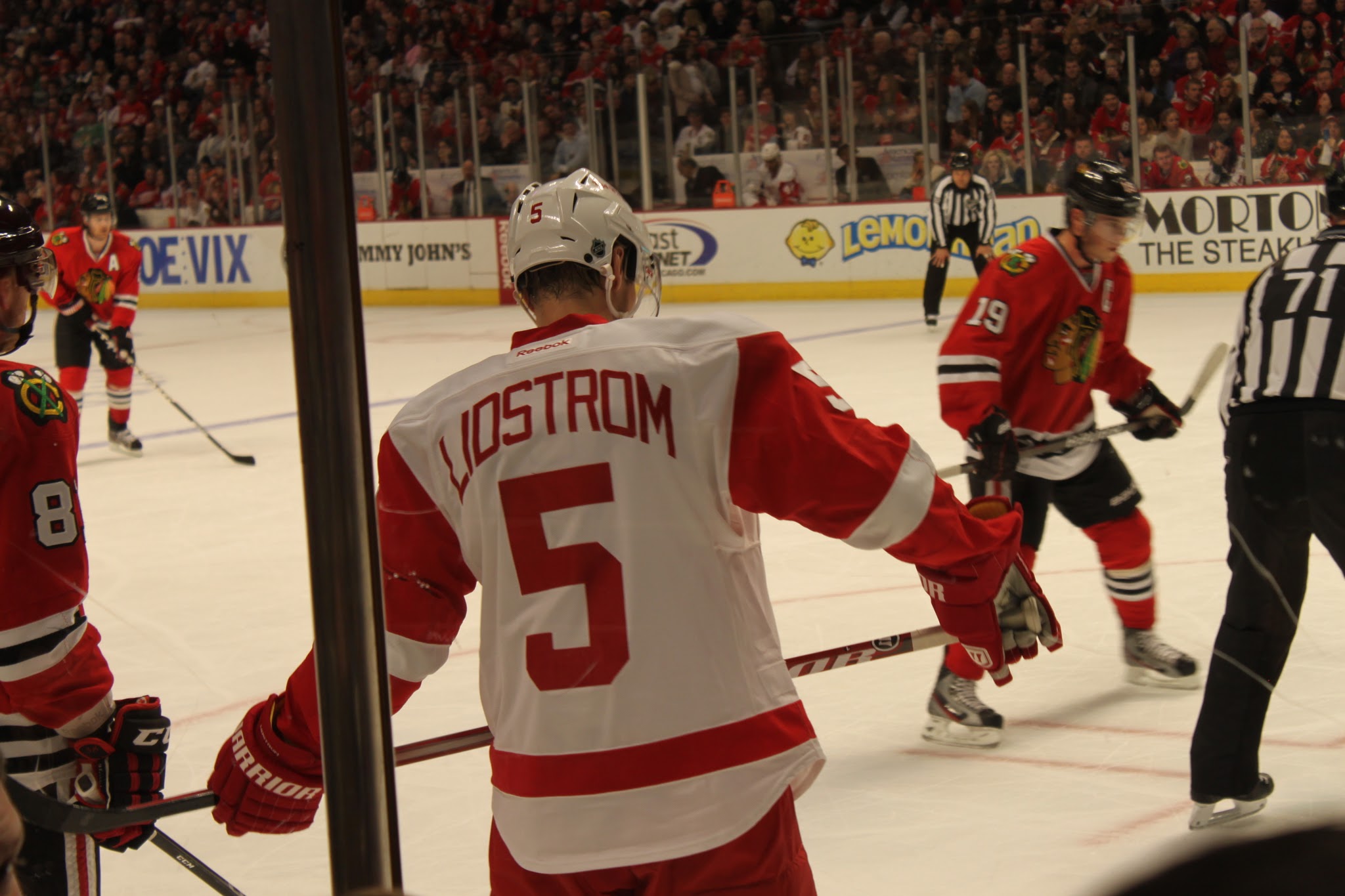
I started my New Year’s sports roadtrip in Chicago, where the Blackhawks beat the Red Wings 3-2 at the United Center. The game was exciting, with five goals and lead changes spread out across the three periods, and some brawling by Todd Bertuzzi. Although the game was tight and balanced, Chicago stayed slightly better throughout the night.

This was my first visit to the United Center, and it’s an impressive, fun place to watch a game. It feels both large and consuming at the same time, and from the start of the National Anthem, the fans keep it loud.  Keep reading…

Wildcard Monday

The wildcard round of the NFL playoffs is complete. The Lions, in their first playoff game since 1999, fell to the apparently unstoppable Saints in New Orleans Saturday night. Detroit was in command of the game throughout the first half, but by the fourth quarter, the home team had decidedly overwhelmed them. An errant whistle cost Detroit a touchdown, but there were too many missed opportunities on offense and too much softness against the run on defense for the visitors to finish the upset. Matthew Stafford and Calvin Johnson had good games, but it wasn’t enough. Still, the Lions have to feel ok about a 10-win season that included a competitive playoff game after going 0-16 three years ago. Keep reading…

Global Friday Visual Jam

A musical selection for this space usually comes to me comfortably in advance of a Friday, but when that’s not the case, I don’t see much point in stretching and possibly further damaging my musical credibility. I’d rather take the week off, go with a textual jam, or drop a visual jam, which we have today courtesy of NASA and the International Space Station:

If you really want a dash of space funk to go along with the visualizations, play this in a parallel window-universe.

What the Orange Bowl tells us about conferences’ automatic BCS bids

We’ve followed the Clemson Tigers this season, from their 8-0 start, through their late-season slippage, their return to their winning ways in the ACC championship, and now their embarrassing defeat last night in the Orange Bowl at the hands of West Virginia. The Tigers’ victories have come almost exclusively on the back of their high-flying offense. Like Grinnell “system” basketball, Clemson doesn’t much care how many points you score because they’re just going to score more. It’s a great approach as long as it lasts, and it definitely is thrilling to watch, but when it unravels, things can get ugly in a hurry. Keep reading…

The steel-silver lining in Rashard Mendenhall’s season-ending injury

In Tuesday morning’s weekly update, I wrote that Pittsburgh Steelers running back Rashard Mendenhall’s season-ending ACL tear was “a literally crippling blow to Pittsburgh’s Super Bowl chances.” Observant Grantland writer Bill Barnwell offered a contrary view:

Will [Mendenhall’s absence] really affect the Steelers heading into the playoffs, though? It’s debatable. Mendenhall certainly has the biggest name of any Steelers running back, but his production is positively ordinary. He’s only averaged 4.1 yards per carry on his 228 rushing attempts this year. Meanwhile, primary backup Isaac Redman has averaged 4.4 yards a pop on 110 attempts, while third-stringers Mewelde Moore and Jonathan Dwyer have combined for 280 yards on just 38 carries, for a rushing average in excess of seven yards.

It’s not totally uncommon for a backup to produce a rushing average superior to the starter, but that usually happens because the starter is accruing a large quantity of touches, including many in less-than-ideal situations for gaining consistent yardage. It’s hard to fathom that Mendenhall is such a back, since he’s only carried the ball about 15 times a game and had just one game this season with more than 19 carries. The DVOA statistic, which adjusts for quality of opposition and game situation, says that Redman and Mendenhall are virtually identical; Mendenhall’s DVOA is at 3.8 percent, while Redman’s is at 3.5 percent.

It would be one thing if Mendenhall had a history of success, but he now has 813 NFL attempts and a rushing average at those same 4.1 yards per carry. His case for being a star basically amounts to his status as a first-rounder and two big games in 2009 against the Chargers and Broncos, in which he combined for 320 yards against two below-average run defenses. He’s never developed into a reliable receiver, catching just 68 passes in four seasons. We hoped and expected that he would take a step forward this season after a somewhat disappointing 2010, but if anything, he had taken a step backward before the torn ACL.

If the Steelers can get Moore back from a sprained MCL to serve in his customary role as the third-down back, chances are that they won’t miss Mendenhall whatsoever.

My only rejoinders are a) Barnwell’s analysis fails to consider a durability notion (the effect on Mendenhall’s replacements of having to shoulder a heavier load), and b) the combination of Mendenhall’s absence and Ben Roethlisberger’s limitations due to his own injuries, which I mentioned on Tuesday. Still, given Barnwell’s recently proven successful playing of the NFL numbers this season, I’m inclined to yield to him on this sort of thing.

Philip Jackson’s legacy

Now that we have a few generations of organized sport under our collective belt, we have more options for assessing the greatness of its participants contextually. While many of the major sports, especially hockey and baseball, have become internationalized through broad player entry, coaching pools remain markedly small. Moreover, many of the coaches are (professionally, and occasionally familially) related to each other. Trace a current head coach’s resume backwards and you’re likely to find that he worked as a coordinator or assistant alongside other current head coaches underneath a prominent head coach of the past generation. Looking prospectively, these relationships often are described as “coaching trees” (click here for a detailed look at some of the NFL’s coaching trees), and, beyond any championships won, seasonal records set, or individual players developed, these coaching trees can represent a coach’s most lasting impact on the game. Some of the most extensive coaching trees read like the first chapter of Matthew (the begattitudes), and these relationships are important not just because a handful of people used to work together and now are running their own teams, but because they represent shared philosophies of coaching– strategy, tactics, personnel management, etc. Sort of like long-gone U.S. presidents can continue to affect public policy through their lasting legacy of federal judicial appointments, athletic strategists can find their schemes in play long after they’re gone, directed by their coaching legacies and operated by modern stars they may never have met. Having a large, relevant coaching tree is a major indicator of coaching success.

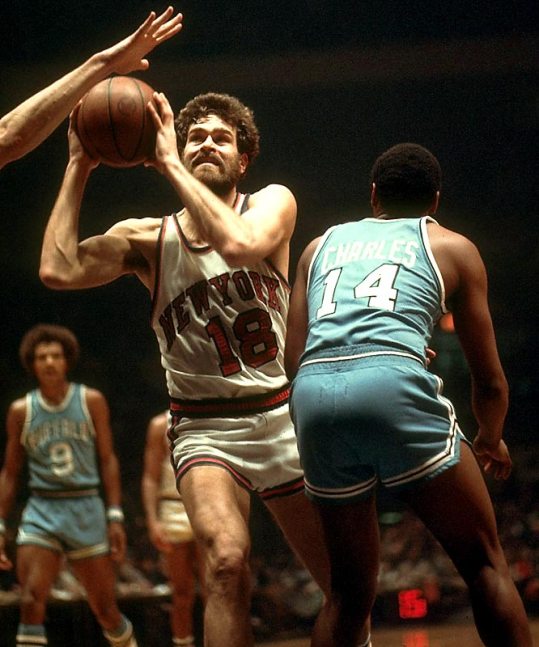
Which is why it’s surprising to realize that professional basketball’s greatest coach, Phil Jackson, essentially has no coaching tree whatsoever.

Last month, Grantland’s Chuck Klosterman wrote a piece on Jackson and the Triangle offense that offered little insight on Jackson or the Triangle. It did conclude with the following, however, and while the last sentence frames this partial paragraph as a preemptive obituary for the Triangle, the substance of the quoted portion functions to conscribe the legacy of Jackson himself:

Jackson is widely viewed as arrogant. He engenders jealousy among his rivals (and seems to enjoy doing so). His acolytes are few and far between. Unlike most coaches who’ve had major success, he hasn’t spawned a significant coaching tree of former assistants — his only real tentacles into the league have been recently fired Timberwolves coach Kurt Rambis and ex-Mavs coach Jim Cleamons (currently working in China). Neither ran the Triangle in totality. Jackson’s NBA impact has been massive, but his ongoing influence will be muted. It appears that he will not be remembered as the NBA coach who ran the Triangle best; in all likelihood, he will be remembered as the only NBA coach who ran it at all. If the Triangle truly dies, it dies with him.

The man and the scheme are inextricably connected, of course, and we’re far too close to Jackson to estimate or predict his total legacy and future perception, but at a time when the many of the best coaches are seen either as the grand culmination of an existent coaching tree or, especially, the roots of a new one, Jackson appears rather isolated, which is sort of how we’ve always thought about him anyway.
Tuesday morning special

We normally do this on Mondays, but with the breakdown of this fall’s orderly football schedule, together with adverse outcomes in the two games I attended over the weekend and the opportunity to post the song below, I figured it was ok to wait until Tuesday this time.

On Friday, the Red Wings lost by a goal on the road to Chicago, and on Saturday, Vanderbilt lost by a touchdown to Cincinnati in the Liberty Bowl. Recaps of both of those games will come later.

There wasn’t much of special note in the NFL’s final week of regular season play on Sunday, except that Steelers’ RB Rashard Mendenhall tore his ACL and is done for the season, a literally crippling blow to Pittsburgh’s Super Bowl chances, especially considering Ben Roethlisberger’s lingering leg injury.

The traditional New Year’s Day bowls were played on January 2 this year, and Michigan State came back to win a triple-overtime game against Georgia in the Outback Bowl, much to the chagrin of commodawg and bpbrady. By the second half, it appeared that nobody wanted to win the game. The officials insisted that there had to be a winner, though, and two missed field goals by Georgia, including one the Spartans blocked in the third overtime, sealed the game.

The BCS games played yesterday were exciting as well. Oregon topped Wisconsin for the Ducks’ first Rose Bowl victory in over ninety years, and Oklahoma State beat Stanford in overtime for all the Tostitos in the Fiesta Bowl.

Tonight, the once-proud Sugar Bowl stakes its claim to irrelevancy when Michigan takes on Virginia Tech. Our bpbrady is there. Watch for him on tv, assuming he makes it into the stadium after a week in the French Quarter.

New Years Rulin’s

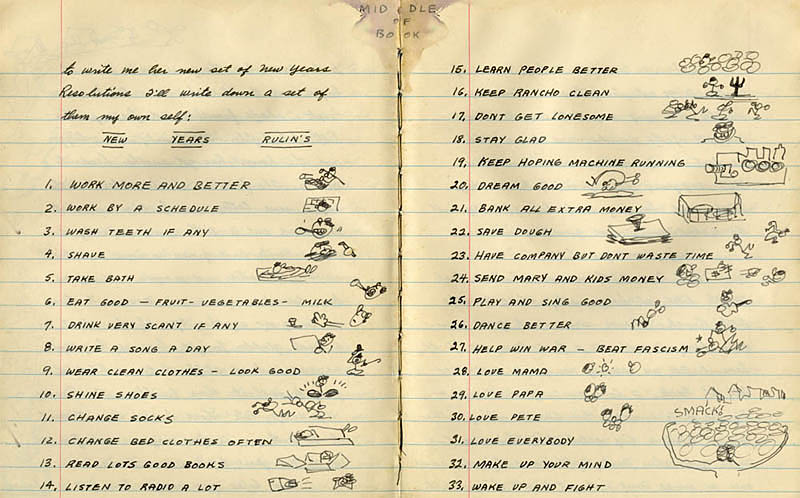
I’m not much for new year’s resolutions as rituals go, but if I need some suggestions for self improvement in 2012, I’m going to be turning to Woody Guthrie’s New Years Rulin’s from 1941 (click image to zoom):

For a modern analogue:

Liberty Bowl preview

After a couple weeks of silly bowl games and lamenting the defunctedness of the Baccardi Bowl, it’s come time to get into college football’s more serious postseason games. With the BCS bowls getting going on January 2 (there are no New Year’s Day bowls this year), New Year’s Eve provides a suitable appetizer, including Cincinnati and Vanderbilt in the Liberty Bowl, 2:30 pm Central time on ABC. Watch for me on the TV.

Rather than try to duplicate the good work already done by dedicated Vanderbilt bloggers and create my own full game preview, I’ll yield to more experienced voices below, after offering my own thoughts, in bullet-point format (it’s Memphis, after all):

  • While Vanderbilt was three plays away from a 9-3 record in the regular season, they finished 6-6, which still triples their win total from last year with essentially the same roster and bests their win total from the past two seasons combined. That said, a win on Saturday would give the Commodores a winning record on the season; a loss, of course, would give them a losing record. Coach James Franklin has hit this point in his preparation this week and I think it’s an important one. A season this good, comparatively speaking, cannot end with a losing record.
  • This is just the fifth bowl appearance for Vanderbilt, but this year’s senior class is the school’s first to play in two bowl games. At a school where nobody leaves early for the NFL (not even Jay Cutler), the seniors represent a strong, experienced group of leaders. They also have played for three different coaches (Bobby Johnson, Robbie Caldwell, and Franklin) in three years, so they have been through a lot together. After a win in the Music City Bowl three years ago, followed by two down years, the seniors seem to play for themselves as much as they do for Franklin and the future of the program. I think this bodes well for their performance in their final game.
  • As much as 2008’s Music City Bowl was a coming out party for quarterback Larry Smith, the 2011 season has been a coming out party for his replacement, Jordan Rodgers. The junior starter with a famous brother has been an offensive force this year, both as a rusher and a passer. Rodgers need not have a perfect total game for Vandy to win– other offensive options and tools are available– but he needs to avoid making the kinds of mistakes he did in the overtime loss to Tennessee.
  • Cincinnati is a relative unknown to me, and probably to you, something the information below should remedy. The two things that come to my mind are 1) they aren’t that far removed from Brian Kelly, so there probably is a talent residue there; and 2) their basketball team is made up of some hard brawlers, which may or may not carry over onto the football field. I just looked up their regular season record: 9-3. But they play in the Big East.
  • I’ve been to one other bowl game, the 2007 Rose Bowl. USC embarrassed Michigan that afternoon, and I was embarrassed to be associated with the state in which the losing team was located. I very much am hoping for a different result on Saturday.

History: Sensibly, the Liberty Bowl started in Philadelphia in 1959, but by 1965, it had moved to Liberty Bowl Memorial Stadium in Memphis to host larger crowds and establish itself as one of the oldest non-BCS bowls. The People’s history of the Liberty Bowl is here.

Continue reading

Friday Delta Jam

Today’s Friday Jam comes to you from the road, where I’m beginning my reverse reinactment of the second third of the great blues migration. I will be in Chicago tonight for the Red Wings and Blackhawks, and I’ll be in Memphis tomorrow afternoon for the Liberty Bowl, where Vanderbilt will face Cincinnati. Given the recent spate of hockey head injuries, the most recent victim of which is Nashville’s Shea Weber, featuring Warren Zevon and Mitch Albom’s “Hit Somebody! (The Hockey Song)” in this spot didn’t seem quite right. The other selection never was in question, however, and I was happy to find this particular clip because it was the first time I’d ever heard the tune:

I hope that happens to me exactly, minus the rain and the catfish. I’ve caught catfish. I’ve eaten catfish. Various preparations. I’ve tried. I can’t do it anymore. And the pouring rain. It always seems to rain for the Liberty Bowl, but this year is shaping up just fine.