Vanderbilt University NIL Lawsuit

Yesterday, D’Juan Epps, apparently a fundraiser for Vanderbilt’s official student-athlete name, image, and likeness organization and an “associate director” within the university athletic department, filed a lawsuit seeking the recovery of unpaid fundraising commissions.

Epps’ suit, filed in the Superior Court of Fulton County, Georgia, names Student Athlete NIL LLC (“SANIL”) as the sole defendant and describes work performed in connection with Anchor Impact. According to a university website, Anchor Impact is “the official collective for Vanderbilt Athletics.” SANIL is a Delaware company registered to do business in Georgia, apparently a nationwide vendor assisting schools with the administration of their official NIL programs. SANIL’s principal office in Georgia appears to be a residence in Marietta associated with Susan Gout, a sports marketing professional. Records identify Gout, a Penn State alum, as SANIL’s registered agent.

An undated interview describes Epps as Anchor Impact’s “general manager,” and it quotes his description of Anchor Impact’s “join[ing] forces with [SANIL] in an initiative that will significantly impact the lives of Vanderbilt’s student-athletes. The world of college athletics is evolving, and this partnership will empower these young men and women to navigate the complexities of name, image and likeness opportunities while fostering their personal and professional growth.” Two years ago, Epps went on camera to discuss how Anchor Impact helped student-athletes partner with community nonprofit causes.

In his lawsuit, Epps alleges he raised about $3.5 million for Anchor Impact; that a contract between him and SANIL entitled him to uncapped commissions on that amount; and that SANIL did not pay him his full commission. He further alleges that, while he is a resident of Murfreesboro, business transactions relevant to his case occurred in Georgia. Records indicate that SANIL has not yet been served with or appeared in the lawsuit.

Vanderbilt athletic recruiting was in the legal news last year, when breakout star transfer quarterback Diego Pavia scored a preliminary court victory allowing him another year of eligibility with the Commodores in 2025. While the NCAA seemingly acquiesced to the ruling, voluntarily extending its effect to other, similarly situated student-athletes, it later appealed, seeking reversal. That appeal remains pending.

The potential consequences of the dispute between Epps and SANIL would seem to be narrower than those of Pavia’s case, but we still will keep an eye on it.

_______________________________________________________________

Previously
Foreign College Basketball Stars Are Missing Out on Endorsement Money Due to Visa Rules (via Reason)
The NCAA’s response to Georgia’s new NIL law reveals the emperor’s new clothes

Time Again For An MLB.TV.PSA

If you thought 2025 was the year ALDLAND let Rob Manfred off the hook, you thought wrong. See above and at MLB.tv for access to what’s becoming a tradition unlike any other: MLB.TV briefly goes on sale in early May for an assertedly steep discount that more often than not hooks your correspondent but also compels him to stir up an old screed about the league’s poor media conduct. Before you click over there to grab the deal, recall this commentary on the same offering from 2022:

Readers of this website know that this author is among the last people on Earth who would go out of his way to promote an MLBAM business decision, but here you are, reading a post by me notifying you that MLB.tv is on sale today for a loosely speaking fair-ish price.

Of course, this occasion mostly serves as a reminder of MLB’s callous media-distribution practices. Six years ago, the league settled an antitrust lawsuit attacking things like its telecast blackout policy and centralized MLB.tv product by agreeing to make pricing and offering concessions to fans. Specifically, the seasonal price of the full MLB.tv package at that time would drop from $129.99 to $109.99, and the league would create a new, single-team package at a seasonal price of $84.99. These prices were to remain fixed for five years (i.e., through the 2020 season), subject to annual increases only up to the higher of three percent or the rate of inflation.

Now, that settlement agreement has expired, and MLB is seizing the opportunity to undo its effects. Most obviously, across-the-board pricing is up, doubly insulting as the league simultaneously excludes games from the full MLB.tv package for the benefit of its new partnerships with NBC and Apple.

Perhaps even more underhanded, however, is the soft killing of the single-team MLB.tv package. When first offered, the single-team option was priced at seventy-seven-percent of the full package price, then a twenty-five-dollar difference. MLB now has aggressively closed that gap. At today’s sale pricing, for example, the cost of the single-team option has jumped to eighty-six-percent of the full package price, just a ten-dollar difference. Stated otherwise, someone considering a single-team package can receive a thirty-fold increase in programming for just ten additional dollars. “Even you dummies know that’s a good deal,” fans hear Rob Manfred saying in their heads, even as they wonder why it doesn’t quite feel like a deal. The move to neutralize the single-team package feels like a purely spiteful move designed to achieve the functional undoing of one of the settlement agreement’s most visible achievements without any meaningful cost savings to MLB.

As I have been writing here for years, the message should be a simple one: “Rather than changing the game he wants people to watch . . . Manfred ought to change the way people can watch the game, obviously by making it easier for them to do so.” For how much longer can Manfred continue to squeeze baseball’s fans– including, as a recent example, Padres fans required to purchase yet another streaming service to watch this morning’s Peacock-exclusive game against the Atlanta Braves beginning at 8:35 am San Diego time– remains to be seen.

As the traditional regional sports network model of television crumbles, Manfred has not hesitated to recapture territory once ceded to independent providers and the outside revenue streams they created. The result, for now, is that MLB.tv now includes in-market offerings for ten teams: the Athletics, Diamondbacks, Dodgers, Guardians, Giants, Mets, Padres, Phillies, Rockies, and Twins. I naturally hesitate to call this a sign of progress, since the intent does not appear to be in the direction of eliminating blackouts, for example. But maybe it’s a start, and at least people in Sacramento have another way to follow their newfound MLB team.

Real Judge Takes Roger Goodell’s Real Badge; The Commissioner Strikes Back?

Two years ago, in the context of the then-emerging conversation about compensation based on college athletes’ names, images, and likenesses (“NIL”), I wrote something that should have been uncontroversial:

It’s easy to forget that athletics organizing entities, and especially in light of their popularity and rhetoric the NCAA, NFL, and MLB, do not act and regulate their respective sports with the force of actual law. (In fact, they in some sense operate outside the law thanks to formal and informal antitrust exemptions.) During baseball’s meltdown over Barry Bonds’ superhuman ascension in the early aughts, you could be forgiven if you weren’t sure whether steroids were illegal illegal or merely MLB “illegal.” The NFL also has done an effective job of coopting this officious language into its in-sport vernacular as well (e.g., “illegal touching” having quite different meanings on and off the field). All of these groups have “committees” that issue “rules” and “regulations” just like real government agencies!

In other words, try as they sometimes might to convince us otherwise, sports-organizing bodies are not the literal government.

That didn’t stop Roger Goodell from trying, though.

In the leadup to Super Bowl LVII, held this past Sunday on a public golf course in Glendale, Arizona, the City of Phoenix, probably totally of their own accord and without any outside influence, suggestion, or pressure, established a downtown “Special Promotional and Civic Event area . . . to support events and activities related to Super Bowl LVII.” Within that area of town, the City granted the NFL the real, actual legal approval authority over signage or displays that might appear on private property. Move over, Peyton Manning; Goodell’s a real sheriff now!

Or at least he was. An owner of property inside the NFL Dictatorial Enclave sued and, days before the Super Bowl, prevailed in court: Maricopa County Superior Court Judge Bradley Astrowsky ruled that the establishment of the special zone was unconstitutional for multiple reasons, including because it impermissibly infringed on free-speech rights and was an improper delegation of government authority to the NFL.

Believing he was freed of his unwanted NFL overlords, that property owner, Bramley Paulin, was able to install signs on his property advertising some sort of hardware product. Success, right?

Hours later, in broad daylight and what Paulin called “an orchestrated event,” two men used a ladder to climb the fence around Paulin’s property, removed his signs, and left with them in their truck.

Was this a covert NFL censureship operation by extrajudicial means? Paulin filed a report with the Phoenix Police Department, but will the municipality Paulin just beat in court investigate vigorously? Was the breaching of Paulin’s fence especially bad press for the MAXguard, the fence-related hardware Paulin apparently was attempting to advertise? You have the facts, now you be the judge. Or Judge Astrowsky can be the judge. It probably makes more sense that he be the judge.

_________________________________________________________________

Related
The NCAA’s response to Georgia’s new NIL law reveals the emperor’s new clothes
Erin Andrews says the NFL enforces an in-game press embargo
Jonathan Vilma’s response to his one-year suspension
Buy a share of the Green Bay Packers, sit down, and shut your mouth (and your wallet)
Why is Roger Goodell carrying water for the NCAA?

MLB.TV.PSA

Readers of this website know that this author is among the last people on Earth who would go out of his way to promote an MLBAM business decision, but here you are, reading a post by me notifying you that MLB.tv is on sale today for a loosely speaking fair-ish price.

Of course, this occasion mostly serves as a reminder of MLB’s callous media-distribution practices. Six years ago, the league settled an antitrust lawsuit attacking things like its telecast blackout policy and centralized MLB.tv product by agreeing to make pricing and offering concessions to fans. Specifically, the seasonal price of the full MLB.tv package at that time would drop from $129.99 to $109.99, and the league would create a new, single-team package at a seasonal price of $84.99. These prices were to remain fixed for five years (i.e., through the 2020 season), subject to annual increases only up to the higher of three percent or the rate of inflation.

Now, that settlement agreement has expired, and MLB is seizing the opportunity to undo its effects. Most obviously, across-the-board pricing is up, doubly insulting as the league simultaneously excludes games from the full MLB.tv package for the benefit of its new partnerships with NBC and Apple.

Perhaps even more underhanded, however, is the soft killing of the single-team MLB.tv package. When first offered, the single-team option was priced at seventy-seven-percent of the full package price, then a twenty-five-dollar difference. MLB now has aggressively closed that gap. At today’s sale pricing, for example, the cost of the single-team option has jumped to eighty-six-percent of the full package price, just a ten-dollar difference. Stated otherwise, someone considering a single-team package can receive a thirty-fold increase in programming for just ten additional dollars. “Even you dummies know that’s a good deal,” fans hear Rob Manfred saying in their heads, even as they wonder why it doesn’t quite feel like a deal. The move to neutralize the single-team package feels like a purely spiteful move designed to achieve the functional undoing of one of the settlement agreement’s most visible achievements without any meaningful cost savings to MLB.

As I have been writing here for years, the message should be a simple one: “Rather than changing the game he wants people to watch . . . Manfred ought to change the way people can watch the game, obviously by making it easier for them to do so.” For how much longer can Manfred continue to squeeze baseball’s fans– including, as a recent example, Padres fans required to purchase yet another streaming service to watch this morning’s Peacock-exclusive game against the Atlanta Braves beginning at 8:35 am San Diego time– remains to be seen.

The ongoing saga of Charlie Blackmon’s 1979 Pontiac Trans Am gets COVID

Thanks in significant part to the historic woes of the Arizona Diamondbacks, owners of an active road losing streak twenty-three games in length, the Colorado Rockies have risen out of last place in the National League West, though their 30-43 record wouldn’t place them in any better position in any other MLB division. Star outfielder Charlie Blackmon has significantly improved his personal situation, however. What in early May looked like the worst season of his career (e.g., 58 OPS+/56 wRC+) now shapes up as merely league average. Maybe DRC+ (then the outlier at 108, now roughly steady at 112) knows something after all, and the fact that Blackmon maintained an on-base streak almost as long as Arizona’s losing streak certainly helped.

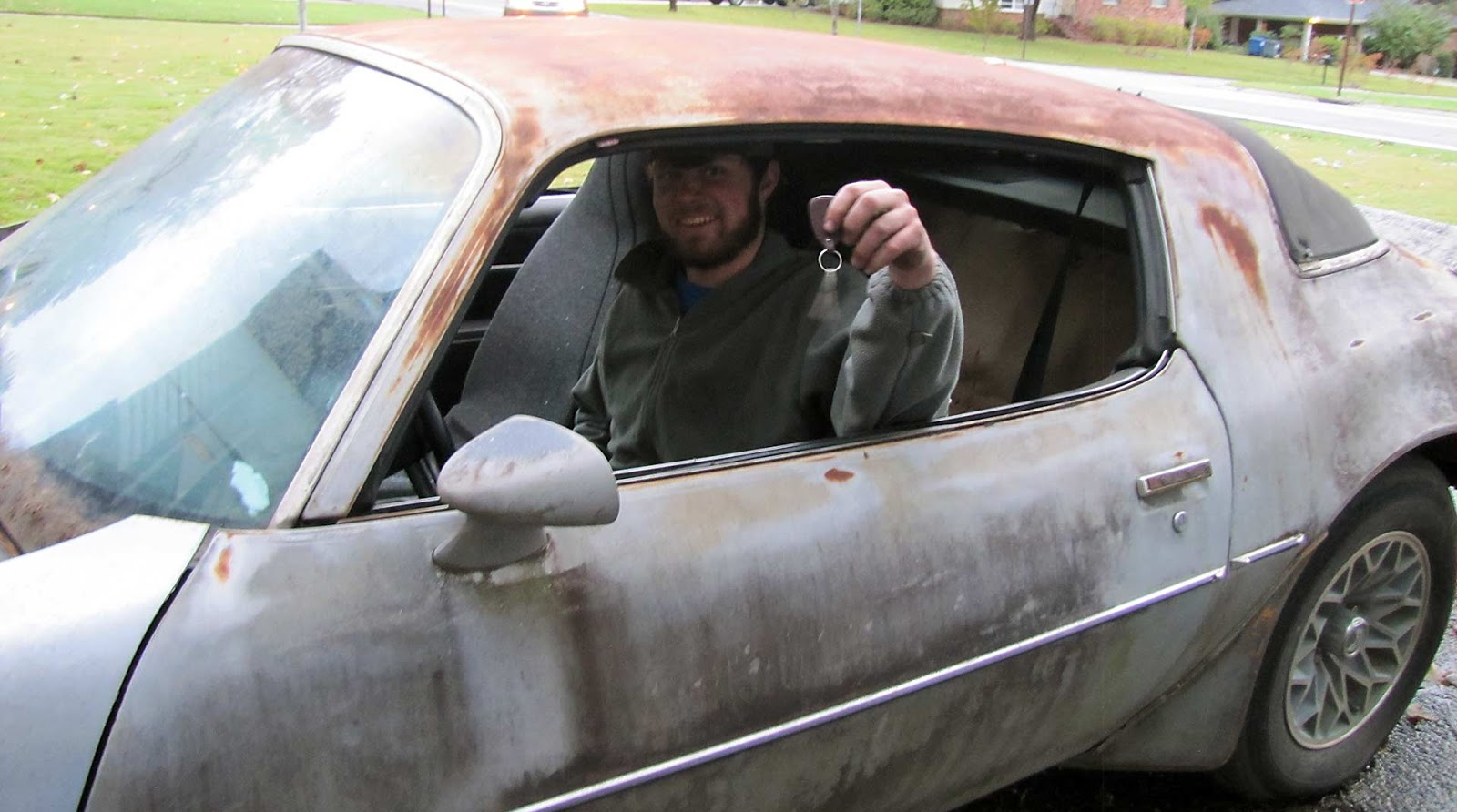
The Rockies don’t face the Atlanta Braves until September, by which time Blackmon likely hopes his Georgia-based legal troubles will have been resolved. ALDLAND remains–weirdly– your exclusive source for coverage of the legal saga of Blackmon’s 1979 Pontiac Trans Am. After Blackmon sued a Georgia man and his company in January, alleging that they refused to either complete work on or return his vintage vehicle, it looked like the case was steering toward a fast resolution when the defendants fumbled their opportunities to respond to the lawsuit. As predicted in these very digital pages, Blackmon then asked the Superior Court of Cherokee County, Georgia, to grant him a default judgment against both the individual defendant, Michael Ramsey, and the corporate defendant, Ramsey Performance. My assessment of the case at that point:

Judge [David] Cannon certainly has plenty of latitude to grant a default judgment in Blackmon’s favor here. The easiest part to resolve should be a ruling on the question of a default judgment against Ramsey’s company, which, in Georgia, must be represented by a lawyer. Apparently open questions about the precise nature of the remedy or remedies Blackmon seeks (e.g., Does he just want his car back? Does he want money from Ramsey, and, if so, exactly how much?) may complicate the situation for Blackmon, however, and complications and uncertainties usually are not helpful to a party seeking entry of a default judgment.

Now, in his first edict in this case on the subject of the defendants’ default, Judge Cannon indeed seized upon that easiest portion of the issue before him, but not quite in the manner Blackmon probably wished. Acknowledging that Georgia law requires Ramsey Performance to be represented by an attorney in litigation in that state, the court’s notice nevertheless states that, in consideration of general guidance from the Supreme Court of Georgia favoring generosity in granting extensions of time during pandemic conditions, it will permit Ramsey Performance nearly another month to find a lawyer.

While this is a significant reprieve for Ramsey Performance, the relief may be short-lived. The mere participation of an attorney on the company’s behalf alone will not cure the company’s problems in this case, and that attorney still will be in the difficult position of having to convince Judge Cannon that he should excuse Ramsey Performance’s failures to respond to Blackmon’s complaint and motion for default judgment. To the extent settlement remains on the table, this may push Ramsey, who has repeatedly expressed his displeasure with the notion of having to pay for a lawyer, closer to a deal.

So pump the brakes for now, attentive public, and navigate your browser back here in a few weeks for our continuing exclusive coverage of arguably the summer’s biggest sports law story.

_________________________________________________________

Previously
A predictable turn in the ongoing saga of Charlie Blackmon’s 1979 Pontiac Trans Am
A reminder that it’s spring training for automotive shop workers too: The ongoing saga of Charlie Blackmon’s 1979 Pontiac Trans Am
The ongoing saga of Charlie Blackmon’s 1979 Pontiac Trans Am

The NCAA’s response to Georgia’s new NIL law reveals the emperor’s new clothes

Earlier today, the State of Georgia enacted HB 617, which affirmatively permits college athletes attending schools in that state to receive financial compensation for use of their name, image, or likeness (“NIL”). The new law takes effect on July 1, 2021.

In a nationwide environment in which the NCAA broadly prohibits almost every form of direct financial compensation to so-called “student athletes,” emerging state laws like Georgia’s HB 617– other states joining in this initial wave include Alabama, Florida, Mississippi, and New Mexico– offer a commonsense middle ground on compensation that’s short of revenue sharing with school athletic departments and would seem to place schools in those states at a competitive recruiting advantage, at least in the short term.

The NCAA’s initial response to what appears to be a broadside attack on one of the governing body’s longstanding, core tenets was surprising. Jere Morehead, a member of the NCAA Board of Governors “said he would expect the NCAA would allow ‘accommodations,’ to be made for athletes in states with NIL rules.” Morehead also is the president of the University of Georgia, so this may not be the NCAA’s official position on state NIL laws. If the “accommodations” comment reflects in any way the thinking within NCAA leadership, though, it is extremely illuminating.

It’s easy to forget that athletics organizing entities, and especially in light of their popularity and rhetoric the NCAA, NFL, and MLB, do not act and regulate their respective sports with the force of actual law. (In fact, they in some sense operate outside the law thanks to formal and informal antitrust exemptions.) During baseball’s meltdown over Barry Bonds’ superhuman ascension in the early aughts, you could be forgiven if you weren’t sure whether steroids were illegal illegal or merely MLB “illegal.” The NFL also has done an effective job of coopting this officious language into its in-sport vernacular as well (e.g., “illegal touching” having quite different meanings on and off the field). All of these groups have “committees” that issue “rules” and “regulations” just like real government agencies!

For the degree to which these private sports administrative entities control the behavior of their subject players as well as the general public’s perception of the goings-ons in and around their games, it’s sort of amazing that states could just opt out of a major NCAA prohibition and the NCAA’s response is to roll over and take it. Not that passing legislation is easy, but is this all that was needed all along?

If the NCAA’s “accommodations” response proves real, it could carry widespread consequences for the enforceability of other NCAA rules. Suddenly, the implication is that the NCAA will yield wherever its policies conflict with state law. Does this mean an end to the NCAA’s punishment of athletes who use marijuana in states that have authorized its use? What about sports wagering? There of course are other actual legal factors at work with those two examples (the persistent federal marijuana prohibition and common legal provisions restricting wagering by contest participants), and it’s unclear whether an affirmative legalization is a prerequisite (e.g., was Todd Gurley prohibited from being paid for autographed helmets as a matter of Georgia law?) . Still, Morehead’s suggestion that the NCAA will quietly accede in this area implies that there actually may not be much brute behind the bluster out of Indianapolis. If that’s the case, it’s a welcome– if still annoyingly executed– development that should further hasten the loosening of the NCAA’s iron fist over those whose efforts generate millions of dollars in administrative salaries.

A predictable turn in the ongoing saga of Charlie Blackmon’s 1979 Pontiac Trans Am

The end of the first month of the 2021 MLB season finds the Colorado Rockies stuck in last place in the National League’s Western Division. By OPS+, they’re the worst hitting team in the NL and the second-worst overall, their 85 OPS+ just edging the Detroit Tigers at 81 OPS+. Even though the Rockies were in the playoffs as recently as 2018, their slow start this year already has cost Jeff Bridich his general manager post. Perhaps unsurprisingly in light of the foregoing, Charlie Blackmon, the team’s ostensible star, so far is having the worst season of his career. His .169/.299/.292 line shakes out to 58 OPS+/56 wRC+/108 DRC+.*

Meanwhile, the winding road that conveys the legal saga of Blackmon’s 1979 Pontiac Trans Am– a story that remains too hot for any other website to cover– may be approaching its terminus. We picked up the tale as it hit the courthouse steps in January, when Blackmon filed suit against Michael Ramsey and his company, Ramsey Performance, alleging that the two entities took his money and his car and, after failing to complete agreed-upon restoration work on the latter, refused to return either. When Ramsey declined to hire a lawyer and instead made a “Good Job/Good Effort” attempt to respond to Blackmon’s complaint by filing only a copy of the complaint bearing Ramsey’s handwritten comments on the allegations, I predicted that Blackmon’s legal team would wait a few weeks and then file a motion for default judgment or judgment on the pleadings.

That’s exactly what happened. Referring to Ramsey’s unusual filing as “a something,” Blackmon’s motion asked the Superior Court of Cherokee County, Georgia to take a shortcut to the end of the lawsuit. Ramsey’s response either was so deficient that it didn’t amount to an answer at all, the essence of the argument goes, or it was an answer that didn’t deny any of the material allegations in the complaint. Either way, Blackmon contended that the court can rule for him on the question of the defendants’ liability right now. The question of damages– basically, the amount of money the court would order paid to Blackmon– could throw a wrench into Blackmon’s gears, however. Because he hasn’t been able to inspect the vehicle, the motion proposes the appointment of a special master– an investigator who works at the judge’s direction– to provide an assessment of the Pontiac’s condition for the purpose of determining a precise monetary award.

If Ramsey’s response to this motion is better than his response to the complaint, it is so only because he typed it as a partially separate document rather than handwriting his comments on Blackmon’s filing. This response otherwise is worse than the last one. Continuing to represent himself, Ramsey complains that Blackmon refused an out-of-court resolution of the dispute on terms Ramsey dictated. Ramsey also provided in-line responses to some of the arguments in Blackmon’s default motion, though these generally do not help his position, being either admissions of matters pertinent to the question of default (e.g., acknowledgement that he was served with the complaint) or immaterial. He also attached correspondence that again reveals Blackmon’s personal email address (although Blackmon’s own lawyer already let that cat out of the bag) and is neither relevant nor, to the extent it constitutes settlement communications, admissible as evidence.

Next up will be the trial judge’s ruling on the default motion. Judge Cannon certainly has plenty of latitude to grant a default judgment in Blackmon’s favor here. The easiest part to resolve should be a ruling on the question of a default judgment against Ramsey’s company, which, in Georgia, must be represented by a lawyer. Apparently open questions about the precise nature of the remedy or remedies Blackmon seeks (e.g., Does he just want his car back? Does he want money from Ramsey, and, if so, exactly how much?) may complicate the situation for Blackmon, however, and complications and uncertainties usually are not helpful to a party seeking entry of a default judgment.

Those, of course, are matters for Blackmon’s legal team to sweat. Their client likely is more concerned about his sub-.200 batting average and his team’s NL-worst record.

As always, keep your browser dialed to ALDLAND.com, where we remain your (actually; I somehow am not kidding) exclusive source for hot rod baseball litigation.

* All statistics current as of the time I typed them.

_________________________________________________________

Previously
A reminder that it’s spring training for automotive shop workers too: The ongoing saga of Charlie Blackmon’s 1979 Pontiac Trans Am
The ongoing saga of Charlie Blackmon’s 1979 Pontiac Trans Am

A reminder that it’s spring training for automotive shop workers too: The ongoing saga of Charlie Blackmon’s 1979 Pontiac Trans Am

MLB spring training kicked off this week, and the schedule included a couple of games for the Colorado Rockies, who make their spring camp in Arizona. While outfielder Charlie Blackmon has yet to make his 2021 spring debut for the Rockies, that didn’t stop his legal adversaries from making theirs on the other side of the country.

In the story too hot for any other sports website to handle, Blackmon is suing a Georgia man– Michael Ramsey– and his company– Ramsey Performance– who, Blackmon alleges, took his money to restore a 1979 Pontiac Trans Am but didn’t finish the work and now refuses to return either Blackmon’s car or his money.

Yesterday, the Superior Court of Cherokee County, Georgia finally heard from Ramsey and his company– sort of. Ramsey, purporting to represent himself and possibly his company, filed a response to Blackmon’s complaint that does not so much answer the allegations, in a conventional sense, as it does continue the long-winded, argumentative emails Ramsey had been sending to Blackmon’s agent before he filed the lawsuit. To the extent they can be distilled, the main points of Ramsey’s countering contentions are that he, personally, is not at fault because all the work was done by his company; there was no fixed schedule for this “spare time” project; the scope of and financial responsibility for work done by third parties remains Blackmon’s obligation; “the vehicle is not a hostage . . . but it will not leave without payment resolution”; a sheriff’s deputy sent to inspect the vehicle at Ramsey’s garage accidentally defrosted Ramsey’s freezer; and Blackmon’s complaint should have included more of Ramsey’s emails.

The unsolicited suggestion that Ramsey and his company should hire a lawyer isn’t merely a strategic one borne out of the thought that judges are unlikely to be swayed upon encountering filings that include both segments typed entirely in capital letters and handwritten annotations on the opposing party’s exhibits. Indeed, while Ramsey has the right to make the choice to represent himself in court, his company, Ramsey Performance, does not.

Indeed, it isn’t clear that Ramsey Performance, as the distinct legal entity that Blackmon named as a separate defendant and to which Ramsey himself pointed for potential liability, filed an answer at all. If it did not, Blackmon’s attorney likely will wait a couple weeks and then move for a default judgment against Ramsey Performance. As for Ramsey’s responsive filing, assuming it qualifies as an answer, it may be ripe for a quick motion for judgment on the pleadings or summary judgment to the extent the judge determines that it does not sufficiently deny key allegations in Blackmon’s complaint. Setting aside for a moment the possibly critical technical failings of Ramsey’s answer, it also is possible that the judge orders the parties to mediate a dispute that seemingly could be resolved for less than $20,000.

The only way to find out what will happen next? Keeping it tuned right here to ALDLAND.com, your exclusive source (seriously) for hot rod baseball litigation.

_________________________________________________________

Previously
The ongoing saga of Charlie Blackmon’s 1979 Pontiac Trans Am

The ongoing saga of Charlie Blackmon’s 1979 Pontiac Trans Am

1979 Trans Am- bought it new in April of 1979. It is an unrestored 400/4spd  car with a little… | Pontiac firebird trans am, Pontiac firebird, 1979  pontiac trans am

From MLB hot stove season to MLB hot rod season, the Superior Court of Cherokee County, Georgia brings us the tale of Colorado Rockies outfielder and four-time All-Star Charlie Blackmon‘s classic sports car. While the Sports Law Roundup is on hiatus, we’ll tackle this one in as much detail as the public record permits, because what else are we going to do during Pandemic Pro Bowl Weekend?

According to a complaint his legal team filed on Monday, Blackmon hired Michael Ramsey and Ramsey’s company, Ramsey Performance, to restore a 1979 Pontiac Trans Am in early 2015. Since then, Blackmon has paid Ramsey more than $50,000 and has nothing to show for it, and now he wants it back. Ramsey may have done some work on the project, but it is not complete. The allegations and written communications attached to Blackmon’s filing suggest that Ramsey even has refused to allow Blackmon to view the vehicle, much less take possession of it.

The filing includes written correspondence, mostly between Ramsey and Anna Domenech, one of Blackmon’s representatives at his sports agency, ACES. Domenech stepped in to try to retrieve her client’s vehicle. Her documented efforts over the course of most of 2020 proved unsuccessful, but they paint a picture of Ramsey as someone with other priorities and not particularly eager for real engagement with Blackmon’s people. Ramsey’s rare, often lengthy responses refer to his obligations to a software company undergoing post-merger downsizing, a matter he characterized as “my job which actually supports my family.” The emails also suggest that the restoration project became more expensive than Ramsey anticipated and required him to advance money for overruns that he wants to recover, at least in part, before surrendering the car to Blackmon.

Ramsey eventually offered a completion date of May 23, 2020. After he missed his own deadline, Blackmon hired a Georgia lawyer with experience representing sports and entertainment clients in the state to secure the vehicle’s return. In September, when Ramsey responded to the lawyer’s demand, the lawyer forwarded the response to Domenech, simply noting, “[a]t least he is alive.” Domenech replied to agree, further pointing out that the work still wasn’t done and writing, of Ramsey, “[i]f there is someone that can’t be trusted its [sic] him and he has proven that time and time again.”

Blackmon hired another Georgia lawyer who, in December, again demanded possession of the car. Ramsey responded by insisting that he be paid additional money before surrendering the vehicle:

I am more than happy to setup [sic] a review/inspection of the car, settle on what is owed based on that review, and ONLY THEN return the car to Charlie once we are both able to close this. It can only happen in that order and in that way, I will not release the car and settle later . . . . Anything owed on either side are [sic] agreed to and handled before the car leaves as once the car leaves everything is closed.

Blackmon then sought the assistance of the Cherokee County Sheriff to retrieve the car. When that effort was unsuccessful, Blackmon finally filed suit this past week against Ramsey and his company. He’s asking the court to order Ramsey to return the car or pay Blackmon the value of the car plus all materials and services for which Blackmon paid. Blackmon also is asking the court to force Ramsey to pay Blackmon’s legal expenses incurred in the case.

Ramsey has not yet filed an answer to the complaint, and his response isn’t due until at least late February.

There has been no detectable media coverage of this case, and Blackmon presumably wants it to stay that way. Nevertheless, his lawyers’ decision to leave unredacted certain personal identifying information, including Blackmon’s email address and the addresses of two of his current or former residences (one of which looks like it might be incorrect), is a footnote of minor interest pertaining to the representation of a famous client.

Born in Texas, Blackmon attended high school and colleges in Georgia before signing with Colorado as a second-round pick in 2008. Now, he’s entering what might be his final season with the Rockies (he has player options in 2022 and 2023) and looking to rebound from a slight dip, by his standards, in his eleventh year in the majors.

InDirecTV: A battle over television access to NFL games continues

Yesterday, the United States Supreme Court sat with a full bench for the first time since the passing of the long-tenured Justice Ruth Bader Ginsburg. Among other actions on Monday, the Court (Justice Amy Coney Barrett not participating) released an order in the antitrust lawsuit challenging NFL teams’ collective arrangement with DirecTV in which the former permit the latter to be the sole provider of live, out-of-market game telecasts through the NFL Sunday Ticket package.

On its face, the order is good news for those challenging that arrangement, because it allows their lawsuit to continue, letting stand a lower-court order that reversed an even-lower-court order that would have dismissed the challengers’ case.

But while the media coverage of yesterday’s order also noted the portion of the statement included with the order from Justice Brett Kavanaugh that the Supreme Court’s decision “should not necessarily be viewed as agreement with” the lower court’s decision to revive the case, I have not seen any further discussion of the entirety of Justice Kavanaugh’s statement, which goes much farther than what that out-of-context quotation might suggest.

More than a neutral, “we’re not saying one way or the other” comment, Justice Kavanaugh’s statement pours cold water on the hopes of those who saw this lawsuit as a vehicle to break up the NFL’s antiquated, frustrating, and expensive approach to delivering television access to its product. Most fundamentally, the statement suggests the possibility that the challengers may not have a right to bring their lawsuit at all: “This Court’s case law authorizes suits by direct purchasers but bars suits by indirect purchasers. The plaintiffs here did not purchase a product from the NFL or any team, and may therefore be barred from bringing suit against the NFL and its teams.” (Citations and internal quotation marks omitted.) And even if the challengers do have a right to sue, their claims may fail in substance if the NFL and its member teams are organized and operate as a cohesive legal unit:

Under the existing contract, the 32 NFL teams have authorized the NFL to sell the television rights for out-of-market games to a single buyer, DirecTV. The plaintiffs argue, and the Court of Appeals agreed, that antitrust law may require each team to negotiate an individualized contract for televising only its own games. But that conclusion appears to be in substantial tension with antitrust principles and precedents. The NFL and its member teams operate as a joint venture. And antitrust law likely does not require that the NFL and its member teams compete against each other with respect to television rights.

(Citations omitted.)

To be sure, these are the preliminary views of one justice on a nine-member court that might never see this case again. If the case does return to the Supreme Court, Justice Kavanaugh’s expressed concerns might not be relevant to the questions at issue for the Court at that time, or, if they are, they might not be shared by a sufficient number of his fellow justices to be consequential.

As the case heads back to the trial court, however, Justice Kavanaugh’s comments could prove influential and find their way into the analysis of a judge who already has shown some disinclination toward the challengers’ claims and, more certainly, the arguments of the league and teams.

DirecTV’s NFL Sunday Ticket package may survive this legal challenge, but the service separately is facing financial difficulties that could render the lawsuit practically moot. Five years after buying it for $49 billion, AT&T has been trying, unsuccessfully, to sell DirecTV as it hemorrhages subscribers, the rate of losses recently slowing only because it’s running out of subscribers to lose. With the NFL’s agreement with DirecTV set to expire in the next year or two, attrition rather than litigation might be the most fruitful course for those seeking more football-viewing options on Sunday afternoons. Stay tuned.