August is known as a slow sports month, which means it probably isn’t the best time to start a new sports website, but here we are. An NFL labor dispute provided a compressed preseason that offered some contrast to that part of the baseball season right before most people wake up and start watching again (which means it’s exactly when the Tigers will go on a tear (and as soon as I write that, for them to blow it in the 10th against the D-Rays)) and that part of the NASCAR season where drivers are still screwing around, oblivious to the fact that the lack of urgency probably will cost them a spot in the playoffs.
Revelations about the Longhorn Network grew into the second annual Texas A&M-SEC flirtation that again has fizzled, and the news of brazen NCAA violations at UMiami are simultaneously so flagrant and unsurprising that there’s not much to add to Charles Robinson’s initial report. And so we cover year-old mascot news.
On the sports blogging front, famous ex-benchwarmer and blogger of the people Mark Titus of Club Trillion apparently now is writing for Grantland, to no tidings whatsoever. I can’t decide what to think about this. Everywhere but on this site, Grantland has been taking it on the chin pretty badly, and even I’m beginning to find The Triangle’s daily sports update by Shane Ryan unreadable. Titus has been the anti-establishment candidate for as long as he’s been a public figure, and probably longer, so it’s tough to see him alongside the purported literary elite that populate Grantland, even if that site’s natural audience surely must be welcoming his voice.
While that relationship, to the extent it is one, remains in its embryonic stages, a new site lurks on the horizon. The Classical, a conceptual rival to (at least the idea of) Grantland, is slated to get rolling possibly by the end of this year.
Sports bloggers probably fall into two camps: the big time, corporate types viewed as influential but out of touch, and the small time, snarky, critical types viewed as operating on the rumor level as much as the cutting edge. Whether internet sports writers are generally clueless reactionaries or hypercritical gossipmongers, they managed to pull it together for uniformly positive and heartfelt responses to the news that Lady Vols’ basketball coach Pat Summitt was diagnosed with early onset dementia. (See here, here, and here, among many other examples.)
All this to say that, today, I traded the slow sports news for the non sports news when I saw a commercial during the TV dead zone that is 6:30-7:30 pm Eastern for a text messaging contest on Wednesday night. I haven’t been able to locate the details on this particular contest online, but apparently these things happen from time to time.

Texting is not a sport, and neither is gambling, but for someone who likes writing about sports (and, really, writing about writing about sports), gambling on sports has a certain, vague attraction, even if I don’t gamble myself, and so I took in Bill Barnwell’s second dispatch from Vegas for Grantland. Of course, I’d trust Barnwell’s betting advice as much as I’d trust that of former vice presidential candidate Wayne Allyn Root or Danny Sheridan. Barnwell does provide some background information on gambling terminology and strategy, though, and that’s nice even if it isn’t always accurate. What I do enjoy from him are the parts of his submissions that talk about the history of Las Vegas, and about trying to find a way to live there and maintain sanity and financial solvency. Having spent just twenty-six (consecutive) hours in Vegas, I have just enough personal experience to enjoy following Barnwell on his desert adventure. We’ll see how long my jealousy lasts.
Finally, Wednesday saw the fruits of a story I’ve been trying to cultivate since the early days of The Triangle and Google+, which is to say, July. It was then that the unappreciated legacy of Kerry Collins, associated more with memories of problems with alcohol and, per the New York Times’ “Black People” section, misplaced racial epithets, than gridiron greatness, came to my attention:
Collins retired this week, which, considering that I happened to graduate from the same college at around the same time, and considering that he once (rightfully) mocked me in a pizza parlor after I got wildly intoxicated on sambuca, seals both of our journeys from misbegotten youth into adulthood. And while we’re here, I would like to note that Collins has more passing yards than Jim Kelly, Donovan McNabb, Phil Simms, Steve Young, Y.A. Tittle, Johnny Unitas, and Troy Aikman. If he had won the 2000 Super Bowl with the Giants, and then made the Super Bowl with the 2008 Titans, he would be a borderline Hall of Famer. As it is, he has to be considered as the most underrated decent-to-very-good quarterback of the past 15 years.
The author makes a fairly remarkable point here, even excusing his sambuca-driven intoxication, and it’s one that Chris Johnson, Collins’ former teammate in Tennessee, mentioned in my fake interview with him the other weekend. Bill Polian, president of the Indianapolis Colts apparently got the memo too, because he pulled Collins out of retirement as insurance for an ailing Peyton Manning. And there’s the ALDLAND news/non-news cycle. Good keeping up, all.
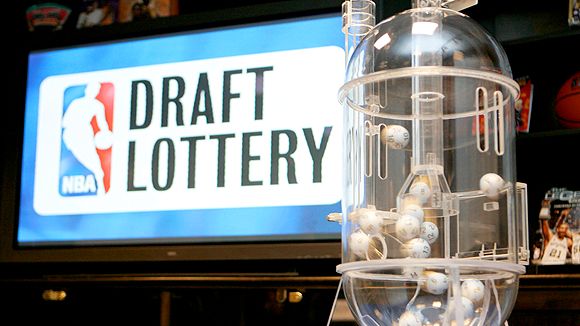 The NBA Draft Lottery is the ping-pong-ball-centered game the league plays with the four worst teams from the previous season to determine the order of selections for the next player draft. It’s basically beruit/beer pong with millions of dollars instead of Keystone Light, and, like timid lightweights, the winner doesn’t want to stay on the table for the next round.

 ALDLAND