A fresh glance at Babe Ruth, upon the resumption of baseball

My latest post at Banished to the Pen contributes to the spirit of the opening of a new baseball season with a quick look back at one of the game’s most accomplished players.

It is nice to see the rookies of today showing respect for their elders, but modern celebrants of the game sometimes fear that reexaminations of their childhood heroes will alter their images and understandings of past giants in adverse fashion. For Babe Ruth, a truncated, targeted retrospective does serve to modify the Ruthian folk zeitgeist, but, in his case, it does so exclusively to enhance the stature of the Sultan.

The full post is available here.

Preseason BP Nuggets

Dewey_BP

Real baseball finally gets underway today. (The NL Central doesn’t count.) Like last year, I read the Baseball Prospectus annual (now just 476 pages!) so you don’t have to. Rather than roll around in the sea of numbers, the following are some little nuggets of information that, at the very least and probably the very most, might help you get excited for the 2015 baseball season.

  • Albert Pujols: Everyone knows Pujols is a mechanized slugger who is and has been aging for some time, beginning in especially noticeable and expensive fashion when he left St. Louis for Southern California in 2012. The authors criticize Pujols for “earning $23 million for 2.9 WARP worth of work,” yet the Angels’ overpayment isn’t really that bad. A win usually is valued between $6 million and $8 million, and while an amount north of $7 million is on the high end, the Angels probably are just fine paying Pujols less than $8 million per win.

  • Ian Kinsler: The Tigers’ return for Prince Fielder, Kinsler made Detroit GM Dave Dombrowski look good last season. One thing Kinsler didn’t do last season though was take a free trip to first base. His walk rate fell off precipitously from his career levels, something the Tigers would like to see return for a guy who’s likely to bat high in the order and is a decent runner and base stealer once he’s aboard.
  • Max Stassi: “He must be the only guy in the game ever to earn his first major-league RBI by taking a fastball to the face.”
  • Kansas City Royals: The American League’s representative in the 2014 World Series had a remarkably mediocre regular season last year. Their ranks in various team measures: RS/G (14th), RA/G (12th), True Average (25th), FIP (16th), Defensive Efficiency Rating (12th). And yet there they were in October, one baserunning decision away from a world championship.
  • Ruben Tejada: PECOTA is in love with the Mets shortstop. BP’s projection machine sees Tejada hitting twenty-five home runs this season (he hit eight in the past three seasons combined) with a True Average of .306 (up from the decidedly average .261 last year), and other gains of similar magnitude across his offensive stats. It also sees him aging eleven years this offsesaon and moving from short in New York to first base in Los Angeles. Something must be wrong here.
  • Pitch framing: The middle child of the famous catching family finds himself a free agent, which is a little bit surprising given the new and widespread focus on catcher value, particularly in the area of pitch framing, where all of the Molinas shine. Here’s José’s player comment: “In 1947, private investigator Eddie Valiant was declared a hero for his work in the murder case of Marvin Acme and R. R. Maroon. With help from his girlfriend Dolores, Baby Herman and Maroon Cartoon Studio star Jessica Rabbit, Valiant discovered that Judge Doom killed Acme and Maroon in an attempt to take over Toontown. Unfortunately, Valiant’s investigation came before the time of detectives Mike Fast and max Marchi. The case was re-opened in 2011 when it was determined that Jose Molina was indeed the one who framed Roger Rabbit.”
  • Chris Archer: We may have found the Detroit Tigers Dugout Librarian‘s favorite non-Tiger in Tampa Bay pitcher Chris Archer: “The Dalai Lama of the diamond, Archer is cool as a cucumber off the field, engaging in philosophical debates and juggling book club memberships. Between the chalk, however, he is a firey competitor, chucking hardballs in the upper 90s with a sharp slider.”

Finally, to satisfy all of your team projection needs, here’s the best prediction piece out there, courtesy of the hard-working crew at Banished to the Pen. Leave your opening day thoughts in the comments below.

Michigan State Final Four Preview

Michigan State’s back in the Final Four, and they take on Duke tonight at 6:09 on TBS. In the spirit of the Final Four, here are four good reads on the 2015 Spartans to get you ready for tonight’s game:

Go Green!

Taking a pass on new hockey statistics

hockey pass

A quick refresher on hockey’s new statistics: puck possession correlates more strongly with winning than do things like goals or shots; measuring possession in a fluid game like hockey is difficult; as a practical solution, Corsi and its less-inclusive sibling, Fenwick, are statistics that track certain, more easily measured events (all shots, including on-goal shots and missed shots, and, in Corsi’s case, blocked shots), thereby serving as proxies for possession and, therefore, indicators of team success. Once you get past the names (as the NHL is in the process of doing), the concept is simple.

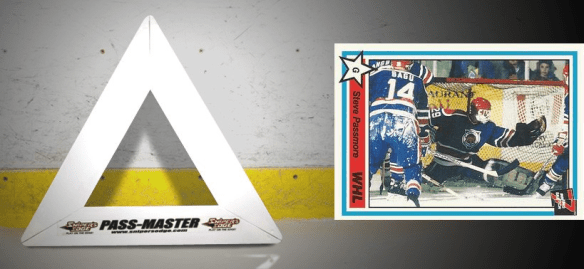
One way to improve Corsi might be to make it more comprehensive. If Corsi approximates possession by counting certain indicia of possession, it stands to reason that a similar metric could better approximate possession by counting more indicia of possession. In looking for other things to add, and keeping in mind that the practical computational benefit of Corsi is that it is comprised of easily tallied events, pass attempts– including both completed and unsuccessful passes– would seem to meet both criteria. Pass attempts indicate possession the same way shot attempts, as broadly defined under Corsi, do, and they should be nearly as easy to count.

I can think of two potential reasons why it might not make sense to expand Corsi to include pass attempts: 1) it is significantly more difficult to identify and count pass attempts than the shot attempts already being tracked, and 2) adding pass attempts to a possession proxy metric like Corsi does not significantly increase the value of the metric.

While the first might be true, it also may make it easier to collect more events. For the limited purposes of a relatively simple metric like Corsi, there should be no need to code or label the component events compiled into the single Corsi output. Adding pass attempts would save trackers from having to decide whether to include or exclude an ambiguous shot-attemptish thing. As for the second, I attempted to address this with someone who has written on the general subject, but, likely due to my own ineptitude, the exchange resembled two ships passing in the night, which is a terrible and sufficient way to conclude this post.

________________________________________________________

Related
Bouncing puck: Passing, not shooting, is the key to scoring on the ice and the hardcourt
More on passing data and the shot quality debateHockey Prospectus
There’s no such thing as advanced sports statistics

Pekka Rinne: Masterton, Vezina, or Both?

Individual play is just as important as team play in the NHL. Two NHL trophies that are awarded each year to individuals are up for Pekka Rinne’s grab. The Vezina trophy goes to the best goalie in the league, while the Masterton Trophy goes to the player (not just goalie) who has played at the highest level and has overcome challenges.

I break down his chances to win over the competition over on TWH.

Read the full story here.

ND Confessional: Sacrifice for Success

nd-uk

With thirty-four seconds remaining in their game against Kentucky, Notre Dame called timeout. The score was tied at sixty-six, and the Irish had just turned the ball over to the Wildcats. The shot clock was off.

As soon as Kentucky inbounded the ball, ND fouled, sending the UK ballhandler to the line. He made both shots, giving the ball back to Notre Dame down 68-66, with thirty-three seconds left on the clock and the chance to tie the game or take the lead and claim a berth in the Final Four.

ND could have had the final possession of the game with more than thirty seconds on the clock, down two, down one, or still tied, if they had fouled Kentucky immediately. The preceding paragraph would have described reality. It does not, because they did not.

Instead, the Irish passively allowed Kentucky to write the script for the game’s final seconds, their foul coming with a mere six seconds left on the game clock. Why wait so long? A quick foul seems like the obvious play. Even if Kentucky made both free throws– and they might not!– Notre Dame still would have nearly a full-length possession in which to tie or take the lead. In essence, an immediate foul inverts in ND’s favor the situation that existed coming out of ND’s timeout. Sure, they might be down two points rather than tied, but they seemed content to grant Kentucky that opportunity to score anyway. The only difference is time.

The Sound of Madness

gusjohnson

Hello Madness, my old friend
I’ve come to talk with you again,
because a vision loudly creeping
left its seeds while I was sleeping,
and the aural vision that was planted in my brain
still remains
within the sound of Madness.

Last night, Fox Sports Live teased us by announcing a late-March appearance on their program of the great Gus Johnson, the Detroiter who rose to prominence as a college basketball announcer for CBS, working the NCAA men’s basketball tournament from 1996 to 2011. If you don’t recognize his name, surely you’ll recognize his voice. In short, Johnson was the genuine article, calling wild tournament games with pitch-perfect passion. None were better. None could be better. Cry while you while away your day with the Gus Johnson Soundboard.

Cry because, in 2011, Fox Sports hired Johnson away from CBS, and CBS let him leave, but CBS retained the broadcast rights to the tournament. Fox’s attempt to convert Johnson into the American voice of soccer did not work.

In Johnson’s absence, CBS appears to have tabbed Bill Raftery as Johnson’s spiritual replacement, a role for which he is ill-suited because 1) Johnson himself is irreplaceable and 2) Raftery is not a good broadcaster. That second point is an Unpopular Internet Opinion, so you have to read another paragraph on the subject.

Raftery seems ok enough in one-on-one settings away from a basketball broadcast, such as this segment on last week’s episode of Garbage Time. Get him on an NCAA tournament broadcast, though, and he is the worst. In a word: unlistenable. I’ve never heard anyone work so hard to consciously fabricate an air of spontaneous passion. Raftery is the unintentionally funny kid in high school who became self-aware, realized why people liked him and thought he was funny, and then actively tried to replicate his past affect to gain popularity, something that’s even more tortured to witness than this sentence is to read. Raftery is Tony Montana, who becomes a reckless wreck after buying too deeply into his own product. I’d rather hear Brian Collins call a tournament game than Bill Raftery.

The present situation is untenable. There can be no missions accomplished, no peace in our time without a reunification of Gus Johnson and the NCAA tournament. Messrs. Berson and Shanks: Tear Down This Wall.

And the people bowed and prayed
to the neon god they made.
And the sign flashed out its warning
in the words that it was forming.
And the sign said, “The words of the prophets are written on the subway walls
and tenement halls
and whispered in the sound of Madness.”

#FreeGusJohnson