NBA offseason > NBA regular season

  1. Last year, I wrote that the NBA offseason, extended by the owners’ lockout of the players, was more interesting than the NBA’s regular season. (See also this.)
  2. Last week, I put forth irrefutable evidence that the James Harden Experience is one of the best there is.

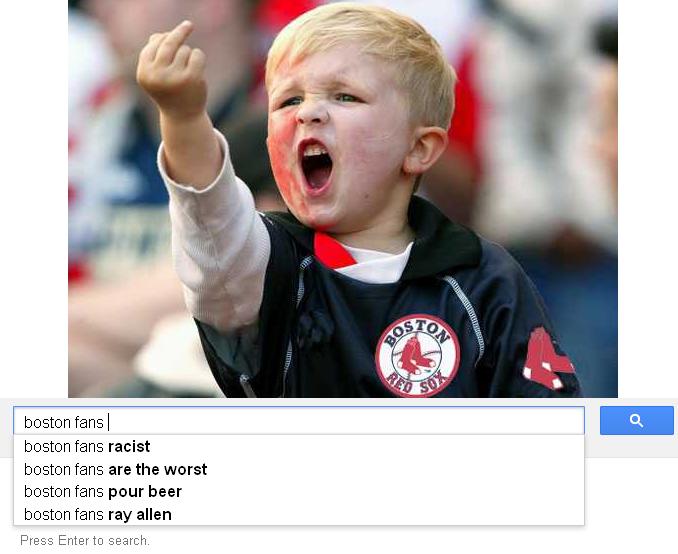
Earlier this evening, bpbrady sent me a piece of investigative twit-journalism that demonstrates beyond a shadow of a doubt that items 1 and 2 above have merged into one truth: like in 2011, the NBA offseason will be more interesting than the regular season, and Harden has taken it upon himself to make it so.

James Harden seems to be enjoying his summer, the appropriately unassuming title reads, and now all the rest of us can enjoy his summer too.

Two girls, one Jam

I’m getting ready to slide out of work and slide into an evening of outdoor music featuring two fine ladies, Mavis Staples and Bonnie Raitt. Here they are in reverse order, Bonnie with one of her biggest hits, and Mavis discussing my favorite album of hers:

_____________________________________________

Previously
Mavis Staples at Hangout Fest
Bonnie Raitt with Bruce Hornsby

The dark side of Olympic opportunity

As a kid, watching the Olympics was an extremely happy event. To go from cheering for the dismal and dully colored home teams to watching this bright spectacle, along with a very successful team to call my own, was a lot of fun, and a lot of the competitors are kids too, which makes it pretty neat. They were competing in some sports and events we didn’t get to watch regularly, and there was a fun simplicity that flowed from the amateurism and unity of the whole thing.

The Olympics, as an event, really aren’t that simple, though. Munich happened. Boycotts of one kind and another happened. Protests were staged. Athletes were deemed unclassifiable. And that’s all before we get to the sports-related controversies of the familiar and unfamiliar variety. Most of these complicating events and issues are sociopolitical matters having little to do with sport as such, yet they still play out in meaningful ways at the Games.

This summer in London was no exception, of course. I’d like to highlight two items, one of which has not been the subject of substantial media coverage, and one of which has.  Keep reading…

On an NFL preseason injury report, one entry stands out

Lest the recent hype, comparative success, and sort of Bad Boy image fool you, the Detroit Lions are still the Detroit Lions, which means you should expect them to have crippling injuries at all times. Add in the context of a preseason game, and it should be no surprise that they’ll be without ten players for tonight’s game against Cleveland. Still, let’s take a look at that injury report:

Safety Louis Delmas, who underwent knee surgery on Tuesday, running back Mikel Leshoure (hamstring), receiver Ryan Broyles (knee), defensive tackle Sammie Hill (back), safety Don Carey (hamstring), offensive linemen Jonathan Scott (knee) also will not play tonight.

Running back Jahvid Best (brain) and cornerback Chris Greenwood (abdomen) remain on the physically unable to perform list.

What??

Head injuries are serious, and so is mental illness, but what does that even mean? Is that what we’re calling concussions now?

UPDATE: It looks like the answer is yes.

Totally disinterested person offers opinion on 2013 MLB Hall of Fame candidates

ESPN Dallas/Fort Worth reports that Rafael Palmeiro, apropos of nothing at all, said that Barry Bonds and Roger Clemens belong in the baseball Hall of Fame. Palmeiro certainly doesn’t have any personal interest in Bonds’ and Clemens’ induction. It’s not as though, if Bonds and Clemens don’t get in, Palmeiro has no shot at all, or anything.

Palmeiro was voted on just 11 percent of the ballots in his first attempt at the Hall of Fame in 2011. He received 12.6 percent in 2012, well short of the 75 percent needed from voting members of the Baseball Writers Association of America to make it in.

Oh well. Maybe he wasn’t going to make it anyway, regardless of what happens to those who rode the PED wave to higher heights than he. Why he wants to cast his lot with these two is beyond me, though, as is how exactly we let him finger-wave his way back into the news, if only for a moment.

Rainy Friday Jam

I’m slowly making my way back here from vacation, and with that and the looming football season ahead, a return to regular content is on its way. The latest ALDLAND Podcast is up on the Podcasts Page There’s also a Lyle Lovett concert report and some Olympic coverage in the can, and I plan to acknowledge the now-passed one-year anniversary of this site’s launch.

One of the many nice parts of vacation was my acquisition of a pile of new music, including three LPs of live music from the Tedeschi Trucks Band. Everybody’s Talkin’ contains a mix of originals and covers. We know that Derek Trucks places a lot of emphasis on the other artists with whom he publicly associates himself, but I still was surprised to see Fred Neil’s “Everybody’s Talkin'” receive such prominent attention, serving as the title track of the triple-live release.

I knew Neil’s song from one of my favorite live releases, Stephen Stills’ Live. There, Stills actually introduces the song by acknowledging Neil by name, which is one of the reasons it always has stuck out to me from among a pretty fluid B/acoustic side.

Here’s Neil’s original, which sets a pace suitable for a rainy Friday afternoon:

Voodoo? Hoodoo? You d[a] Man Blues Jam

In last week’s review of Chicago Blues: The City & The Music, I lamented the exclusion of Hoodoo Man Blues, one of the great Chicago blues albums. Here’s a review by AllMusic’s Bill Dahl:

Hoodoo Man Blues is one of the truly classic blues albums of the 1960s, and one of the first to fully document, in the superior acoustics of a recording studio, the smoky ambience of a night at a West Side nightspot. Junior Wells just set up with his usual cohorts — guitarist Buddy Guy, bassist Jack Myers, and drummer Billy Warren — and proceeded to blow up a storm, bringing an immediacy to “Snatch It Back and Hold It,” “You Don’t Love Me, Baby,” “Chitlins con Carne,” and the rest of the tracks that is absolutely mesmerizing. Widely regarded as one of Wells’ finest achievements, it also became Delmark’s best-selling release of all time. Producer Bob Koester vividly captures the type of grit that Wells brought to the stage. When Wells and his colleagues dig into “Good Morning, Schoolgirl,” “Yonder Wall,” or “We’re Ready,” they sound raw, gutsy, and uninhibited. And while Guy leaves the singing to Wells, he really shines on guitar. Guy, it should be noted, was listed as “Friendly Chap” on Delmark’s original LP version of Hoodoo Man Blues; Delmark thought Guy was under contract to Chess, so they gave him a pseudonym. But by the early ’70s, Guy’s real name was being listed on pressings. This is essential listening for lovers of electric Chicago blues.

Many of the cuts on this album are traditional blues numbers, but Junior Wells and Buddy Guy put their own spin and rhythmic emphasis on these otherwise familiar songs. Today’s Jam is a good example:

(If the title of this post jogged something in you, here‘s what you need.)

________________________________________________________

Related
Book review: Chicago Blues: The City & The Music