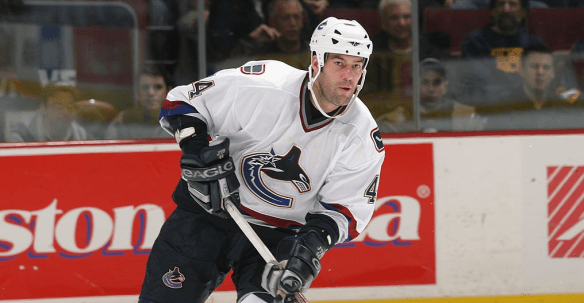
Supreme Court of Utah: “participants in any sport are not liable for injuries caused by their conduct if their conduct was inherent in the sport.”
The court elaborated:
We think it appropriate to establish an exception to tort liability for certain injuries arising out of voluntary participation in sports. But we do not deem it appropriate to require proof that a defendant’s conduct was reckless or intentional. Nor do we think it is necessary to limit the exception to an arbitrary subcategory of “contact” sports. Instead we hold that voluntary participants in a sport cannot be held liable for injuries arising out of any contact that is “inherent” in the sport. Under our rule, participants in voluntary sports activities retain “a duty to use due care not to increase the risks to a participant over and above those inherent in the sport.” But there is no duty to lower or eliminate risks that are inherent in an activity.
Excerpts from last week’s opinion in Nixon v. Clay, which arose out of an injury sustained in a church-league basketball game, and a link to the full opinion are available here.
 Baltimore has filed a lawsuit seeking to use eminent domain to take Preakness Stakes horse race and the Pimlico racetrack, where the race is held. . . .
 Between 1913 and 1915, there was a third baseball league, the Federal League, competing with the two established organized leagues we already know, the National League and the American League. Players’ salaries skyrocketed, and the NL and AL ended up breaking up the FL by buying up some clubs and inducing others to leave the League. The sole remaining FL team, from Baltimore, sued the organized leagues and the National Commission, arguing that their action in breaking up the FL violated antitrust law.

 ALDLAND