The Dansby Swanson Era has arrived in Atlanta

dansbydebut

On June 8, 2015, the Arizona Diamondbacks used the first overall draft pick to select Vanderbilt University shortstop and 2014 College World Series Most Outstanding Player Dansby Swanson. One of three Commodores selected in the first round of the 2015 MLB draft, Swanson spent little time in the Arizona organization before the Diamondbacks sent him, along with Ender Inciarte and Aaron Blair, to Atlanta in exchange for Shelby Miller in the consensus worst (for Arizona) trade of the offseason and one of the most lopsided in recent memory.

For his part, Swanson was happy with the trade. A Marietta native, he considered his move a homecoming. After appearing in 105 minor-league games this year, the Braves called him up to the big club, and he made his MLB debut last night in a home game against the Twins.

Just three years older than Turner Field, Swanson’s first MLB appearance came in the soon-to-be-demolished park where he watched baseball games as a child. When he came to the plate in the second inning for his first big-league plate appearance, wearing a batting helmet reminiscent of Jason Heyward’s (Swanson was hit in the face with a pitch in his first onfield practice with the Diamondbacks), the rookie received a warm ovation from the home crowd. Continue reading

Madness: The NCAA Tournament’s structural flaw

The organizing principle of a competition arranged in the fashion of the NCAA men’s basketball tournament is that better teams should have easier paths for advancement, the goal being for the best teams to meet as late as possible. Tournament organizers therefore employ a seeding system that awards teams believed to be the strongest with the best seeds (i.e., the lowest numbers) and first pits them against teams believed to be the weakest.This is sensible, logical, and good. Anything can happen once the games begin, of course, but if Michigan State and Kansas, for example, are the best teams in this year’s tournament, the tournament should be designed such that those two teams are most likely to face off in the final, championship round. Generally speaking, this is how the NCAA tournament is organized.

From 1985 until 2000, the tournament’s field held steady at sixty-four total teams. In 2001, it expanded to sixty-five teams, adding a single play-in game to determine which team would be the sixteenth seed to face the number one overall seed. In 2011, the tournament field expanded to sixty-eight teams, its current size, with four play-in games.

Many people dislike the fact that the tournament has expanded beyond a seemingly optimal sixty-four-team field, but all should agree that, however many teams and play-in games are included, the tournament should be organized such that the projected difficulty of each team’s path through the tournament is inversely proportional to its seed position. As currently constructed, however, the tournament deviates from this basic principle.

All play-in games are not created equal. Two of the four fill sixteenth-seeded positions, while the other two fill eleventh-seeded positions, and the latter grouping is the culprit here. The NCAA and its broadcast partners no longer refer to the play-in games as the “first round,” thankfully, but, however labeled, these games constitute a significant structural hurdle for their participants. It’s difficult enough to win five consecutive games against the nation’s top competition; adding a sixth game places the play-in teams at a major disadvantage.

If a tournament organized in this fashion is to proceed with sixty-eight participants, play-in games are a necessity. The heavy burden of participating in an extra round of competition should be apportioned in accordance with the tournament’s organizing principle, however. In this instance, that should mean applying it to the lowest-seeded (i.e., highest number) teams. Using two of the play-in games to determine eleventh-seeded positions inappropriately and adversely distorts the degree of difficulty for those two positions.

2016bracket

This year, the unduly burdened teams are Vanderbilt, Wichita State, Michigan, and Tulsa, which are competing in play-in games for eleventh-seeded spots in the tournament’s first full round. Each of these teams would be better off as a twelfth, thirteenth, or even fourteenth seed (to say nothing of an eleventh seed in the West or Midwest regions, where eleven seeds are not similarly encumbered) than they are as participants in eleventh-seed play-in games.

If the tournament committee really believes each of those four teams belongs in the tournament and is deserving of an eleven seed, or thereabouts, it should pick one from each pairing– Vandy/WSU and Michigan/Tulsa– to be the eleventh seed, make the other the twelfth, bump the remaining lower seeds in the region down by one, and have the existing fifteenth seed play the existing sixteenth seed in a play-in game instead. (This wouldn’t be a clean fix in the East region, which already has a Florida Gulf Coast/Fairleigh Dickinson play-in game for the sixteenth seed, but the Midwest region has no play-in games, so one of Michigan/Tulsa could be moved to the eleventh or twelfth seed there, bumping Hampton and MTSU into a play-in game for the sixteenth-seed position in that region.)

Two of the eleventh-seed play-in participants, Vanderbilt and Michigan, likely were two of the last teams to earn at-large bids to this year’s tournament. Even if that’s true, though, it shouldn’t matter. The in/out decision is binary: a team is either in the tournament or it isn’t. Once the field is determined, the committee then should seed the teams based on their basketball merit. If the committee thinks so little of Vanderbilt, Wichita State, Michigan, and Tulsa that it wants to put them through the paces of a play-in game, it should have seeded them lower than eleventh.

The current arrangement of the NCAA tournament play-in games constitutes a structural flaw not because those preliminary games exist, but because of the seed positions they involve. If the NCAA insists on using the play-in-game arrangement to include sixty-eight teams in the tournament, it should use those play-in games in a manner that aligns with the tournament’s overall organizing principle of strength-based seeding. In practice, no tournament of this sort will be perfectly balanced in its initial arrangement, but the current structure clearly is contrary to that fundamental organizational principle and unnecessarily distorts the balance of the entire tournament.

Vanderbilt Football Coach Derek Mason is Coach Klein from The Waterboy?

After consecutive nine-win seasons capped by victories in the Music City and Compass Bowls, James Franklin parlayed his success at Vanderbilt into the Penn State job he always wanted, turning the reins in Nashville over to Derek Mason, who promptly flopped his way to a three-win season that included no victories against conference opponents. Despite a relatively easy 2015 schedule, things weren’t looking too good for Mason’s second season either.

All that changed on Tuesday, however, when the Nashville Post published a report on the Commodore coach that remains equal parts startling and encouraging:

“I had a sheet that I had been looking for for the last 18 months,” Mason said. “Lo and behold, about two weeks ago, it popped up. I found it in my library of football books.”

What he found was a detailed list of game situations and what he should do in each of them. According to his timeline, he had it when he accepted the job at Vanderbilt last January (or shortly thereafter). He was without it, though, when the Commodores went 3-9 and failed to win an SEC game for the first time in five years.

He noted that the ‘gameday checklist’ he has produced for this season includes 65 items “and it covers everything I need to know.”

Continue reading

Everything’s Coming Up Black & Gold: A Remarkable Night for Vanderbilt Baseball

vub

Last night might have been the second-best night in Vanderbilt baseball history, surpassed only by the evening nearly one year ago when they won their first national championship. On the fourth birthday of Grantland.com, a sporting internet website named for VU’s second baseball coach, the Commodores completed their super regional sweep of Illinois and secured a spot in the 2015 College World Series.

Soon after the game ended, three Vandy starters– Dansby Swanson, Carson Fulmer, and Walker Buehler– were selected in the first round of the MLB amateur draft, with Swanson as the first overall pick.

vumlb

As they make their way to Omaha, here’s hoping this team has a few more good nights left in the tank.

________________________________________________________________

Previously
Vanderbilt wins the College World Series

Ohio State claims the first College Football Playoff championship

Following a hot-knife-through-butter opening touchdown drive for the Oregon Ducks in last night’s national championship game, the Ohio State Buckeyes took over the game and never relinquished control. OSU running back Ezekiel Elliott averaged 6.8 yards per carry, and it felt like more than that in the second half, when Ohio State called the same counter run play seemingly on every down and repeatedly executed it successfully. Elliott was so hungry for more yards that he tried to eat confetti after the game.

After that initial Oregon drive, the Buckeye defense, lead by coordinator and former OSU head coach Luke Fickell, found the answer, though, and Oregon’s bucket of tricks soon ran dry. Even in the second half, when Oregon’s defense produced a couple of turnovers, Marcus Mariota and the offense couldn’t make any progress.

Oregon accumulated its twenty points with two touchdowns, that opening-drive score and a one-play, seventy-yard TD pass early in the third quarter, and two field goals. Those two field goals, along with a white-flag punt with eight minutes to go in the fourth quarter, felt uncharacteristic of a school that, in recent years, lead the charge of pedal-to-the-metal offense.

In the end, Ohio State ended up knocking off Oregon by nearly as wide a margin– 42-20– as the one by which Oregon defeated Florida State in the semifinal round.   Continue reading

College football coaches are not overpaid.

So say two professors, Randall Thomas, under whom a number of us studied, and Lawrence Van Horn, and anyone who’s set foot in the state of Alabama in the last few years:

The New York Times has more coverage of their study here.

For another look at this subject, and the broader subject of money and largess in college football, I strongly recommend The System.

College Football Week 2: Two Questions

msvu

College football’s second week didn’t go so well for some of the teams on which we keep a closer eye here at ALDLAND. No controversy or arguments, really. Just poor performances and bad outcomes. Two days later, I’m left with two main questions:

1. Can Michigan State fix its leaky secondary?

Saturday night’s Michigan State-Oregon game lived up to the hype, through the end of the first half, anyway. During the intermission, the Ducks figured out that the one, very real weakness of the Spartan defense was its secondary. Oregon quarterback Marcus Mariota was having no luck creating much of anything on his own, but if he could get the ball out of his hands, his receivers often were very open and had an easy time tacking on extra yards. Everything else seemed pretty good for Michigan State, and I’m not worried about how they’ll handle their conference schedule. At least against Oregon, though, the secondary looked like a real and easily exploitable problem. My question is whether this is a quick fix or a season-long problem.

2. How soon is too soon to fire Derek Mason?

I have an extremely selective (read: poor) memory, but I don’t think Vanderbilt has had two games as bad as the two they’ve played this season in three or four years. A 37-7 loss to Temple and a 41-3 loss to Ole Miss pretty much says it all. USA Today called the latter “just total destruction.” Yes, the team lost its starting quarterback and a pretty good receiver named Jordan Matthews, but these guys look like they caught World Cup fever in the offseason and thought they were out for the soccer team. I don’t think David Williams should take the kneejerk reaction of firing head coach Derek Mason in Mason’s first year on the job, but Commodawg raised the question while we were watching the game, and the regression VU fans are seeing really is shocking. I think it’s okay to ask: If Vanderbilt continues to follow its current trajectory, would you consider firing Coach Mason in the 2014 calendar year?

Flying Tigers: Trade Deadline Explosion

ajaxgoodbye

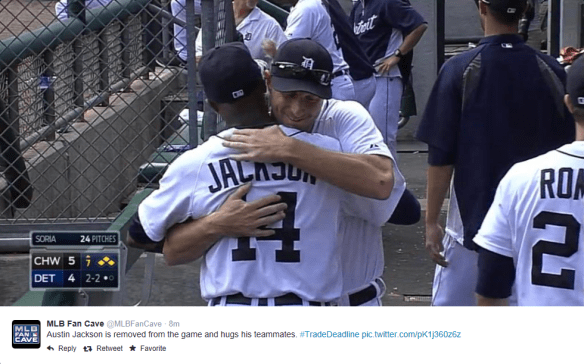
In developments that can only be described as shocking, the Tigers executed a last-minute trade for pitcher David Price, sending Austin Jackson to Seattle and Drew Smyly to Tampa. (Seattle also sent Nick Franklin to Tampa.) The trade was finalized while Detroit was in the middle of a game both Smyly and Jackson had started, and Jackson had to be pulled off the field when the deal was done.  Continue reading

A Statistical Appreciation of the Washington Generals And Harlem Globetrotters (via FiveThirtyEight)

gtRed Klotz, the founder and longtime coach of the Washington Generals, the Harlem Globetrotters’ perpetually feeble opponents, died at age 93 last week (I highly recommend Joe Posnanski’s remembrance). Klotz’s all-time record as a head coach of the Generals and their namesakes was something like six wins and 14,000 losses — they lost 99.96 percent of the time.

How exactly did the Generals lose so consistently? How much of it was their conceding games on purpose, as opposed to simply being really bad at basketball?

Let’s first get a sense for how good the Globetrotters were. … Read More

(via FiveThirtyEight)

ALDLAND Podcast

There is much to discuss on the ALDLAND Podcast this week, and your two favorite cohosts waste no time in getting down to business. First up is discussion of Vanderbilt University’s first ever national championship in a men’s sport, as well as talk about the reasons behind why they won. Also on the menu is the United States of America’s upcoming soccer match against the nation of Belgium, as well as which country has the better food and drink, soccer hairstyles, and whether strikers in soccer are bigger divas than NBA superstars or NFL wide receivers. So dig into this action packed podcast before you go out to support the greatest country in the world, the United States of America.

_______________________________

Download the ALDLAND podcast at our Podcasts Page or stream it right here: