
I can’t stop looking at this.
Has Chris Bosh become self-aware?
(HT: Grantland, which finally has settled on an entertaining regular blog feature for the NBA playoffs.)
I can’t stop looking at this.
Has Chris Bosh become self-aware?
(HT: Grantland, which finally has settled on an entertaining regular blog feature for the NBA playoffs.)
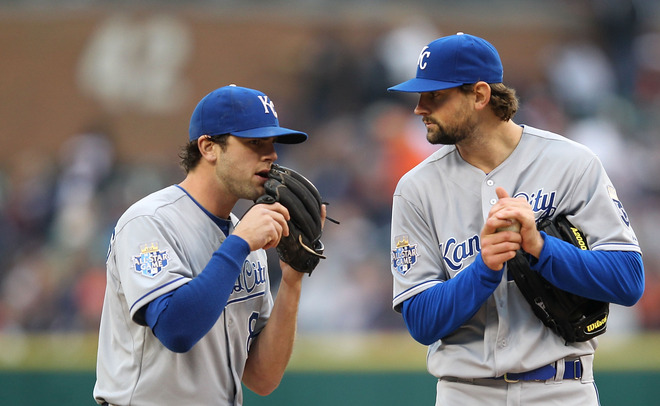
When your baseball team is in a bad way like the Tigers have been, what can they do to get out of the collective slump? It’s a question as old as baseball, but if you’re playing in the AL Central anytime between the 1990s and the present day, the return path to winning ways runs through Kansas City. If you can get them to come over to your place, all the better. Mix in young Rick Porcello’s righting ship, add a pinch of Victor Martinez’s happy return to the clubhouse (if not the playing field), and extract Delmon Young’s unproductive toxicity. Score five runs in the first inning. Allow that to rise into a 9-0 lead. Let settle over the remaining five innings into a 9-3 victory.

On Grantland’s sports blog, The Triangle, Adam Moerder has a post today entitled “Don’t Make Me Hate You, Detroit Tigers.” The uninspired text-drop begins with what actually is a fairly bold proposition: “More than any other MLB team, the Tigers probably have the best odds of becoming a dynasty this decade.” Moerder quickly confesses, “that thought sickened me.”
Why? A Tigers’ dynasty, Moerder asserts, “would be a pretty boring, hollow accomplishment.” Because? Because Moerder thinks it’s likely, apparently. In other words, Moerder is bored (sickened!) by his own prediction. If he feels that way, why strike ahead with the rest of his post? Because sickening boredom is only a stop on the path to hate.
Most sports critics hate teams with neglectful, disinterested owners who do little more than bleed their organizations for cash and refuse to lift a finger towards making an effort to build a winning franchize. The trouble here is that Moerder hates the Tigers because their owner actually is willing to spend money to improve his team. He fashions the Tigers some sort of Rust-Belt Yankees who bought a lineup of expensive free agents (“there’s no elegance”!), except that that doesn’t accurately describe how this team was built, and he even admits that their farm system is strong (a weak one is hate-worthy in his book).
“Boring” also cannot be a characteristic of a team that includes Justin Verlander, Prince Fielder, Jose Valverde, Miguel Cabrera, postseason heroes like Don Kelly, almost-eccentrics like Delmon Young (and, by association, his more borderline-eccentric brother, Dimitri Young), and an entertaining manager in Jim Leyland.
Moerder closes by repeating that he finds the Tigers’ “roster be constructed in an aesthetically unpleasing manner.” He hinted at this earlier, when he wrote that “the current infield defense, led by Miguel Cabrera at third (!), is an abomination.” It’s an abomination because it reminds Moerder of an “amoral” (not immoral, mind you) video game world he experienced two decades ago. That’s really what he wrote. A virtual lack of elegance indeed. He also said the roster “reeks of hubris,” and only one of those words has been accurately used to describe Detroit in the last thirty years. Please.
Since Moerder can’t even express what he doesn’t like, attempting to figure out what he does like probably is pretty fruitless, but it seems to have something to do with an environment of baseball competition in which a down-and-out team can get its act together by building a winner through development of its prospects and some “elegant” acquisitions. If he were to grab a little perspective, he might really like this team out of Detroit.
What a waste of e-space.
____________________________________
While reading Moerder’s non-sequitorious and circularly inconclusive chaff, Justin Verlander and the Tigers blew a 2-0 shutout in the top of the ninth against the D-Rays and suffered their first loss of the season in a game in which former Tiger Fernando Rodney got the save, so you can bet that I didn’t proofread the above, although I’d contend I still put more thought into it than Moerder put into his bit.

Apparently we’re just posting pictures now. This one’s a little less self-evident than the last one, so here’s the accompanying explanation from Chris Ryan, writing about Sunday night’s Grizzlies-Lakers game in L.A.:
Staples Center celeb sightings were pretty fun, if random, last night, with Ashton Kutcher, John McEnroe, David Beckham, and Gerard Butler (gone blond) lighting up courtside with their wattage. But the best appearance of the evening went to a man who seemed to be cheering for the Grizz: Snoop Dogg compatriot Don Magic Juan. Don’t know if there’s ever been a better union of team and fan. Oh, and he seemed to have a preexisting relationship with Zach Randolph, because of course he did.
Yesterday, the voice of the Hip Generation, Chuck Klosterman, rated the NCAA men’s basketball tournament “slightly overrated.” In doing so, Klosterman identified an emergent feature of the tournament that I’ve been talking about for at least three years: the improved accuracy with which the tournament committee seeds the teams, leading to fewer “upsets.” Why? Satellite TV. Huh? The committee is watching more games of more teams. They’re more educated about more teams, so they rank them more accurately. Can you give me an example? Sure. Gonzaga likely has always been about as good as they are today, but the little school in Spokane with the funny name (it has a Z in it you guys!) used to come out of nowhere and “upset” teams because the ‘Zags were underrated. You used to be a fool not to mark Gonzaga down for two wins. Now, though, someone in Indianapolis could watch every Gonzaga regular-season game if he or she wanted, something people likely couldn’t and certainly didn’t do five years ago, and so Gonzaga’s come back to the pack as they’ve been more accurately seeded.
The NCAA selection committee has gotten too good at its job. . . . The committee now seeds the tournament so precisely that the early rounds lack dissonance. We’ve exaggerated the import of the process. The brackets are way more accurate, but less compelling. In the not-so-distant past, the limitations of media kept college sports unpredictable. Easy example: Throughout the 1980s, it seemed like the New Mexico Lobos were habitually being shafted. In 1986-87, they won 25 games and still ended up in the NIT. And when analysts would try to explain why that happened, they’d concede that the members of the committee had not seen enough of New Mexico to give them the benefit of the doubt. They would almost admit they knew almost nothing about the program (and at the time, that felt like a problem). That could never happen now. I’ve somehow seen New Mexico play three times this year, and it’s not even my job. With unlimited media, nothing remains unknown; the committee makes fewer mistakes, and the seedings have become staggeringly reliable. Which was always the goal. The only problem is that the realization of that goal erodes the inherent unpredictability that everyone craves. The surgery was successful, but the patient died.


No, it doesn’t have anything to do with appearing in Maryland-area used-car commercials.
Grantland’s Ben Detrick has the story:

The prequel to this story solidly in the rearview mirror, we’ve moved past the command performances of the shock and the horror, and it’s time for the heavy-hitters to weigh in. They haven’t necessarily taken more time to consider the issues presented, even though they usually write for publications that facilitate such pondering through less-frequent publication schedules, but they are Voices, and so they must speak. Why look, here comes Charles P. Pierce right now!
I like Pierce’s writing a lot– he’s Grantland’s best writer– but his last couple articles have fallen off a bit for me. His previous one, about Ryan Braun, definitely felt rushed and awkwardly framed. What bothers me about politics coming through in sportswriting isn’t that I might not agree with the writer’s policy preferences or that I think politics and sports have no overlap (Congress and baseball excepted). It’s that a political lens often seems simultaneously inapplicable and overemphasized. In other words, it’s very unlikely that you are Hunter Thompson and that Richard Nixon is living in the White House phoning in plays for the Redskins. (Quite unlikely, since they’re both dead.) Sometimes it’s best to keep your separate worlds separate. (That’s my experience, anyway.) The point is that Ryan Braun’s situation doesn’t really have much to tell us about our overlord oppressors and the historical War on Drugs.
Follow that up with Pierce’s swing at Gregg Williams’ bounty program, which oozes pretension from the get-go. First-sentence Harvard name drop? Check. First paragraph West Wing reference? Check. We’ve got a mini-thesis on the Mesoamerican ball game before we even scrape the surface of the illusory NFL, with its “silly pretensions” (as opposed to the serious ones that he employs), “preposterous prayer circles,” and “the dime-store Americanism that’s draped on anything that moves.” Oh, and how could we forget the “suffocating corporate miasma,” whatever that means. The word “Queegish” soon follows, and I realize it’s past my bedtime here in flyover country.
The crux of Pierce’s high-minded caterwauling is a more hushed, but apparently equally urgent Denny Green moment: The Saints’ crime was showing us in daylight that the NFL is what we thought, in the darkness of our willfully ignorant minds, it was. That’s fine. Loss of innocence isn’t not an angle of approach here. It does seem like, though, if football still had its shroud of innocence, it would’ve gone with more of a bang. The head injury issue probably fits the bill a little better, if we’re looking for a recent example, but nobody asked me, and I think we’ve known the real deal about football for awhile.
Next to drummed up (not to say inauthentic) outrage, an apparently necessary exercise in which the horribles are trotted out and reacted to as if witnessed for the first time, and now we’re nearly into a mad libs piece adapted from a reflection on McGwire and Sosa’s home run chase after the word was out on steroids.
This is getting boring to write, which may say something about your experience in reading it. The point is that I am disappointed in Pierce’s article because it seems so unoriginal, overreactionary, and unessential. I never did get into Gregg Easterbrook, but based on what Drew Magary tells me, I think Pierce could be his liberal brother. Pretension is what happens when the stuff that you get to do when you’re a really good writer outpaces and overburdens the thing that made you a good writer in the first place. That’s one way to get to it anyway.
_________________________________________________
Related:
Scrutiny of the Bounty: A prequel

The writers and readers of this site tend to be employed or otherwise disposed during the day such that watching video clips on full volume usually doesn’t happen. If there’s something I really want to hear, I save it for lunch or the end of the day, and I suspect a lot of people do the same thing. This means that there are a lot of us watching a lot of videos– the general tenor of the internet being what it is– on mute. Conventional wisdom suggests that this practice detracts from our experience of these videos. Conventional wisdom also suggests that you never get involved in a land war in Asia, but is Afghanistan even in Asia and anyway that’s not what we’re talking about because the fact is that conventional wisdom can be wrong about videos and about wars (but not about videos of wars), which is why we’re introducing the ALDLAND Silent Film Series.
The concept is simple: some videos are better without sound. Whether they’re made that way or are seen that way for some variation on the modern reality alluded to above, this addition-by-subtraction effect is very real.
The Series’ inaugural feature comes from Oakland, California in 2007. Yesterday afternoon, Amos Barshad included the clip in his possibly prescient (given the Knicks’ loss in Miami last night) contingency plan for the end of Linsanity. It stars a somewhat (i.e., five-years) younger Baron Davis in his role as point guard for the Golden State Warriors, and it comes in the final minutes of a 20+ point win over the visiting Utah Jazz.
I neither am nor aspire to be Chuck Klosterman: a second-by-second analysis of this video hardly seems necessary. Instead, as you watch it (sans audio!, of course), appreciate the silent cinemagic of every shot of Davis, his teammates, Andrei Kirilenko, the fans, and the referee. Sound can improve these visuals in zero ways.
In terms of watchability, the Lakers are a miserable team this year, even by NBA standards, and the pre-season rap that the (well, more than) once-great team was little more than an aging-but-relevant superstar loner, a largely unsupportive (and largely unrecognizable) supporting cast, and a coach not named Phil Jackson has borne out. Even the team’s most famous fan thinks these Lakers are a snooze-fest.
But what about Kobe this year? First, he was visibly upset about the dismissal of Lamar Odom. More recently, he was visibly ignorant of Jeremy Lin. Slightly more recently, he was the victim of Jeremy Lin’s best career NBA performance. The uniform he’s wearing this year is too big. He seems to lack context, even for himself. What’s his story this year?
Kobe has arguably reached the end of his prime, and while it’s fascinating to watch him hoop with somebody’s swooning great aunt, you can’t help but feel like the moment deserves higher stakes. Kobe’s relentlessness has always been his most celebrated quality, but this season, he’s starting to remind me of one of those space probes that somehow keep feeding back data even after they’ve gone out twice as far as the zone where they were supposed to break down. You know these stories — no one at NASA can believe it, every day they come into work expecting the line to be dead, but somehow, the beeps and blorps keep coming through. Maybe half the transmissions get lost these days, or break up around the moons of Jupiter, but somehow, this piece of isolated metal keeps functioning on a cold fringe of the solar system that no human eyes have seen.
That’s Kobe, right? While the rest of the Lakers look increasingly anxious and time-bound, he just keeps gliding farther out, like some kind of experiment to see whether never having a single feeling can make you immortal. He’s barely preserving radio contact with anyone else at this point, but basketball scientists who’ve seen fragments of his diagnostic readouts report that the numbers are heartening. It’s bizarre. He’s simultaneously the main character in the Lakers’ drama and someone who seems to have nothing to do with the narrative logic of the post-Phil team. Whatever the Mike Brown era is, he’s got no point of contact with it. Even Gasol and Bynum, his best supporting players, essentially just concentrate on not interfering with his flight path. Everyone stays out of his way, which is easy, because “his way” is a couple of billion miles from the rest of the Lakers.
So writes Brian Phillips for Grantland, in a piece arguing that the Lakers have nothing to lose by adding Gilbert Arenas right now.
I’m not sure what I think about Agent Zero these days, I do know that I think Phillips pretty much nailed it with that description. 2012 Kobe is playing like carry-the-team-on-my-back Kobe, except that he doesn’t seem too concerned about whether he’s actually dragging the team along behind him. Spike Lee’s Kobe Doin’ Work was about the 2008 playoffs, but the title might more aptly describe this season, where Kobe’s blue collar isn’t so much the value and virtue-laden, American proverbial blue collar as it is an indication that he’s merely punching the clock.
 ALDLAND