The Death’s-head of Wimbledon, Part 5 (via Grantland)

But it’s so fragile, tennis! I mean, it’s so silly, basically. I have been a completely inadequate Wimbledon correspondent, and even I noticed when the All England Lawn Tennis and Croquet Club’s P.A. announcer came on to say, “Ladies and gentlemen, your attention, please. There is a 30 percent chance that it is now raining.” The kidnapped hawk, the Centre Court roof, and Roger Federer all have fake Twitter accounts that are only intermittently as funny as the actual Wimbledon Twitter account, @Wimbledon, which I suspect has a better sense of humor about Wimbledon than does Jeremy Piven. I’ve hardly understood a single thing that’s happened since I’ve been here. Why, the other night I wandered into the actual English pub next to my hotel for a burger and a drink, and there was some sort of American-themed costume party going on — all sorts of Marilyns and Duff Men and Top Gun jet aces, that sort of thing — and I was wearing a shirt with the name of an obscure Italian soccer club on it, and I got pitying looks for not being comically American enough! … Read More

(via Grantland)
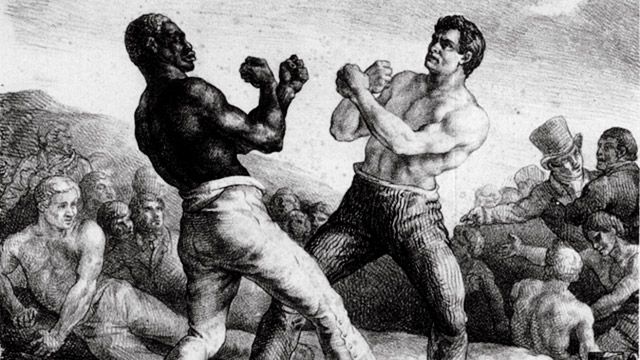
A Fighter Abroad (via Grantland)

On December 10, 1810, in a muddy field around 25 miles from London, a fight took place that was so dramatic, controversial, and ferocious that it continues to haunt the imagination of boxing more than 200 years later. One of the fighters was the greatest champion of his age, a bareknuckle boxer so tough he reportedly trained by punching the bark off trees. The other was a freed slave, an illiterate African-American who had made the voyage across the Atlantic to seek glory in the ring. Rumors about the match had circulated for weeks, transfixing England. Thousands of fans braved a pounding rain to watch the bout. Some of the first professional sportswriters were on hand to record it.

It was the greatest fight of its era. But its significance went beyond that. Even at the time, it seemed to be about more than boxing, more than sport itself. More than anything, the contest between a white English champion and a black American upstart seemed to be about an urgent question of identity: whether character could be determined in the boxing ring, whether sport could confirm a set of virtues by which a nation defined itself.

The fight cemented a set of stock characters — the fast-talking, ultra-talented, self-destructive black athlete; the Great White Hope; the canny coach who’s half devoted to his pupil and half exploiting him — that have echoed down the centuries.1 In fact, so much about the fight feels familiar today, from the role of race to the role of the media, that if you had to name a date, you could make a good case that December 10, 1810, was the moment sport as we know it began. … Read More

(via Grantland)