The DET Offensive: Interleague Play

It has been a tough first half of the season for the Detroit Tigers, who are struggling just to get to .500. I wrote before that the best way to get out of a slump is to invite the Royals to your yard. That sort of worked, but it didn’t really cure any ills in the longer term. After this month, though, I have a new recipe: play the National League.

The Tigers began interleague play on June 8 in Cincinnati, and they won each of their interleague series except for the last one, taking two of three from the Reds, Cubs, Rockies, and Cardinals and avoiding a sweep in Pittsburgh with a game three win against the Pirates, the team with the second-best home record in all of baseball. The Reds, Cardinals, and Pirates are good, and the Cubs and Rockies are quite bad, but Detroit’s performance on a given night seemed to have little correlation to the strength of their opponent. MLB, unlike the NFL or NBA, is a situation in which any team can beat any other team on a given day, but I think this is more a reflection of the Tigers’ internal struggles.

Injuries continue to be an issue, the most troublesome example of which is all-star catcher Alex Avila’s knee and leg problems. Fortunately, Gerald Laird has proven to be a more than serviceable backup, but Jim Leyland consistently and accurately insists he has yet to have his best lineup on the field for any meaningful stretch of games. Utility man Don Kelly also is out as a result of flinging his leg into a barrier at dead-sprint speed.

On the positive side, Doug Fister looks to be healthy and back on the path towards pitching effectiveness. Ditto on the latter for Max Scherzer and Rick Porcello. The shining star continues to be Austin Jackson, who is hitting very well in the lead-off spot while recording zero errors in center field.  Keep reading…
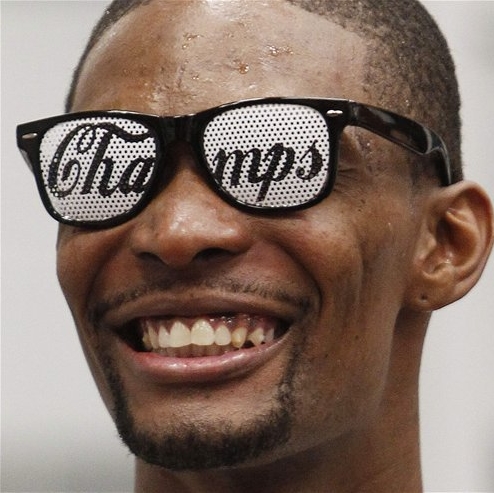
Four thoughts on the Miami Heat’s 2012 NBA championship

1. It was just last Thursday that the Miami Heat claimed the 2012 NBA championship with a blowout win over the Oklahoma City Thunder, yet it feels like it could have been six months ago. Maybe that’s because I don’t follow the NBA that carefully, but I get this feeling with nearly every passing major sports championship, and I remember it even as a kid, so it isn’t a feature of a developing perspective on time with age. It could be that the media mediates our experience of sports more than we realize. Hyperanalysis of championship games and series builds so much anticipation and tension. By the morning after the clinching game, though, the championship really does feel like yesterday’s news. Absent a controversial happening during the game, the media typically offers little beyond a standard game breakdown and an interview with a player or coach before jumping right into previewing the next season.

2. The morning-after conversation after this championship was all about LeBron James. The media’s beat on James had already begun to shift once the Heat made it to the finals, and by the time Miami clinched, they had made a complete 180 on LeBron. Had LeBron really changed, though? In some ways, probably. We’re told he developed his post game this year. That’s definitely something material. But if material, identifiable, quantifiable basketball things were the focus, his winning a championship wasn’t the point of change. He wasn’t heralded as the greatest when he was having, by the numbers, the best season in basketball history earlier this year, or when he won his third regular season MVP award, only questioned more. The nexus of the widespread criticism seemed to be personal and stem from things like the artistic merit of The Decision and The Introduction, his prediction that he’ll win eight championships, his apparent laissez-faire attitude with respect to competitiveness and the fourth quarter, his receding hairline and associated coping method, his unwillingness to shake hands when he loses, his calling the mother of his children his sidekick, etc. etc. If some or all of these are the bases for your beefs with James, though, the new ring on his finger changes nothing. Drew Magary, as usual, cuts to the chase:

There’s never been any question that LeBron James is a great basketball player. And even when he was coming up short in the playoffs, haters like myself just used those failures as an easy excuse to pile on him further, because he’s a dipsh[–] and he deserved it. The fact that he’s won a championship doesn’t fundamentally alter his character in any way. That’s the great con of sports: the idea that winners win because they have character and losers lose because they don’t. If you think LeBron is a good guy now because he won a title, then you probably had no business thinking he was a bad guy to begin with, because the outcome of a sporting event says nothing about the person within.

I never decided if I am a “LeBron hater,” which probably means I’m not. The only thing that really bugged me was his unwillingness to shake hands after he lost that championship with Cleveland. I guess I’m more agnostic about him, and I don’t think he’s more likely to win eight championships now than he was a week ago or a year ago save for the mathematical fact that he now has one of those eight.  Keep reading…

You’ll never guess who was the earliest advocate of an eight-team college football playoff

Intransigence by corporate interests, media interests, and Big Ten leadership all have been the objects of blame for college football’s failure to move away from the BCS-based postseason format, and many of those same interests will continue to face blame when dissatisfaction builds with the newly proposed “plus one” system set to begin after the current BCS contract runs out in 2013. Particularly in SEC and Big XII country, Jim Delaney, commissioner of the Big 10, has played the role of lightning rod, the embodiment of resistance new college football’s new competitive order

Interestingly, though, it appears that it was from Delaney’s Big 10 that the vision of college football’s yet-unrealized future first emanated. From The Milwaukee Journal, November 1, 1966:

Continue reading

What really happened in the Pacquiao-Bradley fight?

I do love conspiracy theories, and there’s no better way to end a Sunday or start a Monday than with a video like this. Timothy Bradley’s win by split decision over Manny Pacquiao was much maligned by media of all stripes, and even Bradley’s camp seemed a bit tentative in the aftermath of a victory over someone considered one of the top two fighters in the world.

I did not watch this match, so I don’t have my own opinion on it, but I’ve questioned the HBO announcers’ view of fights before, so I’m not shocked that someone else would do the same. Judge for yourself:

(via BigLeadSports)
(HT: Awful Announcing)

King James Approximately: A Summer Jam from Florida

Plenty of below average songs about Miami came to mind when I woke up this morning and learned that the Heat had won the NBA championship, but I thought it would be better for everyone to raise the level of geographic generality a little bit to broaden the options. Having done that, and recalling that the first day of summer was this week, the choice was pretty easy. Here’s “Mainline Florida,” the last cut off of the great early summer album, 461 Ocean Boulevard:

Please ignore the video uploader’s errant comma and make like Mike Miller and don’t let your troubles keep you from having a great weekend.

24/7: The 2011-2012 New York Rangers’ highs and lows, with Tracy Morgan

For whatever reason (probably because I don’t watch their games), I always have a hard time keeping track of just who’s on the New York Rangers, but I did have in my mind that they were favorites in the East this year, and I was surprised they weren’t the ones meeting LA in the finals. This look inside the locker room offers some answers, though:

Quick video hit on Bill Murray, co-owner of minor league baseball team

Some light fare to start your day. SB Nation’s Amy K. Nelson posted this short bit about Bill Murray: Minor League Baseball Team Owner.

Makes me glad to be headed to a minor league ballpark this weekend.

Also, how am I just now discovering Amy K. Nelson?

____________________________________________________

Related
Hit Bull, Win Steak: A meaty review of Bull Durham

Dr. Dwayne

More from Andy, the West Coast Elite who brought you this and was a guest host on the ALDLAND Podcast a few weeks ago:

Or, How I learned to stop Worrying and embrace that NBA Players can wear whatever they want.
OR can they????

All I’ll add is that I’m still waiting for the tipping point– I mean, let’s be (un)real: we’ve got NBA’ers wearing specs with no lenses– and that looks like a player doing a press conference with a monocle and a bubble pipe. There’s still time.

The Rev. Al Green reminds us why a prophet is not accepted in his hometown

Jesus said to them, “Surely you will quote this proverb to me: ‘Physician, heal yourself! Do here in your hometown what we have heard that you did in Capernaum.’ I tell you the truth,” he continued, “no prophet is accepted in his hometown.” – Luke 4:23-24.

Legendary soul singer Al Green was born in Arkansas, and he’s an ordained pastor at a Memphis church, but Grand Rapids, Michigan is his hometown. He grew up here from a young age, and he attended the same now-defunct high school as Gerald Ford.

But when Rev. Green returned to GR for the first time in over ten years, he mailed in his homecoming. After starting more than an hour and fifteen minutes late, Green played for not more than an hour and offered no encore, though after a brief, mostly flat performance, the disappointed audience’s request for an encore was pretty tepid.

Yes, Green still has his vocal range, if not a youthful stamina, and his twelve-piece band was fine. He sang “Let’s Stay Together,” and he did a disjointed medley of Motown snippets, but his brief set left the audience wanting a lot more. That may be an appropriate strategy for an up-and-coming act playing small clubs and building a following. It really isn’t an appropriate strategy for an established stars playing to a sold-out crowd, each of whom ended up paying more than a dollar a minute for Green to coast through his light performance.

While the, “It sure is great to be here in [fill in the blank city]!” is a throwaway line musicians use at every stop on a tour, it is a meaningful ritual because the audience really does love it, and because observing its execution can offer insight into the performer’s commitment to the individual performance. Whatever its value, Green didn’t make it easy to definitively answer the question, “does he know where he is?”, scattering his geographical shout-outs across the state. Although a tally of municipal mentions upon review of the concert transcript (those exist, right??) likely favored Grand Rapids, Green acknowledged Ann Arbor, Flint, Lansing, Muskegon, and other locales during his time on stage. The number of Michigan cities he named may have outpaced the number of songs he performed, which actually might sort of be a backhanded compliment to the Michigander audience in light of the state’s inferiority complex. Green sufficiently resolved whatever uncertainty existed in the fans’ minds when he sent us off with, “Good night Pontiac!”, though. Regardless of whether he knew where he was, he didn’t care, and that was illustrative of his approach to the night as a whole.

___________________________________________________

Previously
Hang out at the Hangout
ALDLAND’s 2011 live music reviews