LaMichael James, Tom Petty, and the Heisman Trophy

Two years ago, Wall Street Journal entertainment writer John Jurgensen wrote a retrospective on Tom Petty. The musician certainly wasn’t finished, but the then-upcoming release of a career-spanning anthology provided the occasion to look back and consider his legacy. The thesis of the piece was that, in terms of legacy, Petty was too good for his own good. Somehow, because he has been so popular and successful for so long, people almost lose track of him and forget to list him when discussing the great rock and rollers of the period.

An analogous narrative may apply to Oregon running back LaMichael James. The thought came to me while listening to the most recent episode of The Solid Verbal podcast on the Grantland Network. Ty Hildenbrandt casually referenced James’ numbers in Saturday’s Pacific Twelve championship game: 219 yards, 3 touchdowns, 8.8 yards/carry. Hildenbrandt’s co-host and acknowledged Oregon homer Dan Rubenstein appropriately led the show into a discussion of the James’ absurd statistical output and the casual response it generally receives. Indeed, the Heisman Trophy finalists were announced this week, and James’ name was not among them.

There are plenty of reasons why people may not bat an eye at James and his numbers– he plays on the West Coast, in Oregon’s offensive system, and has been doing so for a long time in relative terms (and he’s only a junior, which, along with the existence of a strong field of contenders, may help to explain his omission from the Heisman list this year)– but one can strum up plenty of reasons for Petty’s treatment in the popular realm too– he isn’t a flashy guitar shredder, his voice isn’t inherently iconic, he didn’t have a mega-hit of temporal cultural relevance, he’s kinda goofy-looking. Yet Jurgensen’s too-good-for-his-own-good thesis applies equally to both men. Indeed, these listed reasons really aren’t exceptions to the overarching notion; the fact that they are good or at least debatable factors tends to support it.

I don’t think that familiarity always breeds contempt. In the case of Petty and James, the combination of familiarity and success appear to breed forgettableness.
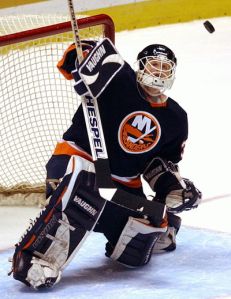
The Weekend Interview: Chris Osgood

The first newspaper I read seriously and regularly was the Wall Street Journal. A test preparation company gave me a free print subscription, and I milked it as long as I could by doing things like stopping delivery when I was away, which had the effect of tacking more issues onto the end of the subscription. When it finally dried up, a friend on his way out at Dow Jones, the family driven organization that used to control the Journal before News Corp took over, lined me up with an online subscription, which carried me another year or so. By that time, newspaper websites were in full bloom, and a subscription really didn’t mean anything. When the family split and Rupert Murdoch took over, a digital lockdown followed closely on the heels of a substantial (if sometimes misguided) increase in content. No worry, though, as a free and easy workaround makes it simple to get behind the Journal’s paywall. All you have to do is…. Well, I don’t want my cell phone hacked, but, as Jimmy Cliff said, you can get it if you really want, and frankly, it isn’t even that tough.

Uh, hockey? Right. The WSJ has a regular feature called The Weekend Interview, a full-page study of one person, accompanied by an illustrated portrait by Ken Fallin. For reasons that make sense to me, Fallin inspired my photographic selection for this post, above. Because ALDLAND is neither the Journal nor The National Sports Daily, though, more often than not, the interviews are going to have to be imagined.

Chris Osgood is the right subject for this site’s first Weekend Interview. When the Detroit Red Wing goalie retired last month, my immediate reaction registered on the sadness side of the line. It wasn’t totally shocking, although I had thought he’d be around another year or two, especially given Captain Lidstrom’s decision to stay on. And Osgood is likeable, if not a perpetual fan favorite (but few goalies are). Osgood also is the type of player for whom the immediate hall of fame question is more than an element of the motions through which to go the media has obligated itself for every retiree; for him, it’s a real question, an interesting question, a debatable question, and possibly ridiculous that it is a question at all, and like Jim Gray, I promise I’ll promise you I’ll get to that question right away. Here goes… Keep reading…