The NCAA’s response to Georgia’s new NIL law reveals the emperor’s new clothes

Earlier today, the State of Georgia enacted HB 617, which affirmatively permits college athletes attending schools in that state to receive financial compensation for use of their name, image, or likeness (“NIL”). The new law takes effect on July 1, 2021.

In a nationwide environment in which the NCAA broadly prohibits almost every form of direct financial compensation to so-called “student athletes,” emerging state laws like Georgia’s HB 617– other states joining in this initial wave include Alabama, Florida, Mississippi, and New Mexico– offer a commonsense middle ground on compensation that’s short of revenue sharing with school athletic departments and would seem to place schools in those states at a competitive recruiting advantage, at least in the short term.

The NCAA’s initial response to what appears to be a broadside attack on one of the governing body’s longstanding, core tenets was surprising. Jere Morehead, a member of the NCAA Board of Governors “said he would expect the NCAA would allow ‘accommodations,’ to be made for athletes in states with NIL rules.” Morehead also is the president of the University of Georgia, so this may not be the NCAA’s official position on state NIL laws. If the “accommodations” comment reflects in any way the thinking within NCAA leadership, though, it is extremely illuminating.

It’s easy to forget that athletics organizing entities, and especially in light of their popularity and rhetoric the NCAA, NFL, and MLB, do not act and regulate their respective sports with the force of actual law. (In fact, they in some sense operate outside the law thanks to formal and informal antitrust exemptions.) During baseball’s meltdown over Barry Bonds’ superhuman ascension in the early aughts, you could be forgiven if you weren’t sure whether steroids were illegal illegal or merely MLB “illegal.” The NFL also has done an effective job of coopting this officious language into its in-sport vernacular as well (e.g., “illegal touching” having quite different meanings on and off the field). All of these groups have “committees” that issue “rules” and “regulations” just like real government agencies!

For the degree to which these private sports administrative entities control the behavior of their subject players as well as the general public’s perception of the goings-ons in and around their games, it’s sort of amazing that states could just opt out of a major NCAA prohibition and the NCAA’s response is to roll over and take it. Not that passing legislation is easy, but is this all that was needed all along?

If the NCAA’s “accommodations” response proves real, it could carry widespread consequences for the enforceability of other NCAA rules. Suddenly, the implication is that the NCAA will yield wherever its policies conflict with state law. Does this mean an end to the NCAA’s punishment of athletes who use marijuana in states that have authorized its use? What about sports wagering? There of course are other actual legal factors at work with those two examples (the persistent federal marijuana prohibition and common legal provisions restricting wagering by contest participants), and it’s unclear whether an affirmative legalization is a prerequisite (e.g., was Todd Gurley prohibited from being paid for autographed helmets as a matter of Georgia law?) . Still, Morehead’s suggestion that the NCAA will quietly accede in this area implies that there actually may not be much brute behind the bluster out of Indianapolis. If that’s the case, it’s a welcome– if still annoyingly executed– development that should further hasten the loosening of the NCAA’s iron fist over those whose efforts generate millions of dollars in administrative salaries.
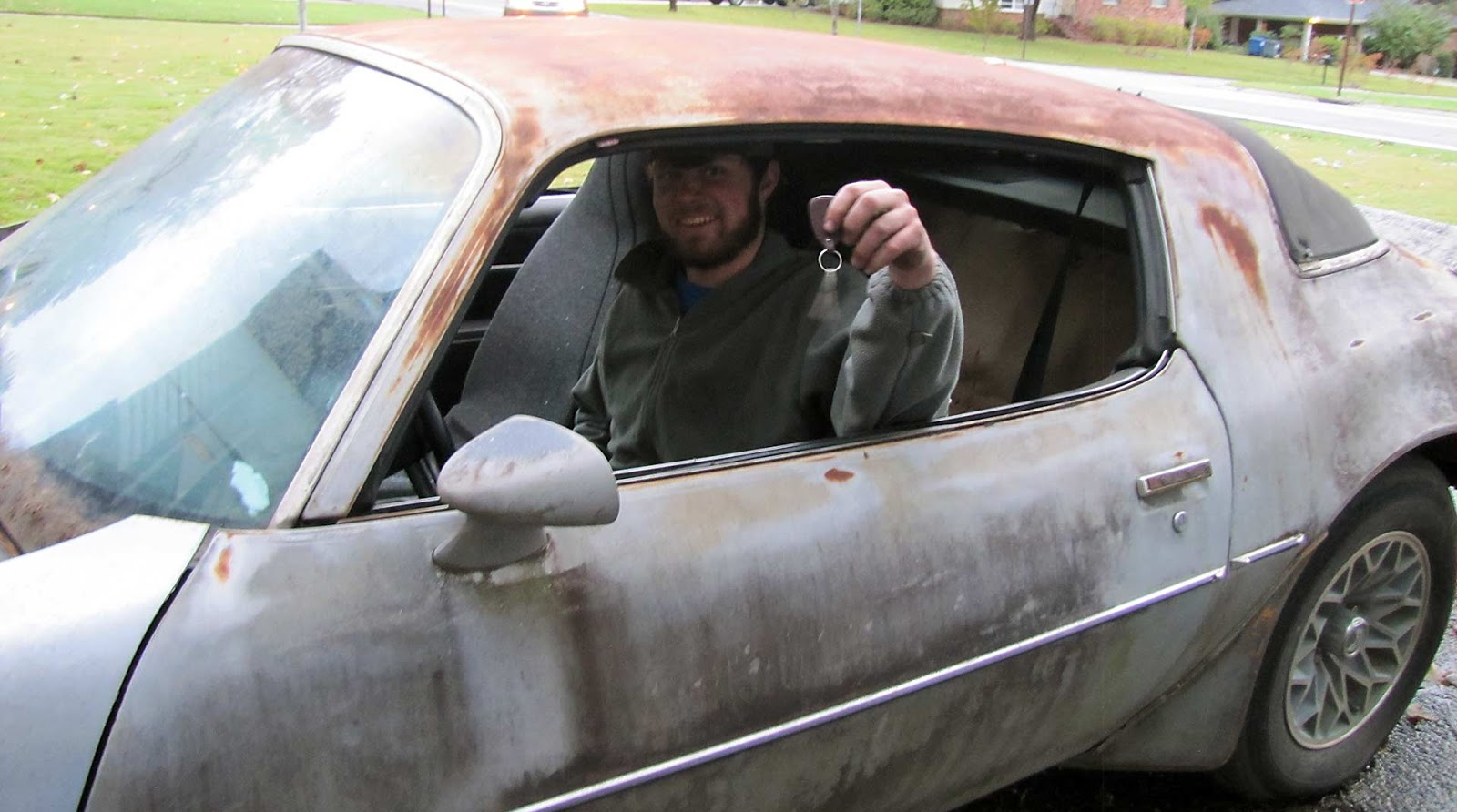
A predictable turn in the ongoing saga of Charlie Blackmon’s 1979 Pontiac Trans Am

The end of the first month of the 2021 MLB season finds the Colorado Rockies stuck in last place in the National League’s Western Division. By OPS+, they’re the worst hitting team in the NL and the second-worst overall, their 85 OPS+ just edging the Detroit Tigers at 81 OPS+. Even though the Rockies were in the playoffs as recently as 2018, their slow start this year already has cost Jeff Bridich his general manager post. Perhaps unsurprisingly in light of the foregoing, Charlie Blackmon, the team’s ostensible star, so far is having the worst season of his career. His .169/.299/.292 line shakes out to 58 OPS+/56 wRC+/108 DRC+.*

Meanwhile, the winding road that conveys the legal saga of Blackmon’s 1979 Pontiac Trans Am– a story that remains too hot for any other website to cover– may be approaching its terminus. We picked up the tale as it hit the courthouse steps in January, when Blackmon filed suit against Michael Ramsey and his company, Ramsey Performance, alleging that the two entities took his money and his car and, after failing to complete agreed-upon restoration work on the latter, refused to return either. When Ramsey declined to hire a lawyer and instead made a “Good Job/Good Effort” attempt to respond to Blackmon’s complaint by filing only a copy of the complaint bearing Ramsey’s handwritten comments on the allegations, I predicted that Blackmon’s legal team would wait a few weeks and then file a motion for default judgment or judgment on the pleadings.

That’s exactly what happened. Referring to Ramsey’s unusual filing as “a something,” Blackmon’s motion asked the Superior Court of Cherokee County, Georgia to take a shortcut to the end of the lawsuit. Ramsey’s response either was so deficient that it didn’t amount to an answer at all, the essence of the argument goes, or it was an answer that didn’t deny any of the material allegations in the complaint. Either way, Blackmon contended that the court can rule for him on the question of the defendants’ liability right now. The question of damages– basically, the amount of money the court would order paid to Blackmon– could throw a wrench into Blackmon’s gears, however. Because he hasn’t been able to inspect the vehicle, the motion proposes the appointment of a special master– an investigator who works at the judge’s direction– to provide an assessment of the Pontiac’s condition for the purpose of determining a precise monetary award.

If Ramsey’s response to this motion is better than his response to the complaint, it is so only because he typed it as a partially separate document rather than handwriting his comments on Blackmon’s filing. This response otherwise is worse than the last one. Continuing to represent himself, Ramsey complains that Blackmon refused an out-of-court resolution of the dispute on terms Ramsey dictated. Ramsey also provided in-line responses to some of the arguments in Blackmon’s default motion, though these generally do not help his position, being either admissions of matters pertinent to the question of default (e.g., acknowledgement that he was served with the complaint) or immaterial. He also attached correspondence that again reveals Blackmon’s personal email address (although Blackmon’s own lawyer already let that cat out of the bag) and is neither relevant nor, to the extent it constitutes settlement communications, admissible as evidence.

Next up will be the trial judge’s ruling on the default motion. Judge Cannon certainly has plenty of latitude to grant a default judgment in Blackmon’s favor here. The easiest part to resolve should be a ruling on the question of a default judgment against Ramsey’s company, which, in Georgia, must be represented by a lawyer. Apparently open questions about the precise nature of the remedy or remedies Blackmon seeks (e.g., Does he just want his car back? Does he want money from Ramsey, and, if so, exactly how much?) may complicate the situation for Blackmon, however, and complications and uncertainties usually are not helpful to a party seeking entry of a default judgment.

Those, of course, are matters for Blackmon’s legal team to sweat. Their client likely is more concerned about his sub-.200 batting average and his team’s NL-worst record.

As always, keep your browser dialed to ALDLAND.com, where we remain your (actually; I somehow am not kidding) exclusive source for hot rod baseball litigation.

* All statistics current as of the time I typed them.

_________________________________________________________

Previously
A reminder that it’s spring training for automotive shop workers too: The ongoing saga of Charlie Blackmon’s 1979 Pontiac Trans Am
The ongoing saga of Charlie Blackmon’s 1979 Pontiac Trans Am